Get Full Government Meeting Transcripts, Videos, & Alerts Forever!
Get email alerts on the Transportation Regional Planning topic
No spam. Unsubscribe anytime.
Austin UTC urges CAMPO changes, seeks limits on MoPac South and Highway 183 expansions
Summary
The Urban Transportation Commission told the Mobility Committee on April 17 that it wants major changes to the draft CAMPO 2050 regional transportation plan, including removing or reducing freeway expansions and prioritizing transit, safety and active transportation.
The Urban Transportation Commission told the Mobility Committee on April 17 that it wants major changes to the draft CAMPO 2050 regional transportation plan, including removing or reducing freeway expansions and prioritizing transit, safety and active transportation.
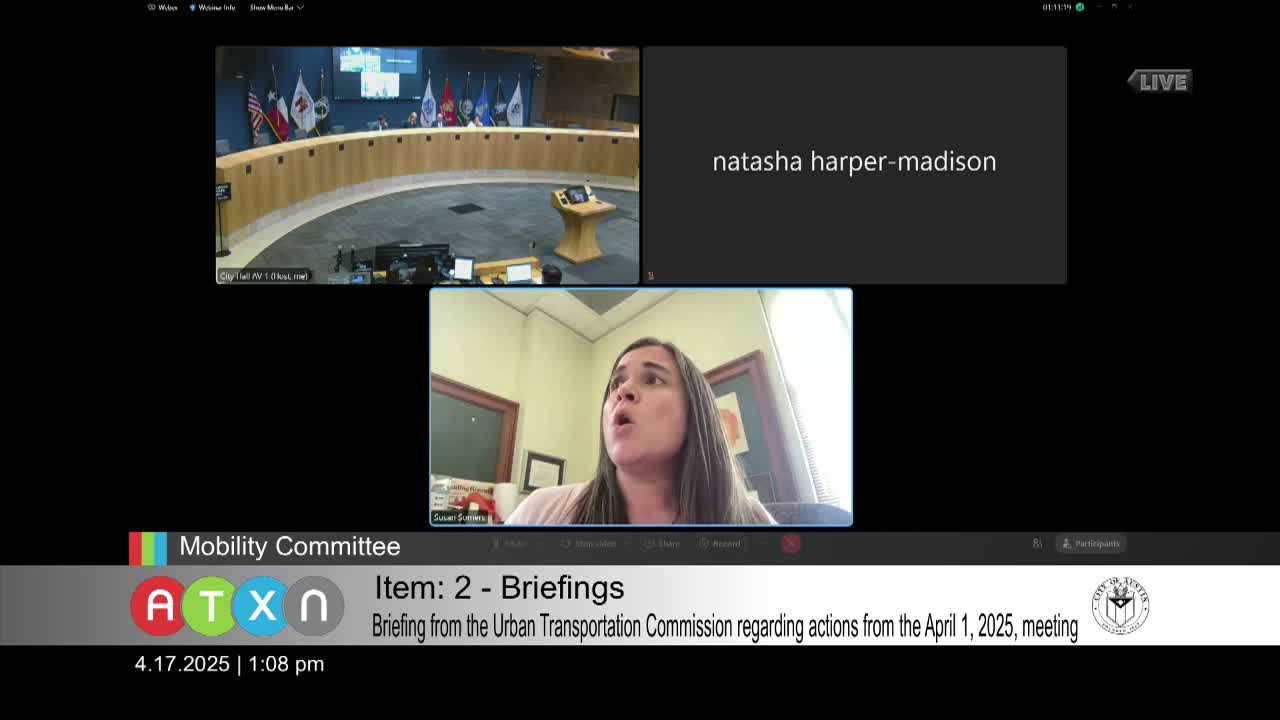
UTC Chair Summers told the Mobility Committee that the draft CAMPO plan proposes a large increase in roadway capacity and includes projects such as the MoPac South expansion and a wide buildout on State Highway 183. “The regional plan proposes adding more than 3,000 new lane miles, which UTC said amounts to roughly a 26 percent increase in roadway capacity,” Summers said, noting UTC’s concern that added road capacity can induce demand and increase vehicle miles traveled.
The commission’s formal recommendations include prioritizing funding for projects that improve safety for all users and for transit and active transportation, deprioritizing projects that increase vehicle capacity or lengthen travel distances to jobs, and removing MoPac South from CAMPO 2050 or amending it to add no more than one lane in each direction. UTC also recommended removal of the Highway 183 project as described in the draft plan.
Summers raised concerns about transparency in CAMPO’s technical work, saying the detailed county-level population and employment forecasts and some modeling inputs had not been publicly shared with local technical advisory committees. UTC recommended that CAMPO share all demographic forecasting data and methods with the public, the Transportation Policy Board and the Technical Advisory Committee, and use scenario planning so forecasts reflect different transportation investments and induced demand.
UTC also noted local political actions relevant to MoPac South. Chair Summers summarized Council resolution 2024‑1212‑066, which asked the Central Texas Regional Mobility Authority to refine MoPac South to align with Austin’s Strategic Mobility Plan and other city policies and requested that the resulting project not increase vehicle miles traveled or greenhouse gas emissions. Summers said the commission is pressing for CTRMA to produce full environmental review and to align any design with local climate, watershed and trails plans.
Commissioners also included local program and budget recommendations in their report to the Mobility Committee. UTC recommended expanding the Living Streets program capacity to deliver 72 additional activations, buying more Meridian Archer movable street barricades for event and pedestrian safety, and increasing annual maintenance funding for sidewalks and urban trails from $5,400,000 to at least $7,500,000; UTC members said the true annual maintenance need is substantially higher.
Council members and staff asked UTC and Transportation Public Works staff follow-up questions about procuring additional movable barricades, whether those devices could be used for Living Streets activations, and how to coordinate with Austin Police Department. Transportation and Public Works Director Richard Mendoza said APD is leading some procurements and staff would follow up with specifics.
Why it matters: CAMPO's regional plan guides allocation of federal and state transportation funds across Central Texas. UTC’s recommendations aim to shift investments away from capacity‑expanding highways toward safety, transit and active modes, and to secure greater transparency and local influence over regional modeling and project selection.
What’s next: UTC’s recommended language and the Mobility Committee’s responses will be part of ongoing local engagement with CAMPO, CTRMA and state agencies as the CAMPO 2050 plan proceeds through public comment and adoption steps.