Get Full Government Meeting Transcripts, Videos, & Alerts Forever!
Get email alerts on the Gaza Humanitarian Crisis topic
No spam. Unsubscribe anytime.
UN says humanitarian supplies in Gaza are close to depletion as fighting continues
Summary
The United Nations warned that humanitarian supplies in Gaza are near exhaustion after Israel imposed a full closure on cargo entry on March 2, leaving more than 2 million people with dwindling access to food, fuel, medical services and water infrastructure.
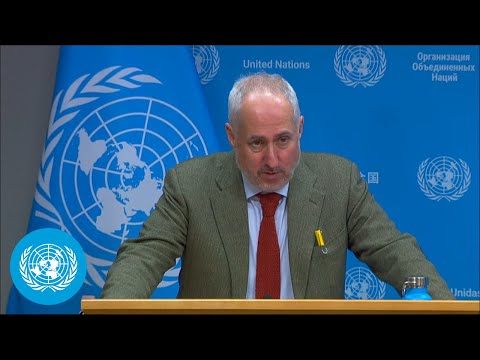
The UN spokesperson, Spokesperson of the United Nations Secretariat, said humanitarian supplies into the Gaza Strip are “extremely close” to being exhausted after Israel imposed a full closure on cargo entry on March 2.
The spokesperson said more than 2,000,000 people remain inside Gaza and that ongoing hostilities and dwindling aid supplies are driving life-saving services “to the brink of collapse.” He added that in Gaza City only three ambulances of the Palestinian Red Crescent Society remain operational out of 30 because of lack of fuel.
The UN Office for the Coordination of Humanitarian Affairs (OCHA), as reported by the spokesperson, has distributed emergency health kits to some 3,000 people in Gaza City and Khan Younis but warned that nearly 90% of water assets — including wells, pumping stations and sewage treatment plants — were destroyed or partially damaged. The spokesperson said partners are distributing bedding sets because more than half of Gaza’s population now needs some form of emergency items.
The spokesperson repeated the UN’s view that “Israel as the occupying power has clear obligations under international law,” including obligations to ensure food, medical supplies and public health services are available and to facilitate humanitarian relief when not otherwise being supplied. He said OCHA stresses that civilians must be protected whether they leave or stay and that those fleeing must be allowed to do so safely and be able to voluntarily return when conditions permit.
In a later exchange with reporters, the spokesperson was asked how close the UN is to having no food and no fuel in Gaza. “The short answer is extremely close,” he replied, adding that UN and humanitarian partners are “stretching” the remaining supplies but that it is difficult to predict precisely when the remaining stock will be exhausted.
The briefing did not provide a timetable for resumption of regular aid flows or details of specific shipments awaiting entry. The spokesperson’s remarks were based on OCHA and humanitarian partners’ reporting and on operational assessments shared with the news briefing.