Get Full Government Meeting Transcripts, Videos, & Alerts Forever!
Get email alerts on the Electric Rates topic
No spam. Unsubscribe anytime.
Board recommends 3‑2 that county advance plan for 9% electric rate increase and time‑of‑use framework
Summary
Los Alamos County Board of Public Utilities voted 3–2 to recommend an ordinance that would raise electric rates and add a time‑of‑use/residential demand structure, with the board split over whether to delay restructuring until new solar resources and distribution costs are clearer.
The Los Alamos County Board of Public Utilities voted 3–2 on April 16 to recommend that County Council introduce an ordinance (No. 02365) that would implement a 9% electric rate increase on July 1, 2025, and an additional 8% on July 1, 2026, and add a time‑of‑use and residential demand rate structure planned for no sooner than July 1, 2026.
Utility staff told the board the ordinance is intended both to restore revenue lost during a long period of limited rate adjustments and to modernize rate design by shifting some charges to time‑of‑use and a modest residential demand component. Karen Kendall, who presented the proposal, said the ordinance follows a multi‑year rate‑design process and is intended to be revenue neutral when time‑of‑use is implemented. “We are recommending an electric rate increase of 9% for 07/01/2025 and an increase of 8% for 07/01/1926,” Kendall said during the hearing.
Why it matters: Utilities staff said the combined effects of rising equipment and capital costs, long stretches without rate adjustments and reduced reserves require action to stabilize the electric fund. The ordinance also proposes increasing the fixed monthly residential service charge to cover administrative allocations: from $12.60 currently to $17.60 on July 1, 2025, and to $22.50 on July 1, 2026.
Key details
- Proposed near‑term rate changes: 9% increase effective July 1, 2025; an additional 8% effective July 1, 2026 (figures in staff presentation).
- Service charge: current fixed monthly residential charge $12.60; recommended to increase to $17.60 in FY26 and $22.50 in FY27 to cover administrative allocations and interdepartmental charges.
- Time of use and demand: staff proposed on‑peak hours of 5 p.m.–11 p.m.; projected to be revenue neutral if customers do not shift behavior (the county’s historical hourly data show roughly 31% of residential usage occurs in on‑peak hours). Kendall framed the design as intended to let customers shift load and reduce distribution stress.
- Foxtail Flats and market context: staff provided illustrative costs for Foxtail Flats generation and battery discharge (daytime solar about $37.88/MWh; battery discharge periods about $148.83/MWh) and Hour‑Ahead Market averages to show why peak pricing exists.
Board split and reasoning
Board Chair Gibson and two other members voted to recommend the ordinance to council; two members opposed. Dissenting board members said the proposed restructuring (time‑of‑use plus residential demand) is premature until Foxtail Flats is delivering meaningful capacity or the county has clearer distribution upgrade costs from the electrification study planned for August. Chair Gibson, while supporting a rate increase, argued the time‑of‑use and demand changes should be timed to cost drivers; other board members favored adopting both the rate increases and the time‑of‑use/demand framework now so the county can phase implementation, build public education, and have billing systems ready.
Public comment and board discussion
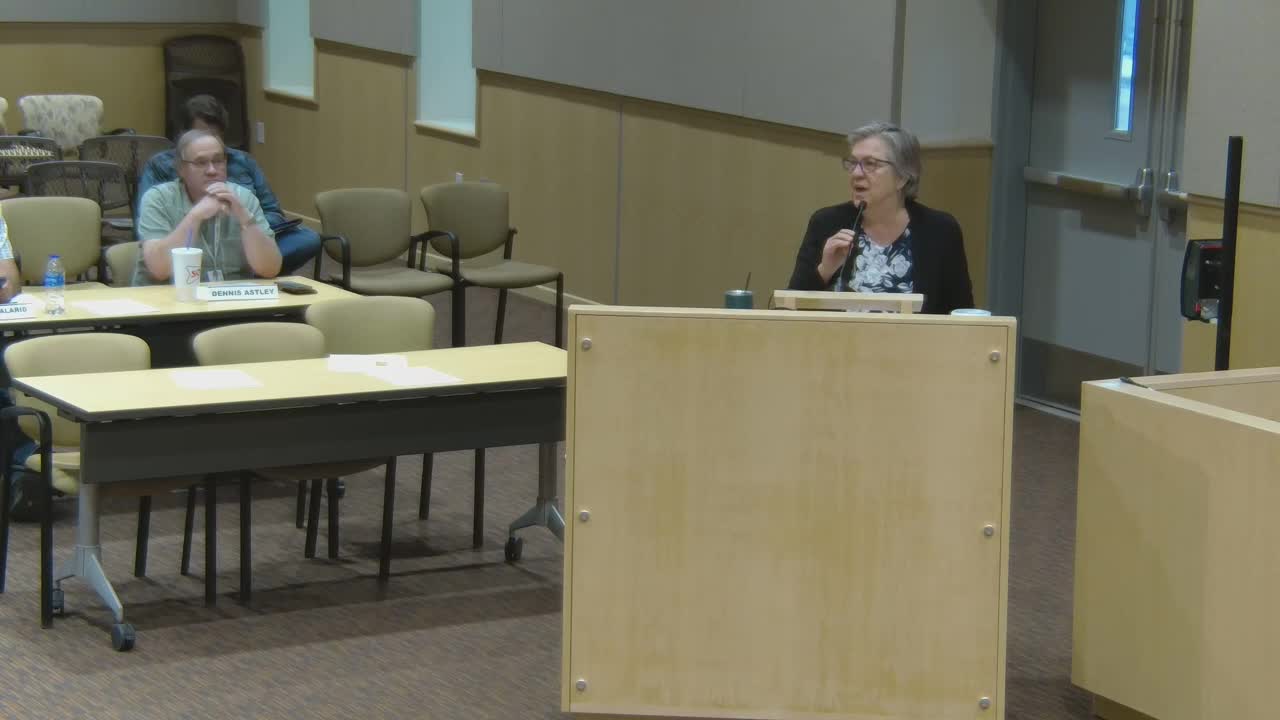
Public commenters raised a mix of concerns, including general unhappiness with rate increases, technical questions about demand charges, and local environmental questions triggered earlier in the meeting. Board Member Eric Stromberg urged staff to consider a higher fixed connection or service charge for rooftop solar customers so the distribution costs are equitably allocated, noting several states have adopted similar adjustments. “People with rooftop solar are not paying their fair share of infrastructure costs,” Stromberg said during board discussion.
Vote and next steps
The board approved the motion recommending introduction of Ordinance 02365 to County Council by a 3–2 roll call vote (Hollingsworth: Yes; Nochley: Yes; Stromberg: No; Heffner: Yes; Gibson: No). The ordinance will be introduced to County Council for consideration and public hearings are scheduled at subsequent council meetings. Staff said implementation of time‑of‑use and demand requires a billing software upgrade budgeted in FY26 and approximately 12 months to deploy; if the ordinance proceeds, the county plans a phased public education effort before residential time‑of‑use begins.
Ending
The ordinance recommendation advances a two‑part approach: immediate revenue increases to stabilize electric finances and a planned migration toward time‑sensitive pricing intended to curb peak loads and defer distribution upgrades. County Council will consider introduction and public hearings in May and June.