Get Full Government Meeting Transcripts, Videos, & Alerts Forever!
Get email alerts on the Public Noticing topic
No spam. Unsubscribe anytime.
Planning commission debates broader public-notice rules; signs deferred for now
Summary
Staff proposed expanding mailed notice beyond current 300-foot minimum, notifying occupants as well as property owners and holding community meetings for larger projects. Commissioners agreed on broader mailed notice but recommended deferring mandatory on-site signage and refining how tenants and businesses are reached.
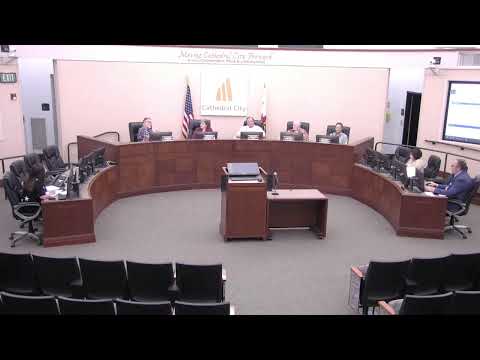
Planning staff presented proposed changes to Cathedral City’s public-noticing procedures at the April 16 Planning Commission meeting, recommending expanded mailed notice for more inclusive outreach and a structured community‑engagement step for larger projects.
The staff report said state law requires direct mailing to real property owners within a 300‑foot radius as a minimum; staff proposed increasing that radius to 500 feet for typical projects and to 750–1,000 feet for larger sites (for example, projects of 10 acres or more). The packet also suggested notifying occupants of rentals and commercial tenants in addition to property owners and adding a community‑meeting requirement for projects that meet a size or impact threshold.
Staff noted costs and practical issues with on‑site signs and recommended deferring a mandatory sign requirement for now. “A sign is about just under $1,000 for fabrication,” staff said, and added that the installation and removal costs would further increase expense; commissioners agreed the visual clutter and limited readability from fast-moving streets reduce signs’ utility compared with broader mailed notice and tenant notification.
How to reach non‑owner occupants was a frequent practical question. Staff said assessor tax rolls provide owner mailing addresses and that planning and GIS can pull supplemental lists (business license addresses, parcel records) to reach tenants in apartment complexes, mobile home parks and commercial suites. Commissioners asked staff to clarify language that currently anchors mailing lists to assessor records so that applicants notify occupants as well as owners.
On the community‑engagement proposal, staff recommended that applicants hold a neighborhood meeting after initial submittal and before the public hearing so applicants can vet issues and, where feasible, modify designs in response. The commission discussed whether to require follow‑up meetings if a project changed substantially between the community meeting and hearing; staff said the development director could require an additional outreach meeting where appropriate.
Next steps: staff will draft ordinance language for the commission’s recommendation. Planning staff said the proposal will return to the commission for a recommendation before forwarding to City Council for introduction and adoption. Commissioners generally supported expanded mailed notice and tenant notification, asked staff to refine the technical language for assembling mailing lists, and supported deferring mandatory on‑site signage to evaluate the expanded notification program first.