Get Full Government Meeting Transcripts, Videos, & Alerts Forever!
Get email alerts on the Capital Projects topic
No spam. Unsubscribe anytime.
School department revises Wickford Middle School plans after RIDE feedback; options include compact design, enrollment changes and net‑zero tradeoffs
Summary
School officials said April 16 they are reworking Wickford Middle School designs and enrollment scenarios after RIDE asked for a new look at program, design and costs to maximize state reimbursement.
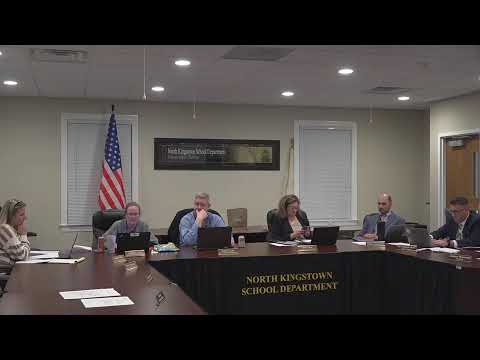
The North Kingstown School Department told the school committee April 16 it is revising stage‑2 materials for the new Wickford Middle School after a follow‑up meeting with the Rhode Island Department of Education (RIDE).
Administration and the project team said RIDE recommended that the district reexamine the project’s educational program and design to maximize state reimbursement. Among the options the team is studying are: increasing enrollment (the district submitted an option that would raise target enrollment to 525 students to improve reimbursement eligibility), a more compact three‑story design that reduces footprint, and versions that remove net‑zero features (solar/geothermal) to lower upfront cost. Officials stressed each option changes the reimbursement calculation and the capital allocation tradeoffs.
District staff and architects said RIDE suggested the district look at building up rather than out to reduce foundation and site costs, and to rework costly elements such as curtain‑wall systems. Perkins Eastman (the architect) and Jacobs (owner’s project manager) are preparing cost estimates for each option; administration said it expects estimates next week and a building advisory meeting is scheduled for April 24 to review them prior to a May 5 submission to RIDE.
Staff emphasized that the bond voters approved a plan with a targeted capital allocation and noted RIDE’s feedback does not require abandoning that plan, but does press for cost reductions or reallocation to increase eligible reimbursement. Committee members repeatedly asked for a clear comparison showing (1) the project as presented to voters, (2) the RIDE‑recommended alternatives and (3) the estimated impact on the capital‑project list (CIP) and other district projects. Administration agreed to provide a side‑by‑side cost and reimbursement analysis of multiple options and the original submission.
Public commenters at the meeting urged preservation of net‑zero features (geothermal and solar) as a long‑term cost‑saver, and others pressed for clarity about redistricting and how any change to building program (for example, adding preschool or fifth grade) would affect the CIP and enrollment projections. The administration said they are using an updated demographic study from Cropp & DeWitt to inform planning and recommended that the committee adopt that study’s forecasts for project planning.
Next steps: the architects will return cost breakdowns, including separate line items for site work and athletic fields so the town can compare apples‑to‑apples with other projects; administration will present a cost/reimbursement comparison and a proposed decision timeline so the committee can weigh programmatic versus budgetary tradeoffs before the May 5 RIDE deadline.