Get Full Government Meeting Transcripts, Videos, & Alerts Forever!
Get email alerts on the Municipal Budget topic
No spam. Unsubscribe anytime.
Council adopts tentative FY25–26 budget and sets May 21 public hearing; staff present program priorities and changes
Summary
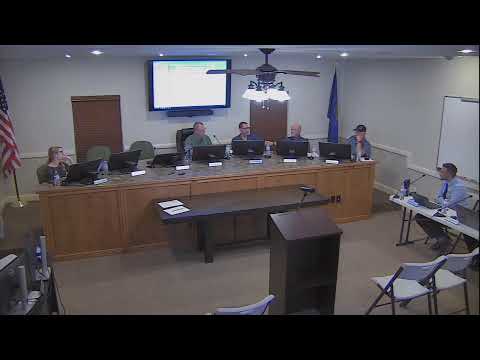
The Toquerville City Council adopted a tentative FY2025–26 budget and set a public hearing for May 21 after staff presented fund balances, capital projects and several changes from the administrative budget.
The Toquerville City Council voted to adopt a tentative FY2025–26 budget and set a public hearing on the tentative budget for May 21. The budget discussion that preceded the vote covered fund balances, capital projects and program priorities; councilmembers asked questions about funding assumptions, service impacts and contract and vehicle costs.
City staff (presented by Ben, who led the budget presentation) summarized current fund balances and reserves: a restricted Recreation/Arts/Parks set-aside of about $180,000 earmarked for West Hill Park; an unrestricted general-fund reserve of about $560,000; capital-projects balances that included a remaining parkway fund of roughly $2.8 million (separate from an additional $6.5 million in potential funding); and various impact-fee reserves (streets ~$170,000; parks ~$190,000; stormwater ~$14,000; water impact fees ~$218,000). The staff presentation noted the water utility had an unrestricted reserve of about $290,000 and that $450,000 reimbursement from the state related to the water tank was expected to bolster that fund.
Staff described five material changes from the administrator’s draft to the tentative budget: (1) refreshing all impact-fee studies (funded from impact-fee proceeds when eligible), (2) adding a SCADA transition and administration cost for the city’s water SCADA system, (3) a $5,000 budget line for fencing/landscaping at the newly acquired town-hall property, (4) omitting a $15,000 FEMA erosion-hazard mapping project from the tentative budget after staff concluded the study would not unlock short-term FEMA funds as originally anticipated, and (5) other small adjustments tied to parks and program staffing.
On SCADA, staff recommended the city assume direct administration and monitoring of its SCADA system (the city owns the equipment but the regional conservancy district had been maintaining it). Staff said the transition would be a one-time approximate $5,000 cost and an ongoing $400-per-month service/administration commitment charged to the water fund; staff framed the change as a service-level decision to obtain more reliable access to administrative controls and reporting.
On parks, West Hill Park remains a staff and council priority. Staff said the tentative budget includes roughly $400,000 to complete West Hill Park, funded from Recreation/Arts/Parks set-asides, impact fees and a $150,000 state grant the city expects to receive. The council discussed potential alternatives if grant revenue or other expected sources do not materialize, including phasing construction or using future parks impact-fee receipts.
Staff also described cemetery perpetual-care funding, reporting the city holds about $65,000 in a perpetual-care investment that produces minimal annual yield (roughly $1,000/year) and is not sufficient to cover ongoing cemetery maintenance without general-fund subsidy; staff recommended evaluating options to reduce general-fund reliance on cemetery maintenance over time.
Councilmembers asked detailed budget questions about cultural/recreation event allocations (e.g., July 4 and holiday events budgeted lower than recent historical high-spending years), legal/litigation budget lines (the tentative budget includes $190,000 for contractual legal services and litigation), and vehicle-lease and fleet costs. Staff reported current vehicle leases total about $89,300 annually under existing multi‑year agreements that extend to 2027, plus about $15,000 in vehicle stipends paid to staff who declined city vehicles, roughly $15–16,000 in annual fuel costs, and about $26,500 in vehicle maintenance across the fleet. Councilmembers discussed options (purchase vs. lease) and noted the council would revisit vehicle and stipend arrangements in the context of employment agreements when appropriate.
Following the presentation and questions, a motion to adopt the tentative budget and set the public hearing for May 21 was moved, seconded and approved by roll call (the transcript records councilmembers' Aye votes and states “motion carries”). The council and staff said the May public hearing will allow public comment before the council adopts a final budget (the final adoption must occur before July 1 under state law).