Get Full Government Meeting Transcripts, Videos, & Alerts Forever!
Get email alerts on the Child Welfare Reform topic
No spam. Unsubscribe anytime.
DFCS outlines corrective‑action progress; proposes community roundtable and school‑based social worker pilot
Summary
DFCS told the committee it has built a CDSS‑supported dashboard, updated policy templates and expanded training as part of its corrective action plan, and it described two community‑facing efforts: a community roundtable to co‑create reforms and a pilot to place county social workers in Franklin‑McKinley schools with a south‑county site to follow.
The Department of Family and Children Services (DFCS) briefed the Children, Seniors and Families Committee on corrective‑action work, quality‑assurance tools and two community engagement pilots intended to strengthen child‑welfare practice.
Interim DFCS leadership said the department organized corrective‑action work into three “pillars”: safeguarding children, key partnerships and workforce development. Staff described a new custom dashboard, developed with the California Department of Social Services (CDSS) technical assistance, to track mandated assessments such as Structured Decision Making (SDM) safety and risk assessments, risk reassessments and reunification assessments.
Wendy Kinnear (interim DFCS director) said the dashboard is being customized with managers and supervisors to support case‑level compliance and supervision, and that DFCS will refine the tool based on staff feedback before sharing it more broadly. The department also reported updating the agency’s operational policy and procedure (OPP) templates to separate state/federal required policy items from county‑specific procedures and said it added staff to accelerate the policy review.
DFCS outlined training and coaching activities under way: “mastering key elements of safety planning,” SDM coaching for supervisors and social workers, and family‑engagement training. Kinnear said the department continues one‑to‑one coaching for supervisors and social workers and has held manager meetings to teach use of the new dashboard.
Committee members pressed for a public summary of the listening sessions DFCS held with frontline staff. DFCS agreed to prepare a top‑themes summary for the committee about what staff identified as problems and opportunities, and to describe where corrective‑action tasks overlap with staff suggestions.
On child‑fatality tracking, DFCS said it is implementing a formal tracking process that stitches together investigative timelines across child welfare, law enforcement and the coroner, and that the department reviews each fatality and near‑fatality to identify system changes. DFCS and county staff said fatality reviews feed both case‑level learning and countywide child‑death review team reports that examine trends (for example, safe‑sleep or substance‑related deaths) and inform cross‑agency prevention strategies.
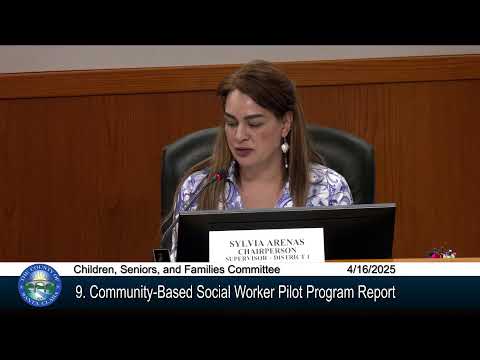
DFCS also reported progress on community engagement and reform pilots. The department is forming a community roundtable (a county‑facilitated, community‑member group) and is proposing a school‑based community social‑worker pilot to co‑locate DFCS workers in schools. DFCS said it conducted initial outreach and selected Franklin‑McKinley School District as the first school partner and will add a south‑county pilot (Gilroy region) for geographic balance. The department plans to recruit a cohort of about 15–20 community roundtable members via email and resource fairs, use a third‑party facilitator and begin pilot meetings this summer.
Supervisors supported the pilots but requested concrete timelines, participant selection criteria and clarity on how the school‑based social workers will coordinate with school staff and protect families’ privacy and trust. DFCS said it would coordinate with labor partners and districts and underscore that the pilot’s intent is to strengthen reporting, referrals and connections to services, not to deter access to school or health care. The committee voted to receive the corrective‑action update and the pilot reports.