Get Full Government Meeting Transcripts, Videos, & Alerts Forever!
Get email alerts on the Early Childhood Health topic
No spam. Unsubscribe anytime.
Santa Clara County health systems expand ‘dyadic’ early‑childhood screenings under CalAIM benefit
Summary
County health system and community partners reported progress expanding universal developmental screening and a dyadic HealthySteps pilot that integrates behavioral‑health specialists into pediatric clinics; presenters said billing and workforce hurdles remain while providers begin submitting Medi‑Cal claims.
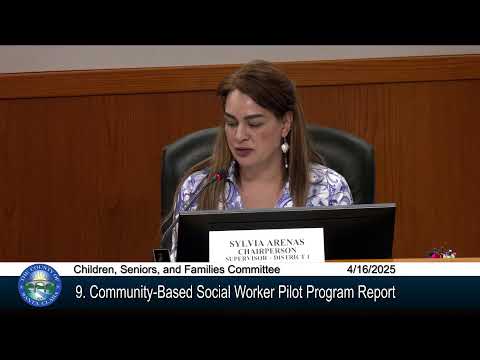
Santa Clara County’s Children, Seniors and Families Committee received an update Thursday on efforts to expand universal developmental screening and a dyadic early‑childhood behavioral‑health model across county and community clinics.
Presenters from Valley Health Care, First 5, UCSF and Bay Area Community Health described a multi‑partner pilot based on the HealthySteps model that embeds child‑development specialists in pediatric primary care to screen and intervene for social‑emotional and behavioral concerns in children ages 0–3.
“Early childhood is a critical time for children,” Serena Sai, director of operations for primary care at Valley Health Care, told the committee. “There are over seven visits during the first year and in total 12 before the child turns 3. That is a critical opportunity for health care settings to play a role.”
Panelists said the pilot began as a county referral in 2020 and builds on statewide CalAIM changes that established a dyadic care benefit under Medi‑Cal. Partners named in the presentation included Valley Health Care clinics, Bay Area Community Health, school‑based clinics, First 5 and three managed‑care plans in the county (Anthem, Santa Clara Family Health Plan and Kaiser). UCSF provided technical assistance and a learning collaborative for participating sites.
Dr. Katherine Margolis of the UCSF team described the implementation supports: quarterly learning collaboratives, monthly site visits and training on fidelity to the HealthySteps model. “Because dyadic services are a very different way of practicing, this is about a child coming to see their pediatric provider but the entire family is served,” Margolis said.
Sites reported measurable increases in screening and service delivery. Presenters gave monthly‑average figures showing developmental screening and parent‑report screening rates rising from baseline after pilot supports were added. The panel said monthly average dyadic behavioral‑health visits for children 0–3 rose from virtually zero at baseline to 49 in year one and 116 in year two across participating clinics.
Panelists also described two principal challenges: workforce shortages for early childhood behavioral clinicians and the state’s initial delay in allowing same‑day claims for federally qualified health centers (FQHCs). UCSF presenters said California recently approved a State Plan Amendment allowing retroactive same‑day Medi‑Cal claims back to March 2023, which permits FQHCs to bill for dyadic services when medical and behavioral services are provided on the same day.
“We are seeing Santa Clara County clinics at the front lines of actually submitting these claims,” Margolis said, noting sites recently began receiving some reimbursement. Presenters also pointed to new state rules allowing associate‑level clinicians to bill under supervision at FQHC rates as an important recruitment lever.
Community clinic pediatrician Aparna Arun, medical director at Bay Area Community Health Park, said the model has served more than 300 families locally and “reduces the stress both for families and the providers while improving early intervention and long‑term health outcomes for children.”
Committee members asked about geographic expansion, billing interactions with Medi‑Cal and how the model connects to school‑age services. Presenters said Valley Health Care plans to expand the pilot from Tully to Sunnyvale and then Gilroy clinics to ensure countywide coverage, and that existing school‑age screening/behavioral systems remain separate but could leverage the model later. Dr. Margolis emphasized the pilot’s preventive intent: “The beauty of doing this screening early is because we actually are trying to not have to assign diagnoses — we’re trying to prevent downstream problems.”
The committee voted to receive the report. Vice Chairperson Young and Chairperson Arenas voted in favor and the motion carried.
The county said First 5 provides project oversight and funding (Prop 10) and two managed‑care plans also contributed funds; the Department of Health Care Services and the Children and Youth Behavioral Health Initiative were cited as statewide funding partners for scale and sustainability.
The presenters asked the committee to note two near‑term milestones: (1) continued technical assistance through the UCSF learning collaborative over the next eight months focused on billing and sustainability; and (2) active recruitment for HealthySteps specialists in Sunnyvale and Gilroy, with workforce shortages cited as the biggest near‑term constraint.
The presentation included a recommended next step that managers and the committee track billing and claims reimbursement trends and monitor fidelity measures as sites aim to reach full HealthySteps certification and sustainable Medi‑Cal billing.