Get Full Government Meeting Transcripts, Videos, & Alerts Forever!
Get email alerts on the School Budget topic
No spam. Unsubscribe anytime.
Salem School Committee reviews proposed FY26 budget; specialists and special-education costs under scrutiny
Summary
At a special meeting April 15, 2025, the Salem School Committee discussed proposed FY26 budget adjustments, including cuts to specialist positions, plans to add library digital media staff, escalating out-of-district special-education tuition, and possible state funding changes that could affect district costs.
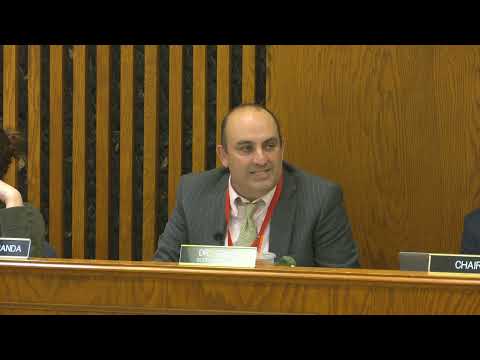
At a special meeting of the Salem School Committee on April 15, 2025, administrators presented follow-up details on the proposed fiscal 2026 budget and answered committee questions about specialist staffing, library services, and rising special-education tuition costs. The session followed a public hearing held the night before and focused on clarifications and next steps rather than a final vote.
Superintendent Dr. Zreich opened the discussion by thanking the public and saying the presentation was intended to clarify points raised at the prior hearing. "We will have a total in this budget of 5 family engagement facilitators," Dr. Zreich said, describing how those positions would be allocated (one each at Salem High School and Collins Middle School, and three split among six elementary schools).
Nut graf: The committee’s most immediate budget concerns were twofold: a package of proposed changes to specialist positions at the preK–5 level (1.0 net specialist FTE reduction after some additions) and a substantial projected increase in out-of-district special-education tuition that district staff said could add roughly $1.4 million to next year’s costs unless state reimbursements change. Administrators said several funding uncertainties — including a pending legislative supplemental budget and an ongoing state early-education funding discussion — could materially alter the numbers before a final FY26 budget is adopted.
District presentation and key figures
- Specialist staffing: Kate Carboni, Salem Public Schools staff, summarized the net specialist change in the proposal. The budget as presented would cut one full-time PE teacher, 0.5 music teacher, 0.5 art teacher and civics (noted as a position that exists only at one elementary school), for cuts totaling 3.0 FTE in the specialist category while adding two library digital media specialists. Carboni said that combination results in a net reduction of one specialist FTE at the preK–5 level and that the administration will work with principals and union partners on scheduling to preserve equitable access to art, music, PE and library services.
- Family engagement and substitutes: Dr. Zreich said the five family engagement facilitator positions in the proposed budget would be assigned by enrollment and need, noting the facilitators "would need to work in the Parent Information Center as they do now." He also said the district is seeking a larger substitute pool and additional guidance for elementary schools on coverage and lunch/recess supervision.
- Libraries and scheduling: Carboni said the district plans to expand library access and integrate library time into regular schedules. She noted Salem High librarians have time during the day to support circulation, and that library digital media classes at Collins Middle School and the elementary schools include periods for browsing and checking out books. The administration said it would pilot expanded after-school library access through existing after-school programs where feasible.
Special-education costs and state funding variables
Elizabeth, Salem Public Schools staff, explained that out-of-district tuition increases were a major driver of the district’s projected budget increase. "The tuitions for out of district placements are set by the Massachusetts operational services division," she said, and presented average tuition estimates: about $171,000 per year for private placements (an increase of roughly $9,000) and about $94,000 per year for collaborative placements (about $20,000 more than the current year). Elizabeth said roughly $800,000 of the year-over-year special-education increase is attributable to higher tuition rates, and about $600,000 is attributable to timing and the duration of particular placements.
Committee members and state funding: Manny Cruz, state representative and school committee member, told the committee he expected the Legislature’s supplemental FY25 budget discussion could affect circuit-breaker reimbursement levels and other K–12 appropriations. Cruz said there is "an additional hundred and $90,000,000 that was allocated for the FY '25 budget" aimed at moving circuit breaker reimbursement closer to the Student Opportunity Act target, though he cautioned legislative work was ongoing and not final.
Other items and corrections
- Playground RFP: Administrators confirmed a request for proposals had been posted for a Bates Early Childhood playground renovation, with an overall FY25 capital budget of $500,000 covering construction, surfacing and equipment. Bids had been received but no contract award had been announced.
- Budget book correction: Staff reported a corrected online budget book after identifying mismatched Bates figures between two pages; the administration said the online version has been updated to fix the error and clarified the treatment of one science coach position that had been inconsistently reported as school-based versus districtwide.
Equity, inclusion and committee concerns
Members pressed administrators on equity across elementary schools. Member Cornell urged closer review of reading and math support allocations, saying Carleton appeared to have more reading support than other elementary schools despite enrollment differences. Several members — including Member Manning and Member Miranda — argued that art, PE and other "specials" play a significant role for students who are harder to reach and urged the administration to prioritize preserving those positions if possible.
Members also discussed inclusion and therapeutic programs. Staff said the district has expanded some in-district sub-separate classrooms in recent years to reduce out-of-district placements; they also described continued work on inclusion models and on collaborating with neighboring districts to share programs and placements.
Grants, revolving funds and revenue options
Administrators provided a preliminary accounting of grant-funded staff: about 28.6 FTE on federal funds, roughly 5.5 FTE on state funds and about 15 FTE on local/private grants, and they said the district has used school choice and other revolving revenue to support early-childhood and related staffing. The administration said it will continue to review grant flexibilities and private funder opportunities to identify mitigations for budget reductions.
Requested follow-ups and next steps
Committee members requested additional, specific information by email, including: more detailed equity analyses of specialist allocations (by school), whether particular specialists work with preK/ECC students, a breakdown of grant flexibilities, and special-education profile and placement trend data. The administration asked staff to provide the requested materials to committee members and said the committee would have time for additional deliberation before finalizing the FY26 budget.
Votes at a glance
- Motion to approve a Salem High School field trip: Motion made by Member Cornell; seconded by Member Miranda; unanimous approval recorded. (Motion taken at start of the meeting.)
- Motion to adjourn: Motion made by Member Cruz; seconded by Member Miranda; approved.
No final vote on the FY26 budget was taken at this meeting. Members and staff agreed to exchange follow-up information and resume deliberations at a future committee meeting so that any newly available state reimbursements or grant adjustments can be reflected before a final budget decision.
Ending: The meeting produced clarifications and a list of follow-up requests rather than budget enactments; administrators emphasized remaining uncertainties tied to pending state funding decisions and said they will return with more detailed numbers and scheduling proposals.