Get Full Government Meeting Transcripts, Videos, & Alerts Forever!
Get email alerts on the Zoning topic
No spam. Unsubscribe anytime.
Councilors debate "Airbnb-for-pools" listings; planning staff outlines two policy paths
Summary
City planning staff told the UED committee that online platforms listing private residential pools for hourly rental conflict with Tulsa’s zoning code; councilors discussed options including a citywide text amendment or rezoning affected properties to commercial, and raised concerns about noise, parking, liability and enforcement.
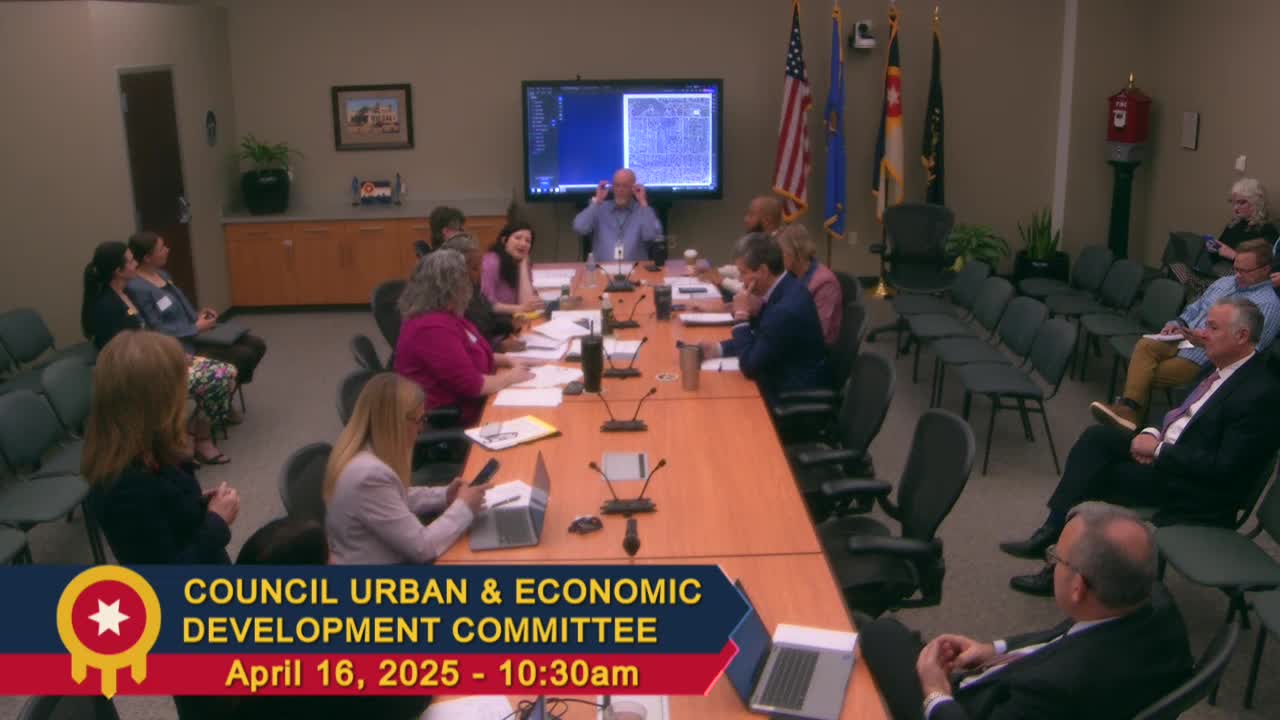
City planning staff briefed the UED committee on a growing online market that lists private residential pools for hourly rental — described in the meeting as an "Airbnb for pools." Staff said the Tulsa zoning code currently treats the activity as a commercial use not allowed in residential districts and that existing home-occupation categories (Type 1 and Type 2) do not accommodate the listings because they limit customers to three at a time and require activities to occur within a building.
Susan from the Planning Office showed examples of listings within the city and said she counted about 14 active listings on the platform at the time of her review; the sample listing allowed pets and "up to 40 guests" for $35 an hour. Staff outlined two policy paths to permit the use: (1) a zoning code text amendment to allow such uses in residential districts (which would apply citywide) or (2) property-by-property rezoning to a commercial district. Susan noted the text-amendment path would trigger a citywide process (staff recommendation, APC hearing, council hearings) and said applicants should expect about 120 days for the process if pursued.
Councilors raised practical concerns — noise, parking congestion ("If you have 40 guests, you may have 20 cars"), restroom access, liability and whether platform operators collect sales tax. Several members said they were reluctant to initiate a citywide text amendment immediately. Councilor Lincoln said many listings did not specify bathrooms or owner presence and described potential recurring neighborhood disruption. Councilor Ballas and others suggested looking at other jurisdictions for models and considering guardrails such as guest caps, decibel monitoring (similar to short-term-rental requirements), or a permitting/licensing regime tied to enforcement resources. Councilor Lakin said he was not interested in initiating a regulatory change at this time and would prefer to route complaints to code enforcement; planning staff confirmed enforcement is complaint-driven.
Staff and councilors noted overlaps with short-term rental rules (noise limits and licensing) and raised concerns about unintended consequences if the code were broadly altered. Several members suggested monitoring the market — staff said the current count of listings was small and many appear seasonal — and returning with research on other municipalities’ approaches before initiating formal code amendments. There was no formal motion or vote recorded in the committee transcript; staff said the two regulatory paths are the primary options available under current code.