Get Full Government Meeting Transcripts, Videos, & Alerts Forever!
Get email alerts on the Fentanyl Overdose Response topic
No spam. Unsubscribe anytime.
Berrien County sheriff tells state committee fentanyl accounts for 74% of local seizures as overdoses climb
Summary
Sheriff Chuck Hite of Berrien County told the Michigan House Committee on Homeland Security and Foreign Influence on (date not specified) that fentanyl now represents roughly 74% of drug seizures in his county and that overdose deaths have climbed sharply since about 2020.
Sheriff Chuck Hite of Berrien County told the Michigan House Committee on Homeland Security and Foreign Influence on (date not specified) that fentanyl now represents roughly 74% of drug seizures in his county and that overdose deaths have climbed sharply since about 2020.
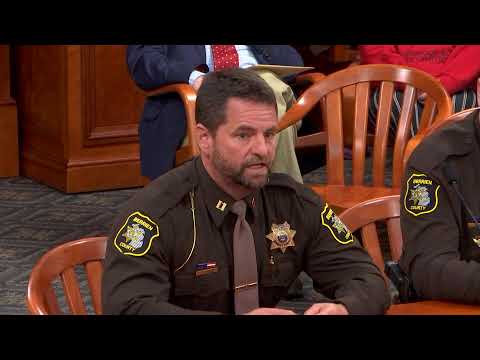
“Fentanyl is 74 percent, of that,” Sheriff Chuck Hite said, summarizing laboratory and seizure data his office provided to the committee. He and Captain Sean Yek, who leads the enforcement division in the sheriff’s office, said local drug labs and undercover work show fentanyl increasingly appears alone or mixed into other drugs, including heroin and methamphetamine.
The testimony outlined two linked developments that officials said are driving overdose deaths: the growth in the volume of fentanyl in the supply chain and the appearance of other substances — most notably xylazine — that do not respond to naloxone (Narcan). “A new cutting agent that we are finding in a lot of these is Xylazine,” Captain Sean Yek said. He added, “Narcan does not work on Xylazine.”
Why it matters: Committee members pressed officials on how fentanyl is entering Michigan, how local law enforcement is responding, and what state legislators might do about sentencing, funding, and public awareness. Committee members repeatedly framed the spike in overdose deaths as a public-safety crisis and sought practical suggestions for better detection, prevention, and post-incarceration treatment.
Key facts from the presentation and questions - Seizures and lab data: Hite and Yek said local drug-lab submissions show a large rise in fentanyl submissions beginning around 2020 and continuing through 2024 and 2025. They reported that fentanyl comprised about 74% of the county’s top seizures in a recent breakdown shown to the committee. - Overdose deaths: The sheriff’s presentation showed overdose deaths in Berrien County rising notably after 2020, with the county’s highest recent annual total exceeding 60 deaths (the precise year was not specified on the record). Hite said the county has seen similar levels so far in 2025. - Mixed and disguised products: Presenters displayed images of seized fentanyl in many forms, including pills made to look like prescription Percocet (often labeled “M 30”) and kilograms packaged with cartel markings. Hite said large shipments sometimes bear identifying stamps used by traffickers. - Xylazine: Captain Yek described xylazine as a growing cutting agent found mixed with fentanyl; he warned that naloxone (Narcan) reverses opioid effects but not xylazine. - Routes and shipment methods: The presenters told the committee that a large share of trafficking now moves by parcel through the U.S. Postal Service and commercial carriers (UPS, FedEx), with mail hubs screening packages. “A lot of the drug trafficking is done through the U.S. Postal Service, UPS, FedEx,” Hite said. They also said interstate highways and border-state shipments are used. - Enforcement structure and funding: Hite described the county’s participation in the Southwest Enforcement Team (SWEAT), a regional task force run with the Michigan State Police and paid in Berrien County in part by a local public-safety millage. He said SWEAT includes detectives and a lieutenant assigned to regional drug work. - Treatment and reentry: Officials emphasized medication-assisted treatment (MAT) options in jails, including Suboxone and methadone, and the need for discharge planning to reduce overdose risk after release. Hite cited an increased overdose risk — “about 33 percent” — when people return to pre-incarceration levels of use, and he urged continued funding for MAT and reentry support.
Questions from committee members and follow-ups - Committee members asked about parcel interdiction, canine detection, and how shipments are traced to out-of-state sources. Hite noted federal partnership on large investigations and said parcel hubs in Grand Rapids use dogs and software to screen mail. - Members asked about pill presses and the ability to detect and interdict disguised pills. Presenters said pill presses are available via online markets and that investigators have seized presses in recent local cases. - On sentencing and deterrence, presenters urged “stiffer penalties” for large-volume distributors and those whose sales cause death; presenters said sentencing policy is ultimately a legislative and judicial matter.
What the testimony did not include or make specific - No formal legislative proposals were voted on or introduced during the hearing. The meeting record does not specify a date for the data slides shown to the committee. Exact dollar amounts for local or state funding requests were not presented in the transcript.
Local context and next steps The sheriff’s office asked the committee for continued support for enforcement funding, better tools for roadside or field testing of impairment, and stronger coordination with federal partners for cases that cross state lines. Multiple lawmakers also urged expanded public-awareness campaigns and sustained investment in treatment and reentry programs to reduce repeat overdose risk.
The committee did not take formal action on the testimony. The presentation slides and materials were posted to the committee website, according to members.