Get Full Government Meeting Transcripts, Videos, & Alerts Forever!
Get email alerts on the Parking Garages topic
No spam. Unsubscribe anytime.
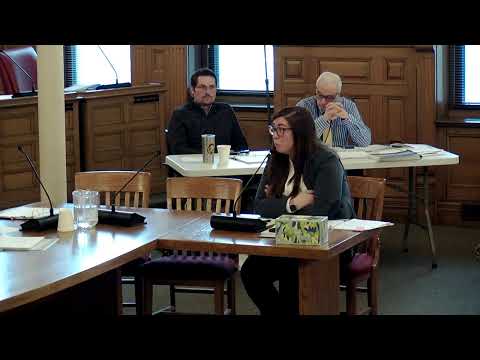
Syracuse council discusses parking garages, proposed rate rise and enforcement gaps
Summary
City officials reviewed operation and condition of four city-operated downtown garages, discussed a proposed monthly rate increase from $90 to $100, an upcoming RFP for a garage manager, a $1.5 million annual contract with LAZ Parking, and enforcement and signage challenges tied to on-street meters and parking checkers.
Syracuse City leaders spent a sizeable portion of a council meeting examining the condition, operations and long-term strategy for the city’s downtown parking system, including four city-operated garages, a proposed monthly rate increase, and questions about enforcement and maintenance.
City staff described the current garage portfolio and responsibilities, noting the Fayette Garage, the Washington Street Garage, the Madison Irving (Madison) Garage and the Center Armory Garage (the latter is technically owned by SURA but operated by the city). The Harrison Street Garage, while owned by the city, is operated by the Marriott and its management partner. Staff said day-to-day maintenance of the Harrison Street Garage is the Marriott’s responsibility, while capital improvements can involve the city under lease terms.
The discussion focused on several immediate items: a proposed increase in monthly parking garage rates from $90 to $100; an annual management contract with LAZ Parking that staff said runs about $1.5 million (the shuttle service was described as a separate cost); reissuing a request for proposals for garage management; recent security and sanitary closures; and enforcement of on-street parking rules.
Why it matters: City garages are both a service to downtown employees and visitors and a potential revenue and development lever as construction and redevelopment reshape downtown supply. Councilors warned that a piecemeal approach leaves neighborhoods and business corridors vulnerable to illegal parking and degraded quality of life.
City staff said cameras and revenue-control equipment have been installed across the garages and that many of the operational upgrades adopted recently have helped keep garages open more often. “One of the parts of the budget this year is a proposed increase in parking garage rates. Right now it’s at dollars 90 a month. We are proposing a hundred dollars a month,” staff said. Staff said they will provide follow-up materials, including a market-rate survey and engineering reports, to council members.
Market positioning and rates
Officials said market comparisons show a range of monthly rates at privately run downtown garages; staff cited the Treasury Garage at about $150 a month and said some other garages appear priced below Syracuse’s current $90 rate. Staff offered to share a parking-garage rate survey and financial statements from LAZ Parking so council members can see how the city’s pricing fits the local market.
Management, contracts and RFP
Councilors were told that the administration plans to reissue an RFP for a garage manager and that staff were “putting final touches” on it; staff said they had notified the incumbent operator, LAZ Parking, about the upcoming RFP. Staff said an extension of the agreement with LAZ had recently been approved by the council; details of that extension (length and price implication) were discussed by councilors and staff during the meeting and councilors asked for clarification of costs tied to a reported six-month extension.
Maintenance, security and a closed garage
Staff described one downtown garage (identified in the discussion as the Hotel Syracuse garage) that remains closed for reasons unrelated to structural safety. Staff said the structure is sound but that repeated complaints about security and sanitary conditions — including human waste and trash — led to the closure after property managers failed to meet conditions to improve safety. Staff said reopening would require different management or improvements to security, camera monitoring and sanitation.
Cameras, revenue-control equipment and capital needs
Staff said the security cameras and revenue-control equipment have been installed citywide and that footage is believed to be stored in the cloud; staff offered to confirm technical details. They also said structural repairs have been substantial this year (Center Armory work described as wrapping up and Washington Street repairs planned) and that capital investments are handled through the capital budget, not the operating budget.
Shuttle service and ridership
LAZ operates a shuttle that serves employees traveling between garages during shift changes, staff said. Councilors were told the shuttle’s ridership was roughly 15 regular riders; staff said a simple back-of-envelope calculation made during the meeting produced a cost of roughly $13 per shuttle ride under current usage patterns, and staff suggested that alternatives such as ride-hail subsidies could be cheaper in some cases.
Enforcement, meters and signage
Councilors pressed staff on enforcement gaps for on-street parking. Several council members said parking checkers and enforcement are concentrated during weekday daytime hours and are not covering nights and weekends when illegal parking and double-parking are common. Staff said the Syracuse Police Department supervises parking checkers and that conversations were underway about filling positions, adding supervisory support and better scheduling. Sergeant Romaine (Syracuse Police Department) was identified in the discussion as currently responsible for parking-checker supervision.
Councilors and staff also discussed broken meters, older-style handicap meters, and weak wayfinding and signage that leave drivers unaware which garages are open to the public versus reserved for monthly parkers or building tenants. Staff said they would share a parking-garage rate survey, a breakdown of capital and operating expenses by garage, and engineering repair timelines on request.
Big-picture strategy
Several council members said the city needs a coordinated parking strategy rather than separate responses for meters, garages and enforcement. Staff acknowledged a previous working group or task force met once and did not continue, and recommended reconvening internal partners to prioritize actions — for example, whether to focus on on-street pricing, dynamic meter pricing, shuttle alternatives, selling or investing in particular garages, or increasing enforcement capacity.
Noted constraints and next steps
Staff repeatedly cautioned that some operational choices are constrained by job requirements: inspectors, some code-enforcement personnel, police and fire staff require ready access to vehicles, which complicates efforts to reassign garage spots for revenue. Staff committed to providing the council with additional documentation: LAZ financials, engineering timelines for planned structural repairs, a detailed capital/operating expense comparison by garage, the RFP when issued and a shuttle-usage report.
Votes at the meeting
The formal end of the meeting was recorded as a motion to adjourn; a motion and a second were recorded and the meeting was adjourned.
Ending
Councilors and staff left the discussion with a series of follow-ups: staff will provide the RFP and supporting materials, confirm the LAZ extension terms and costs, share garage-level capital and operating expense breakdowns and return with options to improve enforcement and signage. Councilors urged urgency in reconvening a parking strategy group to produce prioritized, coordinated recommendations rather than piecemeal fixes.