Get Full Government Meeting Transcripts, Videos, & Alerts Forever!
Get email alerts on the Housing topic
No spam. Unsubscribe anytime.
Lawmakers hear MSHDA report on $2.1 billion in recent housing investments; experts urge zoning and permitting reforms
Summary
The House Appropriations Subcommittee on Labor and Economic Opportunity heard April testimony from Amy Hovey, executive director of the Michigan State Housing Development Authority, who described roughly $2.1 billion in recent housing investments and new programs to expand homeownership and rental assistance.
The House Appropriations Subcommittee on Labor and Economic Opportunity heard April testimony from Amy Hovey, executive director of the Michigan State Housing Development Authority, who described recent state and federal spending and new programs intended to increase housing production and homeownership.
Hovey told the committee MSHDA put out about $2,100,000,000 into housing in the last fiscal year and that the agency is tracking permit activity that it counts toward the governor’s five-year production goal. She said the governor set a goal of producing 15,000 housing units over five years; based on permit data MSHDA uses, "we are about halfway through that five-year period" and the agency is showing roughly 67,000 permits pulled to date (MSHDA counts an estimated 95% of permits as resulting in development, Hovey said). She said recent state appropriations, combined with federal and private financing, have allowed MSHDA to leverage substantially more investment.
The authority reported a suite of programs and outcomes. Hovey said MSHDA supported more than 5,000 families into homeownership last year with about $772,000,000 in program activity; she described a rate-relief mortgage product at about 5.5 percent and a $10,000 down-payment assistance product that MSHDA offers. Hovey also outlined a new first-generation homebuyer program — a $25,000 down-payment assistance product piloted with $8,000,000 in state funds — and said the pilot has been spending roughly $1,000,000 per week since launch. Hovey described MSHDA as the largest public housing authority in the country, administering more than 30,000 Housing Choice Vouchers and prioritizing households at risk of homelessness.
On multifamily development, Hovey reviewed the Low-Income Housing Tax Credit program (LIHTC) and said a state appropriation of $150,000,000 two years ago helped fill financing gaps in projects that use the federal 4% LIHTC allocation. She also described the Housing Community Development Fund (approximately $50,000,000 per year), the housing tax-increment financing (TIF) product, and a new "My Neighborhood" consolidated program that bundles nine MSHDA programs into a single point of entry tied to regional housing partnership plans. Hovey said recently appropriated state dollars helped create an Employer Assisted Housing Fund with $10,000,000 in initial state funding; she said the program has generated matching private commitments and that the governor’s budget proposes an additional $25,000,000 for it.
After Hovey’s overview, the committee took questions about the drivers of construction cost. Hovey cited multiple factors: permitting and zoning burdens, higher costs for materials and potential tariffs, and a shortage of construction labor. She said some federal compliance and reporting requirements add cost, and that MSHDA is working with federal partners and the Michigan delegation to identify opportunities to “right-size” federal reporting requirements for smaller projects.
Jarrett Skorup, vice president of marketing and communications at the Mackinac Center for Public Policy, spoke next and urged lawmakers to prioritize supply-side reforms. Skorup argued that permitting delays, strict local zoning (particularly in Metro Detroit), minimum-home-size and parking mandates, and rising regulatory requirements account for a substantial share of construction cost increases. He recommended a mix of legislative steps: timetables to limit review periods, preapproved plan sets to speed permitting (an approach used in South Bend, Indiana), limits on local rules that effectively bar multifamily housing, and statutory requirements that major code changes be accompanied by a cost-benefit analysis.
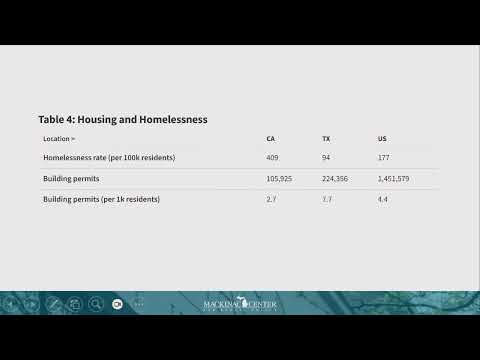
Skorup contrasted Michigan’s situation with states that have more permissive development rules, saying Texas markets produce housing more quickly and California’s strict regulatory regime has raised costs. He cited Minneapolis and recent Montana legislation as examples where loosening single-family zoning or speeding permitting increased supply. Both witnesses emphasized that multiple levers—funding, code and zoning reform, permitting efficiency, and workforce development—would be required to increase housing supply and reduce costs.
The committee approved the minutes from its March 26 meeting by unanimous consent at the outset of the session; no other formal votes were taken on housing programs or legislation during this hearing. Members asked MSHDA to provide more district-level data and said they expect further bills and budget deliberations addressing zoning flexibility, building-code review and additional state funding.
MSHDA materials, including an annual report and quarterly regional production reports, are posted on the agency website, Hovey said. She also said MSHDA plans to begin updating the statewide housing plan and encouraged committee members to request district-level data or site visits.
Votes at a glance: The subcommittee approved March 26 minutes by unanimous consent; no roll-call vote was taken and no numerical tally was provided in the record.