Get Full Government Meeting Transcripts, Videos, & Alerts Forever!
Get email alerts on the Flooding Emergency topic
No spam. Unsubscribe anytime.
Bowling Green ratifies local emergency after April floods; residents urge faster fixes and aid
Summary
The Bowling Green Board of Commissioners on April 15 ratified a local state of emergency after heavy rains and multi-day flooding damaged homes and infrastructure across parts of the city and county.
The Bowling Green Board of Commissioners on April 15 ratified a local state of emergency after heavy rains and multi-day flooding damaged homes and infrastructure across parts of the city and county.
The action formalizes the city's earlier declaration and clears the way for state and federal assistance if the president issues a disaster declaration. City staff said FEMA teams were in Bowling Green to verify damage assessments and urged affected residents to register at the Buchanan Park site being used for intake and verification.
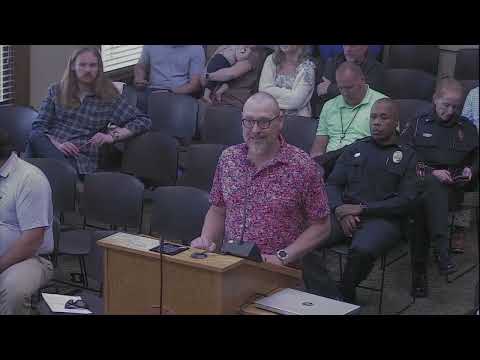
The emergency matter followed extended public comment from residents of Stonecrest, Cave Mill Road and neighboring subdivisions who described repeated or historic flooding at finished-floor elevations, ruined personal property and displacement. "My garage was about 5 foot of water in it," said Marshall Beech, who lives on Cave Mill Road and said the flood left hardwood floors buckled and destroyed business equipment. "I don't know what I'm gonna do about my house right now."
Several Stonecrest residents told commissioners they believe a nearby development removed an important retention area and routed water toward their neighborhood. "We tried to say this isn't a good idea," said Joel Mallett, a Stonecrest resident of 29 years. "You're building these complexes at the expense of us." Residents described ongoing, sometimes annual basement or crawl-space flooding and urged the city to require stronger protections for future developments.
City staff and officials acknowledged the severity of the event and that this storm behaved differently than prior storms. City staff said the incident was driven in part by groundwater and karst conditions: prolonged rainfall had saturated underground cave systems that normally accept stormwater, and runoff manifested later as surface flooding in basins and yards. City staff said those phenomena can cause areas that don't usually flood to see standing water when subterranean conduits are full.
Officials urged residents who have not yet registered with FEMA or local intake to do so. The city said it has submitted property- and public-infrastructure damage estimates to state and federal agencies, and that those figures were part of a larger regional damage compilation; staff said the city had recorded millions in individual property assessments and substantial public costs and expected the federal review to continue.
Commissioners said they would use lessons from the event to review stormwater rules, evaluate whether existing development standards and retention requirements are adequate, and prioritize neighborhood-level retrofit options. City staff cautioned there is no single, low-cost fix that eliminates all risk: some neighborhoods could require large infrastructure investments to materially reduce repeated flood risk.
For residents seeking immediate help, the city advised: register with FEMA at the Buchanan Park intake site (hours and staffing were announced by city public information staff), contact local nonprofit partners that are coordinating donations and short-term shelter, and keep documentation of damages for insurance and federal applications. City staff said they are compiling neighborhood-level damage reports and will return to the commission with recommended funding or engineering measures where feasible.
Minutes and city orders from the meeting show the commission formally ratified the local declaration of emergency and discussed operations and next steps. No specific mitigation projects or new mandatory assessments were adopted at the April 15 meeting; commissioners said staff will present options and estimated costs in follow-up briefings.
Residents with storm damage who have not registered with local intake or FEMA were directed to the city's information channels and local relief partners for assistance.