Get Full Government Meeting Transcripts, Videos, & Alerts Forever!
Get email alerts on the Labor And Compensation topic
No spam. Unsubscribe anytime.
Board approves negotiated agreements that boost starting pay, staff wages; district expects a multiyear deficit
Summary
The Rapid City Area School District board approved negotiated agreements that raise starting wages and increase pay for current employees. District staff said about $4 million in additional compensation will be paid next year and that the general fund will likely run a roughly $3 million deficit as a result.
The Rapid City Area School District Board of Education on Thursday approved a package of negotiated agreements that raise starting wages and increase pay for current employees, board staff said.
The agreements include differentiated allocations by employee group: classified staff and administrative/technical staff received a baseline 3% increase, generally funded teachers saw placement-grid increases tied to the state aid formula while special education–funded teachers received a flat $5,000 increase, and special education paraeducators received larger increases than general-education paras. The district also raised bus-driver starting wages to roughly $20 and $20.55 per hour for assigned and unassigned drivers, respectively.
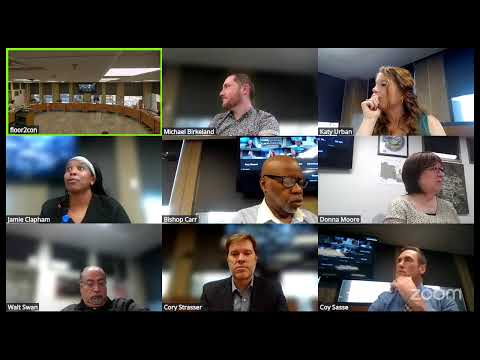
Why it matters: District negotiators and board members framed the package as a targeted effort to recruit and retain staff in a tight labor market. Quay Sasse, a district staff member who led the negotiations presentation to the board, said, “Everybody received a raise,” and added that “about $4,000,000, will be now in the pockets of our current employees as we move into next year.” He also told the board that “early estimates are this would land somewhere in the $3,000,000 range in terms of the deficit.”
What the agreements do: Sasse told the board that allotments going into negotiations were differentiated because the general fund and the special education fund are in “literal polar opposite positions.” He described the teacher-side approach as a mix of percentage and flat-dollar adjustments: generally funded placement grids rose by 1.25% while special-education-funded teacher wages were increased by a flat $5,000. Paraeducators funded through special education received a 9% allocation; generally funded paras received 3%.
Sasse said the district increased signing bonuses for special-education and other hard-to-fill positions, adjusted extracurricular stipends and placement grids, and addressed pay compressions for intra-group transfers. He described the negotiating approach as “interest based bargaining,” emphasizing transparent “allotments” so all parties knew the total resources available before detailed discussions.
Board discussion and budget impact: Board members repeatedly emphasized recruitment and retention as top priorities. Acting Superintendent Dr. Strasser said the board has chosen to “strategically and responsibly enter a deficit to continue to meaningfully increase compensation.” The district’s finance presentation projected that, given the package and other estimated cost pressures (including insurance), average teacher compensation could rise roughly into the low $80,000s in the coming fiscal year depending on final calculations.
Votes at a glance: The board approved a set of proposed agreements and related items during the meeting. A roll-call vote on teacher contracts linked to the ECHO item recorded five yes votes and one abstention (names of five yes votes were recorded; the transcript recorded the overall tally but did not specify the member who abstained). Other routine approvals (policy/procedures/exhibits and the consent agenda) passed by voice vote.
What the board will do next: District staff and board members said they will continue budget work over the next two months as preliminary and final budgets are prepared, discussing multi-year projections and strategies to manage the estimated deficit. Sasse said the district has other funds in healthy condition and that the board has agreed compensation is a top priority despite the budget stress.
Ending: Board members marked the negotiations cycle as labor-intensive and thanked staff and union representatives for collaborative work. The board’s finance committee and staff will bring more detailed budget scenarios to forthcoming meetings as the district finalizes insurance rates and other inputs.