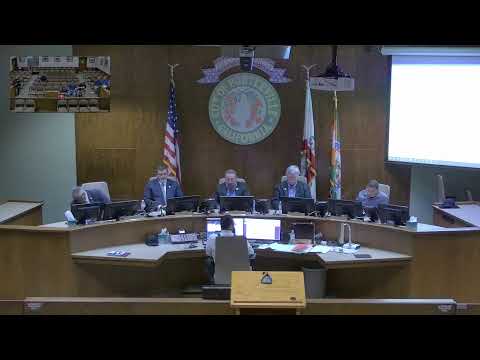
Council directs staff to draft updated rules for cargo containers after building‑code review
Loading...
Summary
Council discussed port‑of‑entry rules for shipping containers used as storage or repurposed structures and directed staff to draft ordinance changes that would allow regulated backyard storage containers, consider grandfathering pre‑2014 units, require base/leveling and visibility screening or painting, and return with formal language.
Porterville City Council reviewed local policy and state building code guidance on intermodal shipping containers and directed staff to prepare an updated regulatory framework for council consideration.
Director Javier Sanchez summarized that California’s building code added explicit language on intermodal shipping containers in the 2022 code (Section 3115) to set structural and safety verification standards when containers are repurposed for habitable or heavily modified uses. Sanchez told council that simplified storage‑only placement is possible but still requires basic site controls such as level pads, setback compliance and consideration of fire and access for emergency services.
Council members discussed multiple policy goals: (1) allow lawful use of containers on private property for storage where appropriate, (2) avoid unsafe placement that hinders emergency access, (3) avoid front‑yard and driveway visibility that undermines neighborhood character, and (4) consider whether units already on site (grandfathered) should retain legal nonconforming status. The council instructed staff to draft ordinance language that would: allow storage containers with requirements (minimum base/level pad, setbacks), require screening or painting if the container is visible from the public right‑of‑way, and evaluate grandfathering existing pre‑2014 containers as legal nonconforming structures. Council also asked that staff return with recommended maximums, lot‑coverage or other tools as appropriate and report back with draft code language.
Sanchez said more heavily modified containers intended as living or commercial space will be required to meet the state building code’s structural verification and design requirements and will trigger plan‑check and engineering review.