
Gaylord board approves three-year extension of K–6 i‑Ready math after lengthy debate
Get AI-powered insights, summaries, and transcripts
Subscribe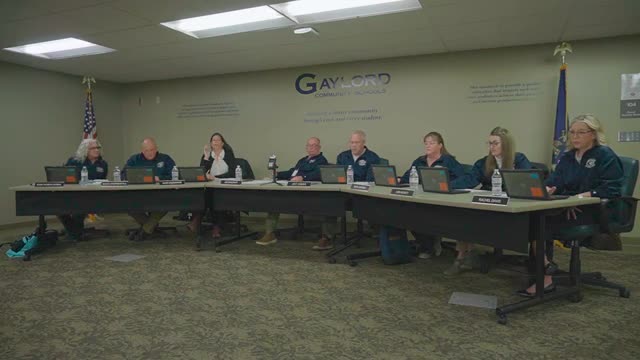
Summary
After a two-hour discussion about curriculum content, fidelity and test performance, the Gaylord Community Schools Board of Education voted 7–0 to approve a three‑year extension of the K–6 I‑Ready (Curriculum Associates) math subscription and materials, with administrators promising continued data review and professional development.
The Gaylord Community Schools Board of Education approved a three‑year extension of the district’s K–6 I‑Ready math subscription and materials by a 7–0 vote, after a prolonged discussion about student proficiency, curriculum content and implementation timelines.
The board’s final motion, made by board member Rachel and seconded by board member Sarah, directed administration to proceed with the three‑year contract as presented. The vote came after debate on whether to adopt a one‑, three‑ or five‑year purchase; the three‑year option was offered as a compromise between potential savings for a longer contract and concerns from some board members about academic outcomes.
Why it mattered: Board members pressed administrators on why the district should continue the I‑Ready program after six years of use, citing third‑grade M‑STEP proficiency that dropped from 43 percent (2018) to 35 percent (2024). Opponents of a long contract said they worried the instructional materials included lengthy non‑math passages and suggested classroom time could be diverted from core math instruction. Supporters noted statewide and local data showing long‑term benefits and stressed teacher buy‑in and training as key to results.
District response and process: District staff described a multi‑year review and adoption process. A district administrator said the math department, building staff and department chairs overwhelmingly recommended continuing I‑Ready after reviewing the updated version; staff and administrators ran the curriculum through district improvement and finance reviews before presenting it to the board. The district said the new version contains only minimal changes from the prior edition and that Curriculum Associates provides ongoing web‑based updates and professional development.
Costs and contract terms: Administration presented three price options during the discussion. Per figures presented to the board during the meeting, the one‑year option was the most expensive on a per‑year basis, the three‑year option cost about $76,000 per year, and the five‑year option averaged roughly $71,000 per year (the finance director reported approximately $100,000 in savings for the five‑year option compared with a series of one‑year contracts). Board members chose the three‑year term to retain flexibility while gaining some savings over annual renewal.
Concerns raised: Board member Katie (identified in the transcript as a member of the board) objected to elements of the teacher guide that she said asked teachers to lead identity‑focused classroom discussions in support passages accompanying math lessons; she said those supporting passages risked taking time away from math instruction and cited low third‑grade proficiency as a reason to reconsider the product. A district administrator and the math department lead responded that the program is aligned to Michigan standards, that the curricular materials are resources rather than prescriptive scripts, and that pacing guides and department oversight are used to maintain fidelity to grade‑level standards. The district also said supports for English‑learner students (for example, noting cognates) are optional tools embedded for classrooms with non‑English speakers.
Implementation and oversight: District administrators said they will continue annual monitoring of student outcomes using local formative assessments and state M‑STEP results, and will maintain department meetings, pacing guides and professional development to support fidelity of implementation. The administration also told the board it is prepared to renegotiate or revisit the contract if outcomes do not improve.
Quote: “We’re constantly looking at that,” a district administrator said when asked whether the district can pivot if results do not improve under a longer contract. “We’re going to get right back to work on it.”
What’s next: With the three‑year contract approved, the district will proceed with the subscription and associated materials for K–6 math and continue annual data reviews and professional development for teachers. The board directed administration to return data in annual reports so trustees can assess efficacy during the contract period.
Ending: The board’s decision followed nearly two hours of discussion during which trustees debated instructional fidelity, assessment performance and cost. Trustees voted unanimously to approve the three‑year extension.