Get Full Government Meeting Transcripts, Videos, & Alerts Forever!
Get email alerts on the Public Transit Funding topic
No spam. Unsubscribe anytime.
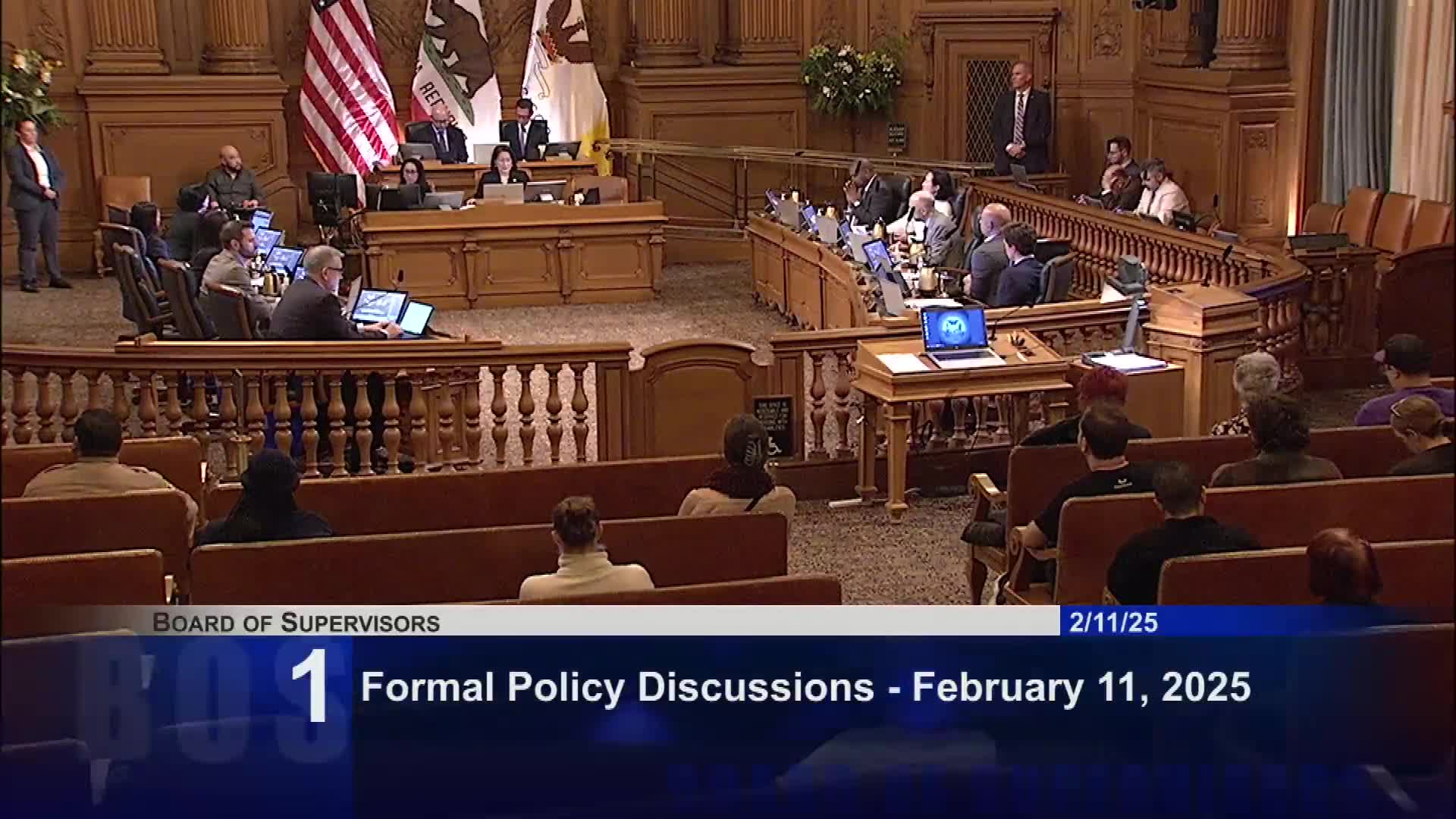
Mayor Lurie pledges to seek funds for Muni; supervisors and transit advocates press for stopgap and long‑term revenue
Summary
At a special-board appearance, Mayor Daniel Lurie told the San Francisco Board of Supervisors he will seek state help and supports local and regional ballot measures to address Muni's budget shortfall. Supervisors and dozens of public speakers urged the board and mayor to find stopgap funding to avoid service cuts this summer.
Mayor Daniel Lurie told the San Francisco Board of Supervisors on Feb. 11 that he will "do everything in my power to support Muni's immediate and long term health," as the city confronts a short-term budget gap and a projected $300 million annual structural deficit for the San Francisco Municipal Transportation Agency (SFMTA).
Supervisor Myrna Melgar, who requested the special order topic on short-term operational funding for SFMTA, asked the mayor whether he would "do everything in your power to ensure that we can weather the next couple years, with no service cuts to Muni while we work together on long term solutions for the system?" Mayor Lurie answered that he would and said he was advocating for state funding in Sacramento and expects local and regional revenue measures on the 2026 ballot; he also said stopgap funding will be needed this year.
Why it matters: Muni provides more than 500,000 daily boardings on weekdays and is the backbone of San Francisco's transit network, officials said. Board members and a steady stream of public commenters warned that service cuts this summer would hurt residents who rely on transit, worsen congestion, and undermine the city's economic recovery.
Details from the discussion and public testimony - Mayor Daniel Lurie said weekday ridership is back to about "500,000 daily boardings" and that "over 60% of all regional transit trips start or end in San Francisco." He told supervisors he was "advocating for state funding," and that a "multi pronged approach" — including local and regional measures on the 2026 ballot — is likely needed. - Supervisor Melgar described both immediate and long-term stakes for Muni, noting a "short term budget deficit and more than $300,000,000 annual structural deficit going forward," and asked the mayor whether he would work to prevent summer service cuts. - Mayor Lurie said SFMTA is evaluating service reductions and other expenditures and that he "wants to work with you, supervisor Melgar, and all of you, the entire board of supervisors, to find long term solutions."
Public commenters across more than two hours of testimony urged the board to fund Muni now to prevent service cuts. Speakers included transit advocates, riders, community organizations and health professionals who described Muni as essential for travel to work, medical care and school. Representative comments: - "If you as a governing body... are not serious about finding funding for Muni service this year and into the future, you are not serious about the future of San Francisco," said a speaker who identified themself as Sarah, D5 resident. - "I urge the board to work together with mayor Lurie to find the $15,000,000 needed to stop the 4% service cuts planned for this summer," said Cyrus Hall, a sustainable transportation advocate and District 7 resident. - "Transit is the highest ROI thing that we can do right now," said Lisa Platt, a D2 resident and former elected official, urging the board to transfer funds from the general reserve to cover the shortfall. - Representatives of organized campaigns — including Transit Justice, San Francisco Transit Riders, and Muni Now, Muni Forever — told the board SFMTA has exhausted many internal efficiencies and that board action is needed to avert cuts that would reduce hours and frequency or eliminate lines.
Board action and next steps - Supervisor Myrna Melgar said she was introducing a "resolution affirming San Francisco's commitment to developing fiscal solutions to ensure that public transportation remains safe, affordable, and convenient." The transcript records the introduction; no final vote on that resolution was taken at the Feb. 11 meeting. - Several public speakers recommended a near‑term transfer from the city's general reserve (speakers commonly cited $15 million as a stopgap figure) and urged prompt collaboration among the mayor, SFMTA and the board on both stopgap and ballot‑measure options for 2026.
Context and background - Officials and speakers repeatedly cited a structural shortfall; Mayor Lurie and the city's Chief Economist (Ted Egan, referenced in the discussion) said a solvent transit agency is essential for economic recovery. - Speakers referenced the November ballot process around Proposition L, which was discussed in public testimony as a previously attempted funding measure; several commenters said passage had been affected by a competing ballot measure they characterized as a "poison pill." The transcript records general references to Proposition L but did not provide ordinance text or precise financial modeling at the hearing.
Outlook The mayor pledged active advocacy in Sacramento and support for local solutions. Supervisors and transit advocates called for an immediate stopgap and a plan for a 2026 revenue strategy. The board did not adopt a funding transfer at the meeting; the Melgar resolution was introduced for future consideration.