Get Full Government Meeting Transcripts, Videos, & Alerts Forever!
Get email alerts on the Reparations Plan topic
No spam. Unsubscribe anytime.
Board adopts final San Francisco reparations plan from advisory committee
Summary
On Sept. 26 the Board of Supervisors adopted a resolution accepting the final reparations plan prepared by the African American Reparations Advisory Committee; supervisors praised committee work and the resolution advances implementation steps to establish an Office of Reparations.
The Board of Supervisors on Sept. 26 voted to accept the final reparations plan submitted by the African American Reparations Advisory Committee.
Supervisor Walton, sponsor of the resolution, thanked the committee, the Human Rights Commission and community allies for their work. “This resolution…further solidifies our commitment to reparations,” Walton said as he presented the item.
Supervisor Melgar also praised the committee’s work and provided historical context about housing discrimination dating back to the 1950s to explain why financial remedies and policy measures are part of the committee’s recommendations. Melgar noted an example in which a house listed for $37,000 in 1957 would be worth several million dollars today and said such lost generational opportunities informed the committee’s calculations.
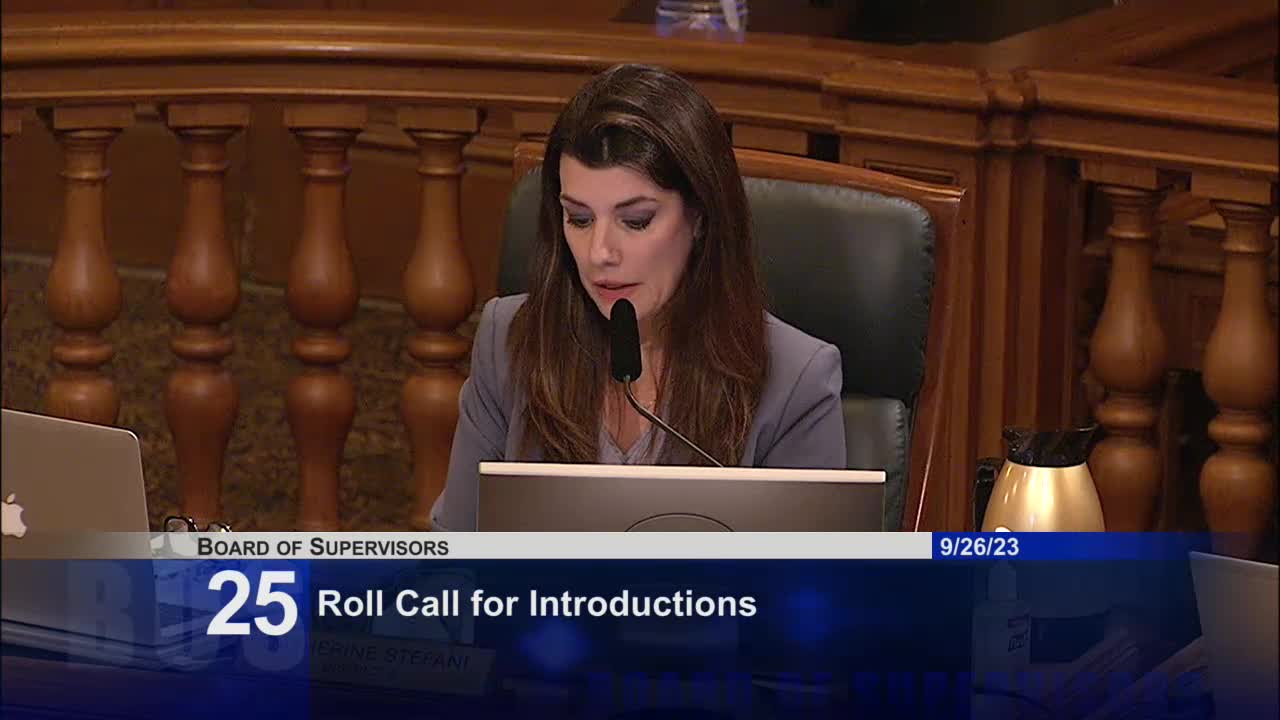
Supervisor Stephanie asked to be added as a co‑sponsor. The clerk recorded the resolution as adopted on first reading with the indicated co‑sponsors.
Why it matters: The accepted plan is the culmination of a multi‑year advisory process examining harm from slavery and subsequent discriminatory policies and proposing a package of monetary and programmatic remedies. Accepting the plan is an administrative and political step that positions the city to move toward implementing the recommendations, including establishing an Office of Reparations.
What happens next: With the plan accepted by the board, staff and proponents will advance implementation steps and the administrative work required to establish the Office of Reparations and other program elements recommended by the advisory committee.