Get Full Government Meeting Transcripts, Videos, & Alerts Forever!
Get email alerts on the Homelessness Recovery Housing topic
No spam. Unsubscribe anytime.
Supervisors introduce 'Recovery Housing First' to prioritize drug‑free supportive housing
Summary
Supervisors Dorsey and Mandelmann introduced legislation to prioritize recovery‑oriented, drug‑free supportive housing in the city's permanent supportive housing portfolio, setting a 25% target and outlining program standards and protections for residents.
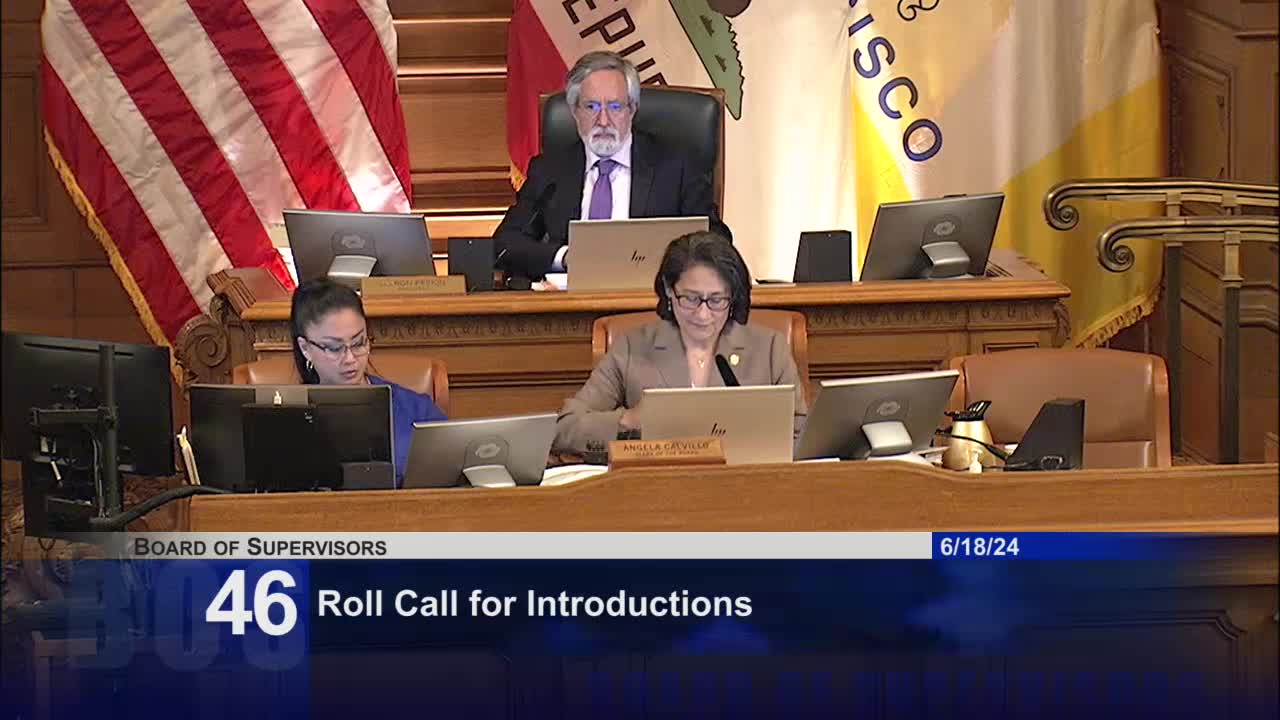
Supervisor Dorsey and Supervisor Mandelmann on June 18 introduced an ordinance titled Recovery Housing First that would prioritize drug‑free, recovery‑oriented units within San Francisco's portfolio of site‑based permanent supportive housing (PSH).
The measure would require the Department of Homelessness and Supportive Housing, in coordination with the Department of Public Health, to adopt local rules aligned with established federal guidance — including HUD policy — to ensure recovery housing options are available to residents who want a drug‑free environment. The ordinance sets a target that recovery housing should account for at least 25% of the city's site‑based PSH portfolio.
Dorsey said the proposal aims to ensure “no one exiting homelessness should need to choose between their recovery and a home that continually endangers it,” and described two streams: recovery housing that prohibits illegal drug use in lease provisions but does not bar medication‑assisted treatment, and low‑barrier recovery options where eligibility would not require a clinical substance‑use disorder diagnosis. He told the board the legislation would follow “strict federal standards on relapses,” noting that relapses would not be automatic grounds for eviction and that discharged residents would be offered drug‑permissive harm‑reduction alternatives and remain eligible to reenter recovery programs.
Mandelmann joined as a cosponsor and the supervisors referenced a San Francisco Chronicle analysis showing a disproportionate share of overdose deaths among PSH residents citywide. Dorsey also pointed to Proposition 1, voter‑approved language that specifically allows for recovery housing, and pending state legislation by Assemblymember Matt Haney as creating “unprecedented opportunities” to expand recovery housing funding.
The board did not take a final vote on the ordinance at the June 18 meeting; Dorsey said he would be reaching out to colleagues for support and to refine details.
If advanced, the ordinance would require city departments to define program standards, residency eligibility, and discharge procedures; it would also explicitly permit medication‑assisted treatment (buprenorphine, methadone, naltrexone) for program participants.
Supporters framed the proposal as expanding housing choices for people recovering from substance use disorders. The measure, as presented, would leave detailed rulemaking to city departments and did not include an immediate funding appropriation.