Get Full Government Meeting Transcripts, Videos, & Alerts Forever!
Get email alerts on the Childcare And Community Services topic
No spam. Unsubscribe anytime.
Hundreds of speakers urge supervisors to protect Prop C funding, family resource centers and community food programs
Summary
More than 300 residents, childcare providers and community food and family-resource program representatives urged supervisors on June 6 not to cut or reallocate funds from Proposition C and related community programs.
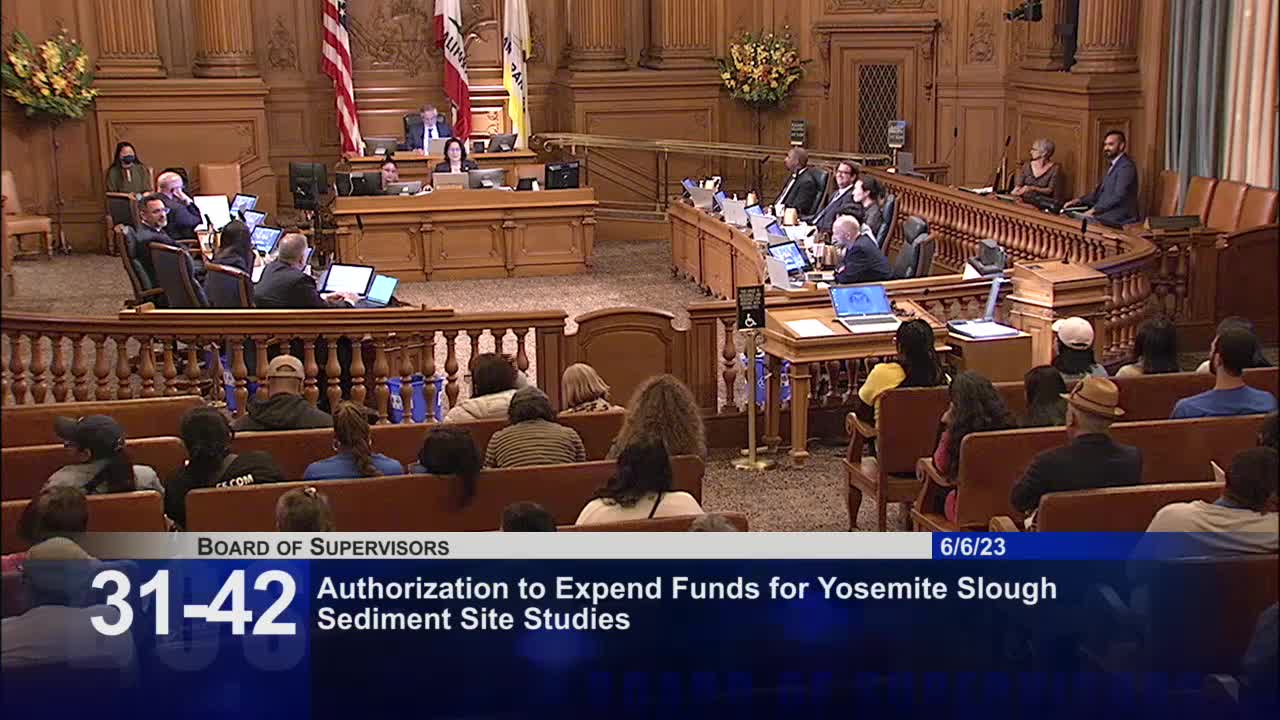
Hundreds of San Franciscans filled the chamber and lined up at the microphones during the Board of Supervisors' public-comment period on June 6 to urge elected officials not to cut or reallocate funds designated by voters for early childhood education (Proposition C) and to preserve community food security and Family Resource Center funding.
Speakers included family childcare providers, preschool teachers, parents, community food-program leaders and representatives of early-childhood workforce organizations. A steady stream of testimonies recounted how Prop C funds had enabled higher wages for early educators, expanded access for low-income families, and supported family resource centers and community food distribution programs.
"Everyone has a name. Everybody matters," said Carrington Osborne, one of the early public commenters who tied his remarks to broader concerns about housing, mental health and services for people experiencing homelessness. Multiple providers and advocates detailed the implications of the mayor's proposed budget adjustments discussed publicly earlier: one speaker described the mayor's two proposals as potentially reducing Prop C funding by approximately $150 million over seven years and cutting Family Resource Center (FRC) funding by about $5.4 million over seven years; other witnesses described cuts to city food programming funding.
Speakers emphasized three themes: - Preserve voter intent: Many speakers cited that Prop C is a voter-approved measure (February 2018) and urged that changes should not be made through a closed-door budget process without community input or a new ballot measure. - Workforce and retention: Educators and program managers said modest wage improvements triggered by Prop C made it feasible to recruit and retain teachers; several providers and teachers said cuts would reverse recent gains and exacerbate staffing shortages. - Immediate human impacts: Family resource centers, community farmers-market partners and food distribution programs described the real-time impact of funding on homebound seniors, working families, unhoused residents and immigrants who rely on culturally relevant food boxes and home delivery.
Representatives of organizations that operate local food programs spoke about partnerships with local farms and nonprofit distribution networks that serve thousands of households. "These programs have helped tens of thousands of people and also supported local BIPOC and women farmers," said a program manager from the Agricultural Institute of Marin. Senior-center and family-resource programs described delivering hundreds of produce boxes per week and meals to seniors.
Some speakers called for greater transparency and public process: "Any change to a voter-passed initiative should come with broad community input or be returned to the ballot," said a parent-advocate appearing on behalf of Parent Voices San Francisco. Others asked supervisors to seek alternatives to the proposed cuts and to prioritize the young children's needs as part of the city's economic recovery.
Why it matters: Early childhood education funding and community food programs are both viewed by advocates as foundational services with immediate effects on family stability, employment and long-term child outcomes. A widespread public coalition of childcare providers, parents, community-food partners and workforce-development leaders testified that the proposed budget changes would reverse early progress and hurt the city's most vulnerable residents.
What the board heard in numbers (as reported by speakers): Advocates and program leaders cited figures including: roughly 40,000 families served by family resource centers systemwide; an asserted backlog of nearly 100 equity cannabis applications in the Office of Cannabis; proposals to reduce Prop C funding roughly $150 million over seven years and to cut FRC funding by $5.4 million over seven years (speakers attributed those totals to the mayor's publicly circulated options). Those numbers were reported by public commenters and program representatives in testimony and are cited here as they were stated in the hearing.
Next steps: Speakers asked the Board to (a) reject mayoral changes that would reallocate Prop C funds without a ballot process and broad community input, (b) preserve or restore funding for Family Resource Centers and community food programs, and (c) prioritize retirement, health benefits and stability for early-childhood educators. Several supervisors (including Melgar, Preston and Ronan) were publicly named by speakers as allies; the transcript includes formal introductions of new business by several supervisors that touch on related policy areas (housing, guaranteed income, child-care related ordinances).