Get Full Government Meeting Transcripts, Videos, & Alerts Forever!
Get email alerts on the Transit Governance topic
No spam. Unsubscribe anytime.
Board holds public hearing on SFMTA charter amendment; proposal continued to Nov. 20
Summary
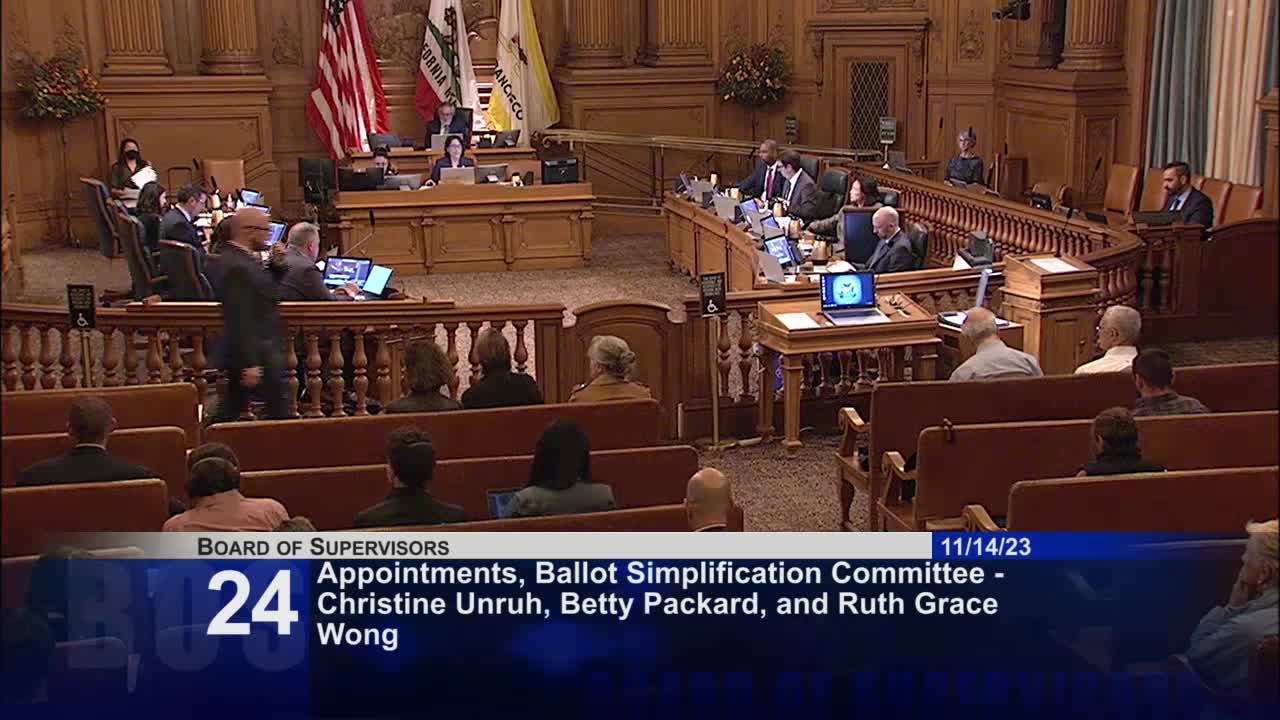
The San Francisco Board of Supervisors opened a public hearing Nov. 14 on a proposed charter amendment that would let the mayor disapprove certain San Francisco Municipal Transportation Agency proposals — including fare adjustments and parking meter rate or hour changes, placing the mayor’s role on the record.
The San Francisco Board of Supervisors opened a public hearing Nov. 14 on a proposed charter amendment that would let the mayor disapprove certain San Francisco Municipal Transportation Agency proposals — including fare adjustments and parking meter maximum rates and extensions of meter hours — when those actions appear in the SFMTA budget or budget amendments.
Supporters said the change would make clear the actual role the mayor already plays in decisions that affect fares, parking and other revenue tools. "This Charter Amendment will reform the process for changes to SFMTA fares and meter rates and hours and days of operation," Supervisor Ahsha Safaie said during the hearing.
Opponents warned the amendment would politicize SFMTA’s budget tools and undermine the agency’s ability to raise revenue to avoid service cuts. "This proposal very much feels to me like a solution in search of a problem," Supervisor London Breed Dorsey (recorded as Supervisor Dorsey) said, adding that previous ballot measures were designed to depoliticize the authority. "In my view, this proposed charter amendment is a step backwards."
Why it matters: SFMTA projects steep operating shortfalls in coming years; critics of the amendment argued making the mayor a possible single veto point over certain revenue changes risks leaving the agency with fewer tools to close deficits and could mean cuts in service relied on by hundreds of thousands of riders. Supporters said placing the mayor’s role on the record would provide clearer public accountability for changes that affect drivers, businesses and riders.
What happened Nov. 14 - The board heard more than a dozen members of the public and testimony from transit, equity and business groups. Testimony opposing the amendment included Audrey Liu (resident, District 1), who said the charter change "will introduce a single point of failure that will directly affect the agency's ability to function," and Cyrus Hall (sustainable transportation advocate) who warned of looming SFMTA deficits and urged the board to vote on policy rather than grant new mayoral power. - Public-sector and labor testimony divided: Amy Cleary, speaking for the Golden Gate Restaurant Association, said the amendment would provide needed oversight; representatives of San Francisco Transit Riders and the League of Conservation Voters urged rejection, citing the risk of service cuts. - After public comment, the board voted on a procedural item (item 20) related to the charter amendment process. That motion passed 6–5 (ayes: Walton, Chan, Peskin, Preston, Ronan, Safaie; noes: Dorsey, Engadio, Mandelmann, Melgar, Stephanie). The underlying charter amendment (item 21) was continued to the Board’s special meeting on Monday, Nov. 20; that continuation was adopted by roll call with 11 ayes.
Positions expressed - Sponsor: Supervisor Ahsha Safaie argued the amendment "calls out the process that actually happens, in real time," and said the change targets increases in fares, meter hours and maximum meter rates. - Opponents: Supervisor Dorsey and speakers from transit advocacy groups warned the amendment would repoliticize an agency voters previously insulated from politics and limit SFMTA’s ability to address multi‑year deficits.
Next steps: The item was continued to Nov. 20 for further consideration. The hearing record and the public comments taken Nov. 14 will be part of the committee-of-the-whole record when the board reconvenes on the charter amendment.