Get Full Government Meeting Transcripts, Videos, & Alerts Forever!
Get email alerts on the Housing topic
No spam. Unsubscribe anytime.
Mayor says city must speed affordable housing production; cites high per‑unit costs and new leadership council
Summary
Mayor London Breed told supervisors that San Francisco needs to accelerate affordable housing production and has convened an affordable housing leadership council; she cited 50,000 approved units citywide (about 15,000 affordable) and per‑unit construction costs that she said range from roughly $650,000 to $1.1 million.
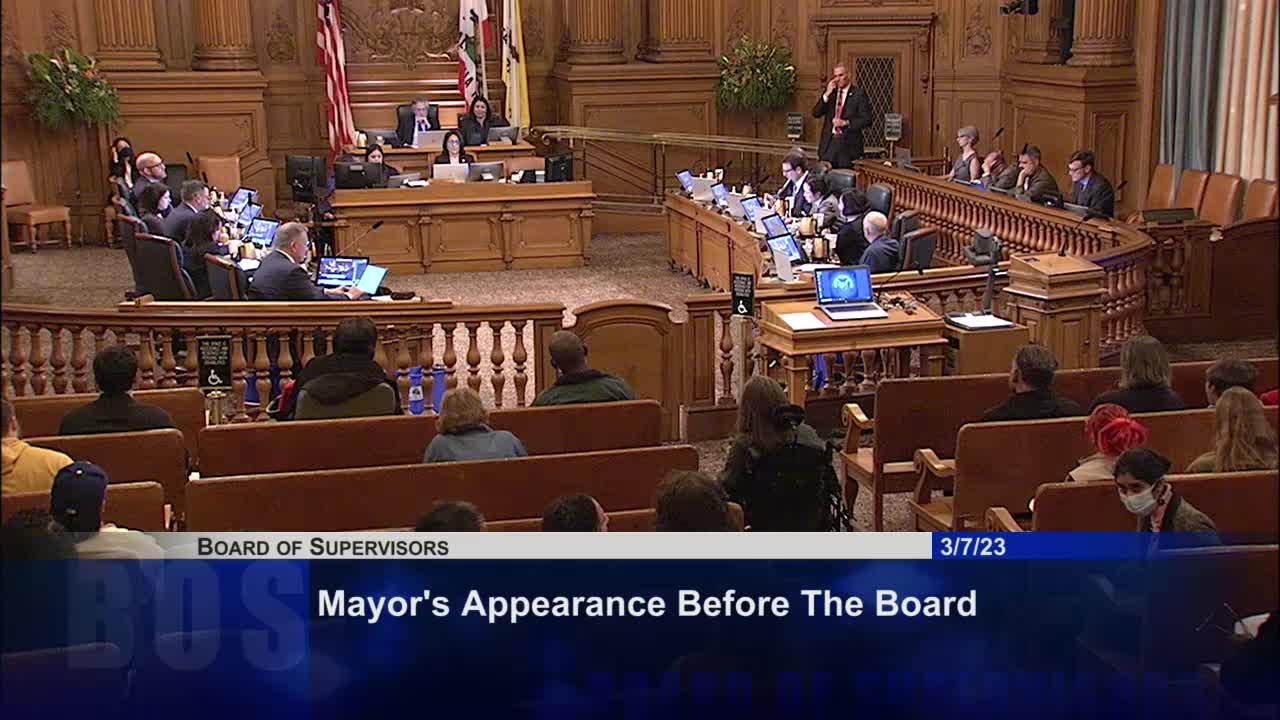
Mayor London Breed told the Board of Supervisors on March 7 that San Francisco needs to increase production capacity for affordable housing and that her administration has directed staff to convene an affordable housing leadership council to help chart a path forward.
"We have over 50,000 units that have been approved and are not being built in a pace that at least gives us 5,000 units a year," Breed said, adding that about 15,000 of the approved units are designated affordable. She said construction costs and regulatory barriers make San Francisco one of the most expensive places to build and estimated per‑unit costs for affordable housing at roughly $650,000 to $1,100,000.
Why it matters: The city is obligated to implement the state‑required housing element and produce housing across income levels. Breed framed the council and related initiatives as tools to unlock capacity, pursue new funding sources, streamline approvals and reduce per‑unit costs, including by exploring modular construction and other policy changes.
Key points from the exchange
- Strategic council: Breed said she has directed staff to form an "affordable housing leadership council" that began work in March to pursue new local and regional funding tools, streamline approvals and advocate for bond funding and other financing tools.
- Funding and leverage: Breed noted the city recently secured a $42 million fund (she did not name a single grant recipient at the meeting) and said market‑rate development and inclusionary requirements will remain part of the production pipeline; she said the city cannot rely solely on 100% publicly financed affordable housing.
- Operational questions: Land Use and Transportation Committee Chair and District 7 Supervisor Matt Haney (chair referenced by Supervisor Melgar) and Supervisor Melgar pressed the mayor for operational details and staffing directives. Breed acknowledged staffing constraints at city agencies and nonprofit developers and said the leadership council will work on both funding and policy adjustments to reduce costs and speed production.
- Next steps: Breed said she plans to introduce measures following the housing element to streamline processes and pursue policy changes that will likely require votes at the board that "make a lot of people uncomfortable" to meet production targets.
Speakers quoted in this article appear in the meeting transcript and are identified by role.