Get Full Government Meeting Transcripts, Videos, & Alerts Forever!
Get email alerts on the Homelessness Policy topic
No spam. Unsubscribe anytime.
Supervisors direct HSH to produce plan for shelter capacity; debate centers on scale, timelines and regional coordination
Summary
The board passed an ordinance requiring the Department of Homelessness and Supportive Housing to prepare a plan estimating shelter needs and options to provide shelter access to unsheltered residents. Supervisors debated resource limits, regional responsibilities and whether shelter should be prioritized alongside permanent housing.
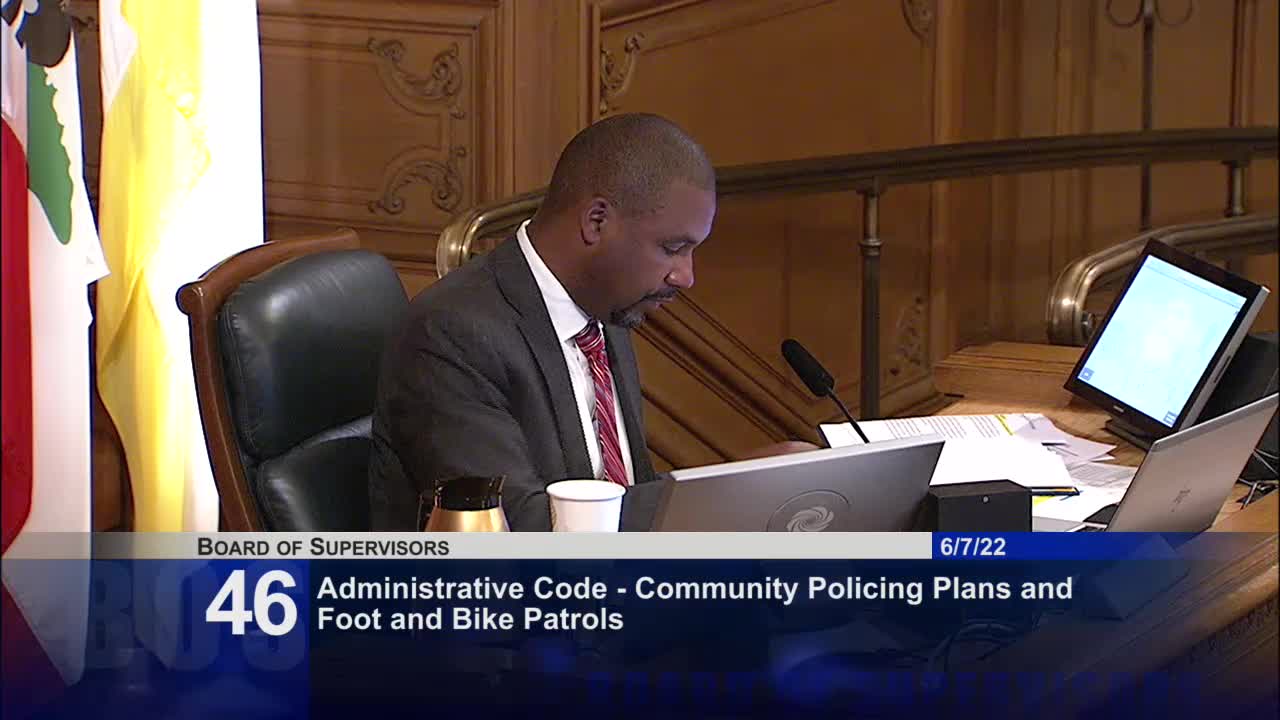
The San Francisco Board of Supervisors voted unanimously June 7 to pass an ordinance requiring the Department of Homelessness and Supportive Housing (HSH) to submit a plan specifying how to provide shelter access to people living unsheltered in the city and to estimate how many additional shelter beds would be needed.
The ordinance amends the Administrative Code to set content expectations for the plan, including cost estimates and mechanisms to allow people to register for available shelter by phone. HSH told the board the requirement will refine its ongoing strategic planning by asking the department to quantify how many shelter beds would be needed to offer a shelter bed to everyone currently unsheltered.
Emily Cohen of HSH told the board: "This ordinance would explicitly call on us to determine how many additional shelter beds we would need to offer a shelter bed to everyone experiencing unsheltered homelessness in San Francisco." Cohen said the department already is conducting a strategic planning process and described the ordinance as providing more specific direction for modeling and data work the department planned to complete by the end of the year.
Supervisor Suraj Mandelmann, the author, framed the ordinance as a push to make exits from the street a higher priority. "I think we ought to be maniacally focused on...having safe exits from the street," Mandelmann said, adding that while permanent supportive housing is the long-term goal, "we should not make the goal of PSH the only goal."
Several supervisors described the issue as a regional problem that will require collaboration with neighboring counties and the state. Supervisor Chan said San Francisco needs a regional approach and urged coordination: "We need to have a consistent approach...we should treat homelessness as a public health crisis that it is." Supervisor Ronan stressed urgency in neighborhoods with concentrated encampments and called for more temporary shelter options while longer-term housing is produced.
Not all board members expected the ordinance alone to be a silver bullet. Supervisor Mandelmann said he would "be voting for this today, but I'm voting for it believing that it will do nothing," reflecting skepticism that planning without funding or space would produce near-term results. Several supervisors, including Melgar and Preston, said they supported the ordinance and urged that the plan be actionable, including safe parking, vehicle triage, cabin homes, and transitional beds alongside permanent supportive housing.
The board recorded a unanimous vote to pass the ordinance on first reading. Members said the ordinance is intended to produce a clear, data-based plan by the department and to guide budget and policy decisions for shelter and housing in the coming months.