Get Full Government Meeting Transcripts, Videos, & Alerts Forever!
Get email alerts on the Recall Reform topic
No spam. Unsubscribe anytime.
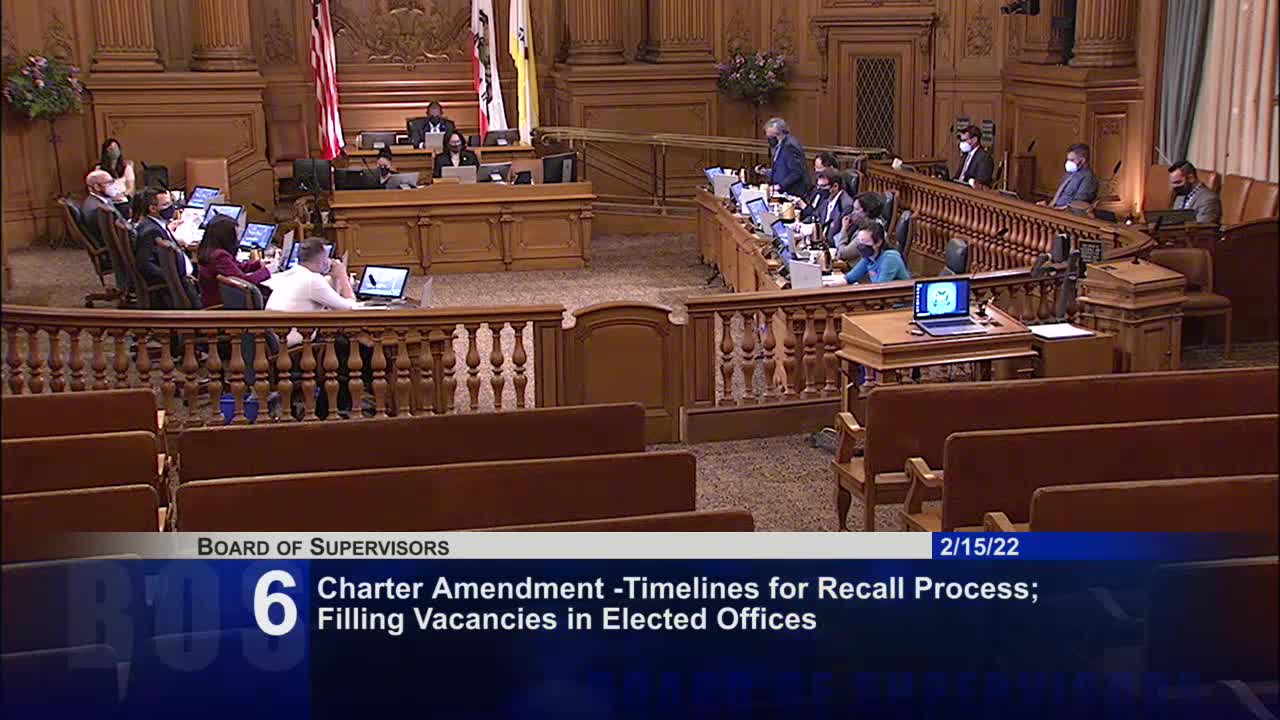
Board approves charter amendment to tighten recall windows; measure to go to voters after 7-4 vote
Summary
The San Francisco Board of Supervisors voted 7–4 on Feb. 15 to submit a charter amendment to the June ballot that lengthens the time windows around when recall petitions can be filed and limits who may be a candidate for a vacancy created by a successful recall.
The San Francisco Board of Supervisors voted 7–4 on Feb. 15 to submit a charter amendment to city voters that would extend restrictions on when recall petitions can be filed and limit who may run to fill a vacancy created by a successful recall.
Supervisor Aaron Peskin, the item’s sponsor, told colleagues the measure is aimed at reducing what he called “unnecessary and enormous costs” to taxpayers and the corrosive political behavior he said accompanied recent recalls. “The core premise of this measure is very simple,” Peskin said. “San Francisco taxpayers should not have to shell out tens of millions of dollars … when the officials being subject to recall are already up for election on the same year's ballot.”
The amendment would: extend the current six‑month prohibition on initiating recall petitions after an official takes office to 12 months; bar the submission of a recall petition during the 12 months preceding a regularly scheduled election for the specific office held by the targeted official; and provide that an interim appointee placed in a vacancy created by a successful recall may not be a candidate in the subsequent special election to fill that vacancy.
Deputy City Attorney John Givner answered technical questions on the measure’s scope, including how the language applies to bodies with staggered terms such as the school or community college boards. Givner said the measure’s references are to the particular seat held by the recalled official and not to all seats on a multi‑member board. “This is not a blanket prohibition for recalls on the college board,” he said, explaining that the language mirrors other charter usage.
Supporters said the change is about preserving the ordinary election process and saving city funds. Supervisor Preston described the proposal as a “common sense” guardrail that does not prohibit recalls but prevents special elections that duplicate scheduled ones. Several supervisors said they would nonetheless vote for the measure with reservations about certain provisions.
Opponents raised concerns that the provision barring an interim appointee from running in the follow‑up election would strengthen the mayor’s appointment power and reduce opportunities for historically underrepresented candidates to gain office via appointment. Supervisor Melgar said she was “very torn,” and ultimately voted no, citing worries that the change could tilt advantage toward the executive branch. Supervisor Mandelmann, Supervisor Safaei and Supervisor Stephanie also voted against the measure.
The motion to submit the amendment to the ballot passed 7–4. Those voting in favor included Supervisors Haney, Mar, Peskin, Preston, Ronan, Walton and Chan. Those in opposition were Supervisors Mandelmann, Melgar, Safaei and Stephanie.
If placed on the ballot and approved by voters, the amendment would alter the city charter accordingly; implementation details would follow city and state election law.