Get Full Government Meeting Transcripts, Videos, & Alerts Forever!
Get email alerts on the Police Reform topic
No spam. Unsubscribe anytime.
Supervisors hear update on SFPD DOJ reform work; leaders say 90% of recommendations in substantial compliance, 27 remain
Summary
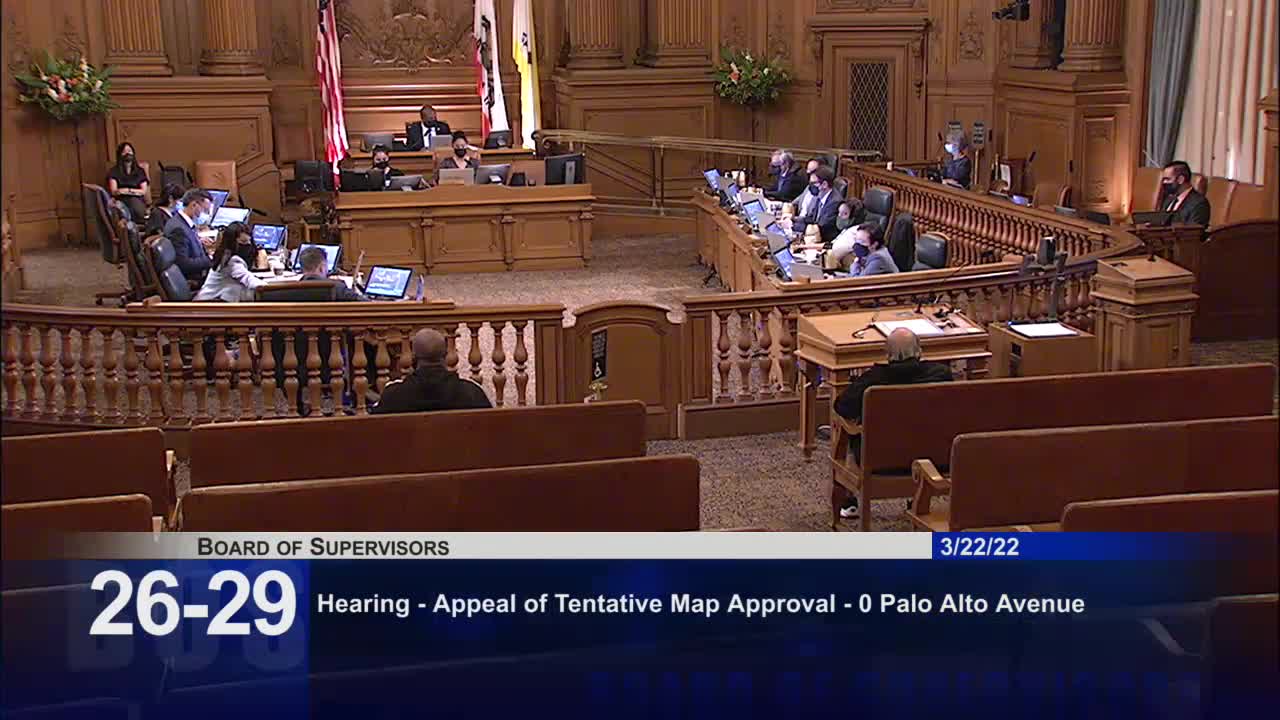
At a Committee of the Whole hearing March 22, San Francisco police and outside consultants reported that most U.S. Department of Justice (DOJ) recommendations have reached substantial compliance but persistent racial disparities and technology-dependent tasks remain; the board continued the hearing to May 24 for additional updates.
The San Francisco Board of Supervisors, sitting as a Committee of the Whole, received an update March 22 on the collaborative reform initiative for the San Francisco Police Department, with Chief Scott and Hillard Hines project lead Deborah Kirby reporting substantial progress while acknowledging remaining work to address racial disparities and implement technology-dependent reforms.
Chief Scott told the board that 245 recommendations had reached ‘‘substantial compliance’’ under the DOJ and state oversight, but cautioned that ‘‘the work is not anywhere near complete’’ and 27 recommendations still remain. Deborah Kirby, the project lead for Hillard Hines, said the phase 3 report found about 90% of the 272 recommendations substantially compliant and described the effort as ‘‘significant’’ work that has required dedicated resources and ongoing oversight.
Why it matters: The collaborative reform effort stems from DOJ findings tied to police practices, including use of force and biased policing. Supervisors and presenters repeatedly emphasized that, while policy and training changes appear to be reducing overall use-of-force incidents, disparities in stops, searches and force — particularly affecting Black residents — persist and remain a central concern.
Chief Scott summarized outcomes and outstanding gaps. He said the department has revised policies, established a five-year policy review schedule, improved coordination with the Department of Police Accountability, and created new units and training programs. On bias-related measures he said the department has seen declines in total stops for Black residents but added that ‘‘the disparity rate is still higher per capita than any other demographic.’’ He identified accountability, bias, community policing and use-of-force as the primary areas with outstanding compliance items.
Both Scott and Kirby highlighted work under way to produce analytic tools and early-intervention systems. Scott said roughly a dozen of the 27 remaining recommendations are heavily IT- and budget-dependent and will require funding and systems upgrades to reach compliance. He described a newly staffed dashboard unit that will allow supervisors to monitor trends in stops and other metrics in near-real time and an upgraded early-intervention system intended to surface officers whose patterns suggest the need for earlier supervisory intervention.
Supervisors pressed for specifics and timelines. President Walton and others asked how soon the dashboard, early-intervention upgrades and remaining training can be completed; Scott said timelines exist and pledged to provide budget and vendor details. Deborah Kirby urged a continued focus on sustainability, warning that reforms must be resourced and institutionalized if gains are to hold.
Board action: After the presentation and public comment, President Walton moved — and Supervisor Chan seconded — to continue the hearing to May 24, 2022; the motion carried on roll call (aye: 10; Melgar absent). Supervisors said they intend to track outstanding technology needs and budget requests closely at future hearings.
What the presenters highlighted as next steps: finish technology-dependent compliance measures, sustain training and auditing programs, continue community-engaged policy revisions (including traffic enforcement and stop policy work), and provide the board with clearer budget requests to implement the remaining items.
Ending: Supervisors said the board will retain oversight of the reform process and review the department’s implementation and funding plans at the May 24 continuation of the hearing. The board and presenters agreed that sustaining the gains will require continued transparency, auditing and funding.