Get Full Government Meeting Transcripts, Videos, & Alerts Forever!
Get email alerts on the Transit topic
No spam. Unsubscribe anytime.
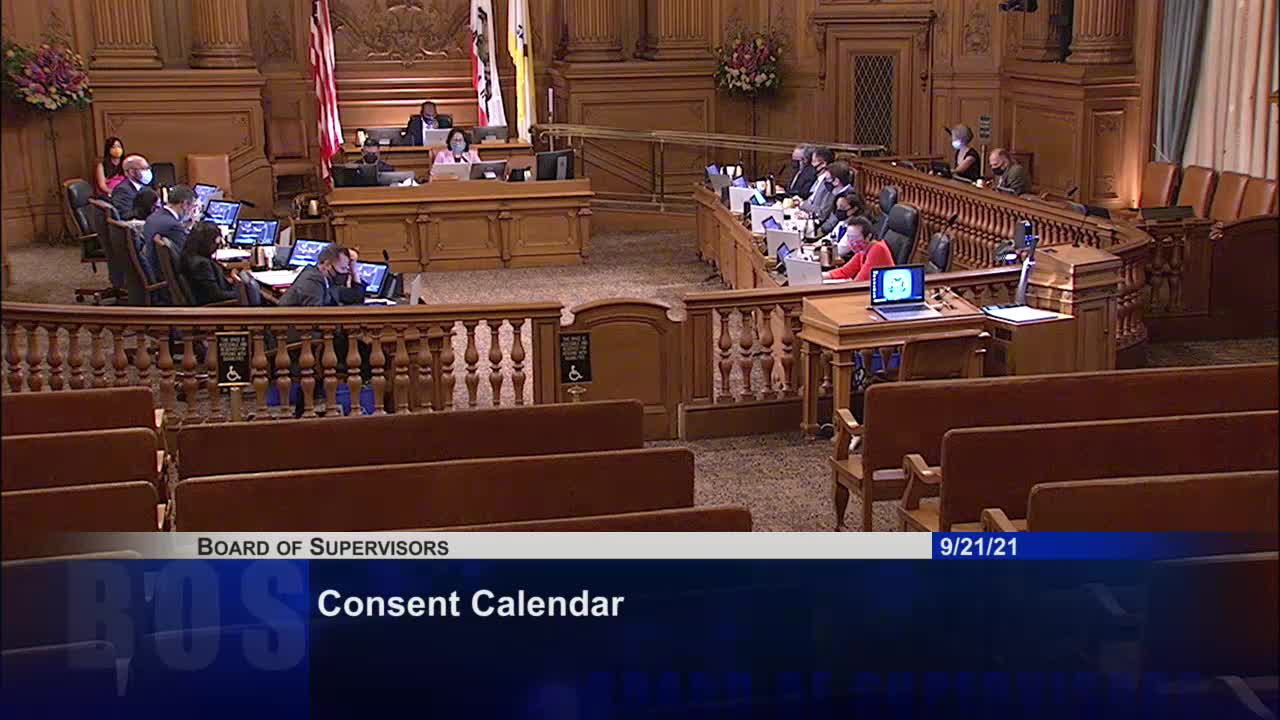
Board approves SFMTA modification to buy 30 Siemens light-rail vehicles amid funding questions
Summary
The San Francisco Board of Supervisors on Sept. 21 unanimously approved the 10th modification to SFMTA’s contract to buy 30 Siemens light‑rail vehicles, after a lengthy exchange over whether Prop B baseline funds could be used as a backstop and whether capital purchases might reduce funding available for operations.
The San Francisco Board of Supervisors on Sept. 21 unanimously approved the 10th modification to the San Francisco Municipal Transportation Agency (SFMTA) contract to procure 30 new Siemens light-rail vehicles, a deal the agency says will save more than $100 million overall but that drew sustained questioning about how the purchase would be funded.
The resolution authorizes the change to contract No. 2013-19 for the procurement of 30 vehicles at a listed contract value of roughly $130,400,000 plus escalation, with cancellation provisions through June 2025 and no change to the contract term or total price. The board approved the item by unanimous voice without objection after several supervisors pressed SFMTA and the acting chief financial officer to clarify whether Prop B baseline funds might be used as a backstop and whether that could reduce funds available for operations.
Supervisor Gordon Preston raised the central financing concern in a series of questions to the agency: Proposition B baseline funds can be used for either operating or capital purposes, Preston noted, and the MTA had identified Prop B as an eligible “backstop” source if other capital grants were not secured. “The source of funds is Prop B. Those are available for operations, and yet MTA is representing that we’re not using funds available for operations for this purchase,” Preston said, asking SFMTA officials to reconcile the statements.
Director Jeff Tumlin (SFMTA) and acting SFMTA finance staff responded that the agency had previously used Prop B baseline funds for operations in response to a structural deficit and that the agency regarded the identified Prop B amounts as an eligible but last‑resort backstop while it aggressively pursues federal capital grants and other sources meant to pay for the vehicles.
Director Tumlin told the board the vehicle purchase produces long‑term operating savings because the newer light rail vehicles are “three to four times easier, less expensive to maintain,” and that deferred replacement would cost the system more over time. He said the agency expects to leverage federal matching funds and other capital grants so that Prop B would not be needed.
Acting CFO Jonathan Rouers told supervisors the charter language governing Prop B permits the agency to use up to 75% of those baseline transit funds for improvements that can include operations, and he said the MTA had used that flexibility in the FY21 and FY22 budgets to shift funds to operating needs during a fiscal crisis.
Supervisors repeatedly framed the vote around the tradeoff between capital and service restoration. Several, including Preston and Supervisor Dean Preston’s colleagues, said they supported buying new vehicles but wanted firmer guardrails so that the agency would not “trade off” operating service to cover the purchase. Reform amendments sought to clarify that enterprise funds such as transit fares, parking revenue, fines and other operating revenue would not be repurposed; SFMTA said its intent was the same and that identified Prop B funding constitutes a flexible but eligible backstop.
Supervisor Raza Safaie, who led budget committee amendments requiring SFMTA reporting on identified funds and use of alternatives, said the board retained many opportunities in future budget cycles to weigh in on the agency’s resource allocation.
The board approved the resolution by unanimous vote. The SFMTA representatives said the contracts are time‑sensitive, that the procurement would be scheduled for production and delivery over coming years, and that the agency expects federal capital programs and other sources to cover most of the purchase so Prop B need not be used.