Get Full Government Meeting Transcripts, Videos, & Alerts Forever!
Get email alerts on the Public Transit topic
No spam. Unsubscribe anytime.
Mayor Breed says Muni restoration will be gradual; staffing and ridership shortfalls shape service map
Summary
Mayor London Breed told the Board of Supervisors the city is prioritizing equity when restoring transit service and will use federal relief funds and ridership data to phase service returns, while warning against a rapid return that risks future cuts.
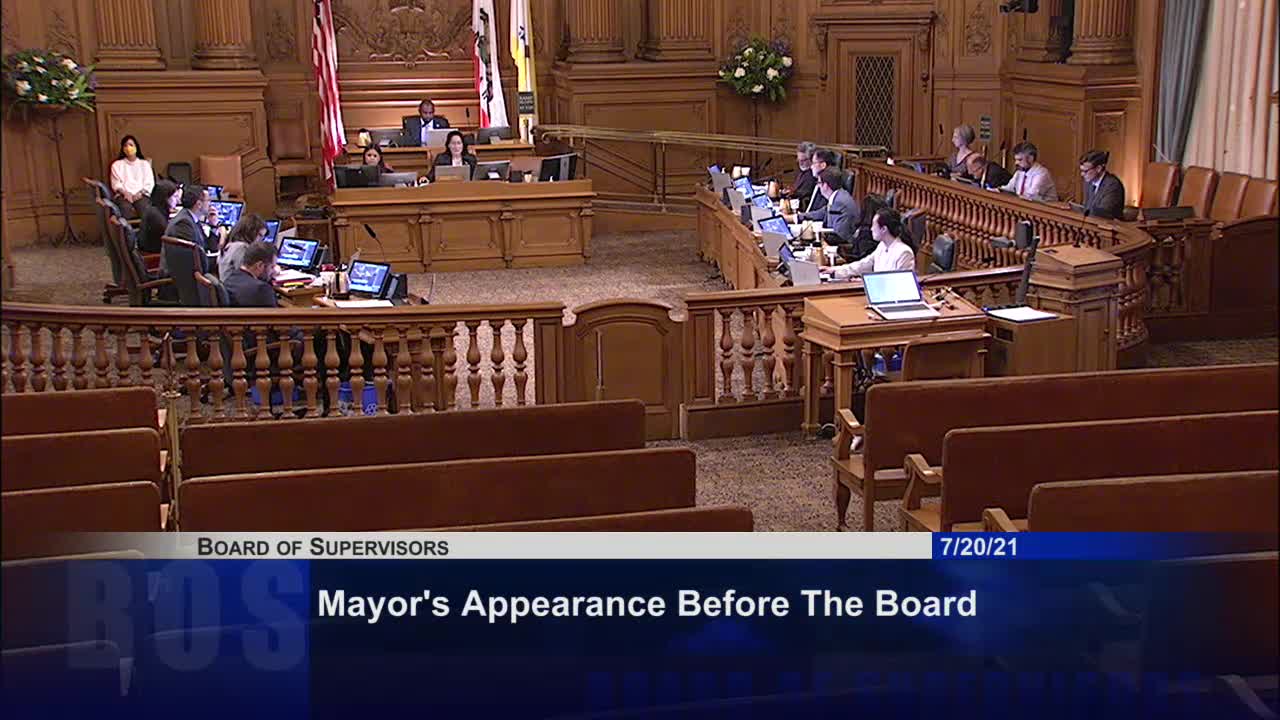
Mayor London Breed told the Board of Supervisors during a scheduled appearance July 20 that restoring San Francisco Municipal Transportation Agency (SFMTA) service to pre-pandemic levels will be gradual and data-driven, citing staffing shortages and a long-term decline in weekday ridership as the principal constraints.
"This is one of the most challenging issues for our recovery," Breed said when asked whether suspended lines would be restored. She emphasized the city has received more than $700 million in federal relief, which "is helping us to get more service routes back faster," but added staffing shortages that predated the pandemic have worsened and ridership remains far below pre-pandemic levels.
Breed said the city is prioritizing equity and access when deciding which routes to restore. "In prioritizing equity, we want to make sure that those neighborhoods that are most reliant on low-cost transit are prioritized for predictable service," she said. She also pledged an August 15 service expansion and said SFMTA will continue an access study to weigh trade-offs between more routes and more frequent service on existing routes.
What was said: Supervisor Dean Preston asked whether suspended lines would be restored in the short term regardless of longer-term community realignment work. Breed did not commit to returning every suspended route exactly as it existed before COVID, saying the agency will use data and staffing availability to make efficient decisions and avoid unreliable service. She cited current ridership near 37% of pre-pandemic levels and under-20% downtown office attendance as factors reducing fare revenue.
Why it matters: The Muni network is a primary mobility lifeline for many transit-dependent San Franciscans. Restoring reliable service affects access to work, school, medical services and economic activity. Breed's framing signals the transit return will focus on frequency and reliable coverage in equity-prioritized neighborhoods rather than strictly re-creating the pre-pandemic map.
Ending: City leaders said they will continue pursuing operator hiring and training while using federal aid to avoid layoffs and restore service where possible. SFMTA expects to present a phased service restoration plan and continue community engagement on proposed realignments.