Get Full Government Meeting Transcripts, Videos, & Alerts Forever!
Get email alerts on the Budget And Finance topic
No spam. Unsubscribe anytime.
San Francisco adopts $X billion recovery budget after weekslong negotiations; 10–1 vote on amended package
Summary
The Board of Supervisors approved the city's biennial budget and related salary and financing ordinances after amendments, adopting a recovery-focused spending plan that funds homelessness, rent relief and other pandemic recovery programs. The final vote on the main package was 10'yes, 1'no.
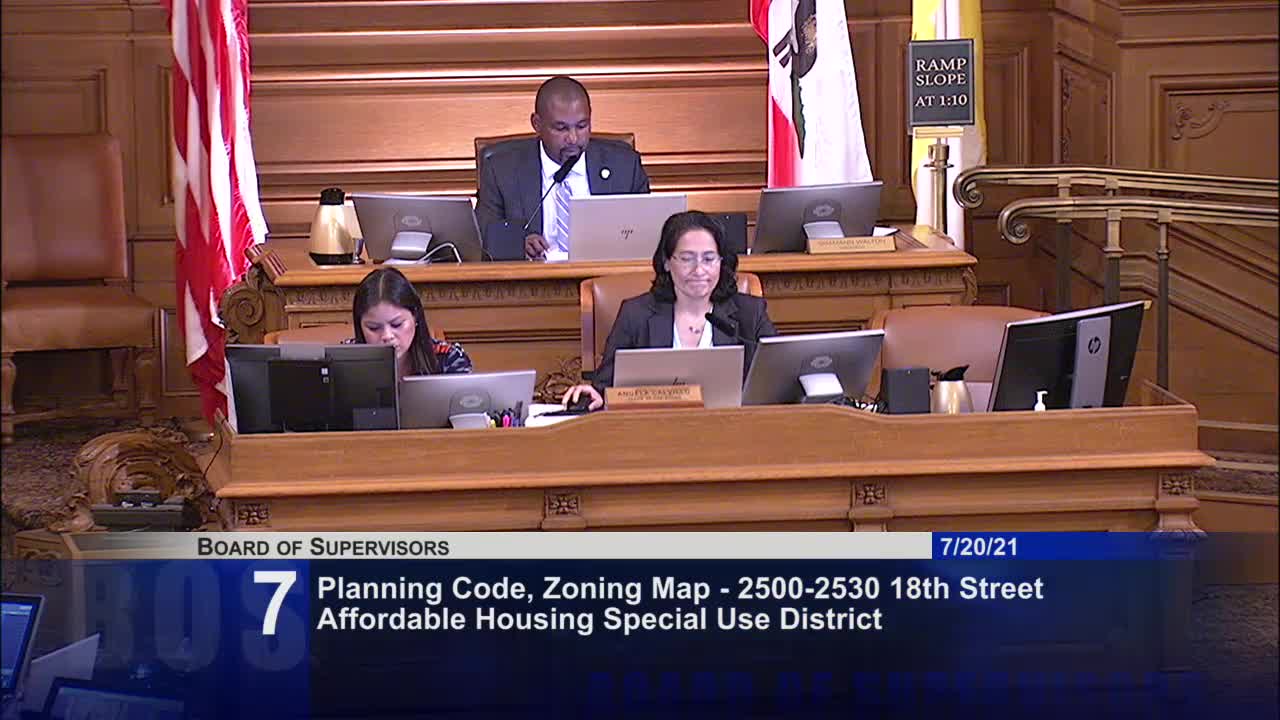
The San Francisco Board of Supervisors voted 10'to'1 on July 20 to approve the city's annual budget and related fiscal ordinances for fiscal years ending June 30, 2022 and June 30, 2023, adopting a recovery plan that boosts spending on homelessness, rent relief and community programs while preserving many existing services. Supervisor Matt Haney, chair of the Budget and Appropriations Committee, led the package to the full board with a set of amendments approved on the floor.
The adopted budget appropriates estimated receipts and expenditures across city departments and includes companion measures: the annual salary ordinance and multiple finance and bond issuances, including OCII's bond authorization and certificates of participation. The package also contains several PUC funding ordinances and a host of grant-acceptance and expenditure approvals.
Why it matters: The vote puts substantial new resources into San Francisco's pandemic recovery priorities, including major investments in homelessness response and supportive housing, expanded rent-relief funding, and funding for community-based public safety alternatives. Supervisors described the budget as a recovery budget that prioritizes equity, homeless services, tenant relief and workforce supports.
Key provisions and amendments: The board approved amendments proposed and seconded by Haney that moved funds between add-back items and added one-time and ongoing appropriations. Notable amendments included $500,000 reallocated within legacy business programming (split into $100,000 for one-time staffing to expedite applications and $400,000 to replenish the Legacy Business Preservation Fund); clarification and reallocation of single-room-occupancy (SRO) operating subsidies toward extremely low-income support; and adjusted language prioritizing rent-relief recipients who face eviction notices. A motion to adjust multiple small items (including transferring some district project funds to the Human Rights Commission and expanding downtown ambassadors) passed unanimously.
Debate and votes: Supervisors praised the collaborative process while also voicing areas of concern. Supervisor Aaron Peskin and others urged greater progress on reducing police funding; Supervisor Dean Preston said he could not support increases to law enforcement funding despite backing many budget items. The package passed on first reading 10'to'1 with Supervisor Preston recorded as the lone no vote on the final roll call for items 8 through 30 as amended; committee votes and multiple related resolutions recorded unanimous committee-level support before the full-board vote.
Follow-up: The budget contains multiple items that require ongoing implementation by city departments and outside partners, including OCII bond issuances and PUC financing items. The board's budget chair and city staff said departments will report back on specific program rollouts.
Votes at a glance: The board voted to approve (first reading / resolutions adopted) the annual appropriation ordinance and salary ordinance (items 8 and 9) and approved companion financing items (items 10'30) as amended; the measure passed first reading 10'to'1 (Preston no). Count and final roll calls for individual resolutions appear in the official minutes.
Ending: With the board's vote, San Francisco moves forward with its recovery spending plan and a slate of related ordinances and resolutions that expand homelessness responses and tenant protections while preserving city services during a period of uncertain ridership and revenues for transit and other enterprises.