Get Full Government Meeting Transcripts, Videos, & Alerts Forever!
Get email alerts on the Building Electrification topic
No spam. Unsubscribe anytime.
Board approves all‑electric construction ordinance with new labor, restaurant provisions
Summary
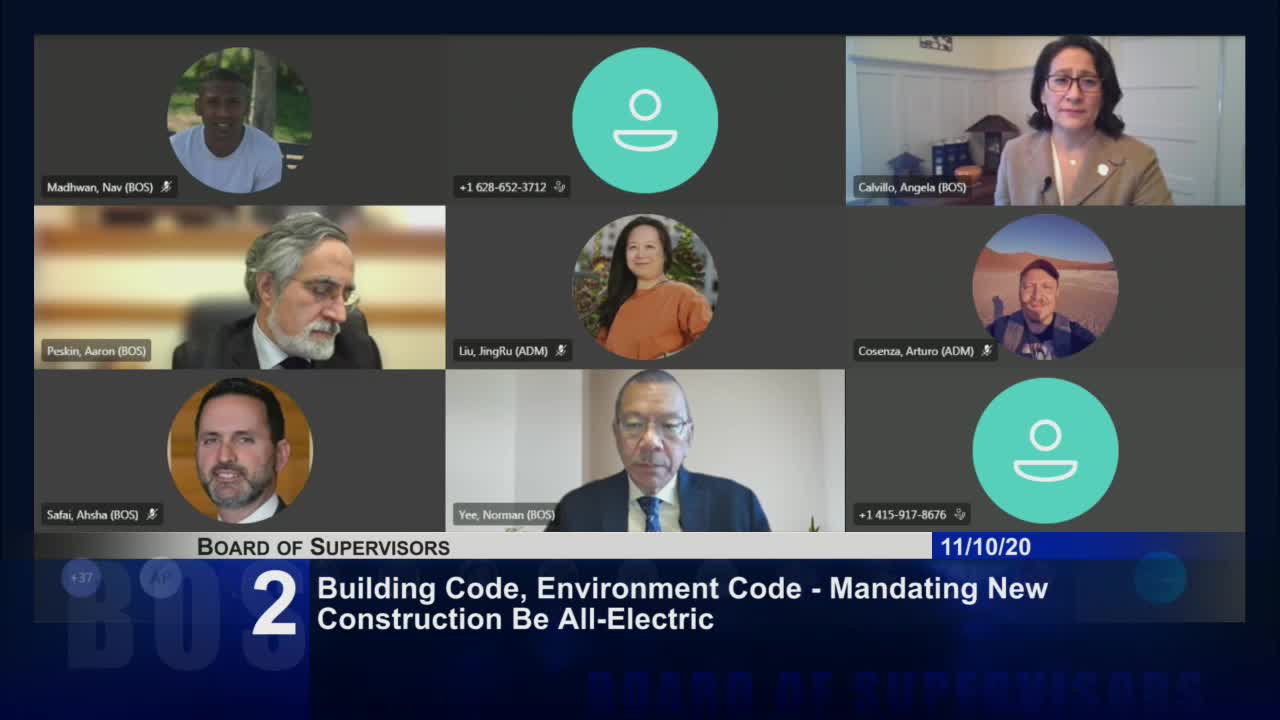
The Board of Supervisors voted unanimously on Nov. 10 to adopt an ordinance requiring most new construction in San Francisco to be all‑electric, while adding amendments aimed at workforce transition, testing additional green building measures, and a limited restaurant waiver process.
The San Francisco Board of Supervisors on Nov. 10 passed an ordinance requiring all new construction to be all‑electric, marking a major step in the city’s years‑long push to reduce building emissions. The measure — authored by Supervisor Rafael Mandelmann — passed unanimously after the board accepted a set of amendments intended to ease implementation for workers and restaurants.
Mandelmann, the ordinance’s lead sponsor, said the move is aimed at reducing greenhouse gases and improving public safety. “Natural gas is the second largest source of carbon emissions in San Francisco after transportation,” he told the board, citing health risks and past gas‑related disasters. He described the ordinance as “an incremental but important move to help save our planet.”
Nut graf: The ordinance sets a citywide requirement that new residential and commercial buildings file permits as all‑electric starting in mid‑2021, with limited administrative exceptions where electric systems are “technically infeasible.” Supporters said the policy advances the city’s climate goals and reduces exposure to gas‑related safety and health hazards. Opponents — and several members of the board — urged allowances for hard‑to‑electrify uses and a pathway to avoid unintended harm to restaurants and small developers.
Key details and amendments
- Effective dates: The ordinance moves the initial effective date to June 1, 2021 for most new permits, with reporting deadlines moved out to provide agencies time to implement procedures. - Workforce/green building amendment: The board adopted language directing City agencies to evaluate concurrent opportunities for further green building standards and to consider workforce transition measures for trades affected by a drop in gas‑related work. Mandelmann said the amendment commits the city to explore “revised green building standards” and worker transition options with labor partners. - Restaurant/waiver provisions: Following extensive public comment and committee work, the ordinance includes a narrow process for waivers where commercial kitchen equipment requires gas or where electric alternatives are demonstrably unfeasible. The board additionally accepted a reporting requirement — DBI will report on electric cooking technology to inform future policy changes.
Debate highlights
Supporters framed the ordinance as a climate and public‑health measure. Supervisor Matt Haney called it a “necessary, bold” step and praised the labor and environmental groups that negotiated the amendments.
Opponents and some restaurants’ representatives warned of cost and operational challenges for commercial kitchens. Supervisor Aaron Peskin and several others pressed for a careful rollout, additional technical assistance, and a longer timeline for certain commercial kitchen uses. Supervisor Safaíe proposed a broader temporary exemption for new restaurant‑serving buildings; that amendment failed on an 7‑4 vote. Colleagues then adopted narrower, time‑limited adjustments and a continued waiver pathway.
What passed and next steps
Mandelmann moved the ordinance and amendments; the motion was seconded and carried unanimously. The Board adopted the ordinance on first reading Nov. 10; additional hearings/second reading and administrative steps will follow before the rule takes full legal effect. City departments (DBI, Department of the Environment, SFPUC) were thanked by the author for implementation work and will publish administrative procedures for exception requests and reporting timelines.
Ending: Implementation will be incremental: the ordinance applies to new permits filed after the stated effective dates, grandfathering projects already in the pipeline. Supporters said the city will revisit waiver provisions as electric cooking technology and supply chains evolve.