Get Full Government Meeting Transcripts, Videos, & Alerts Forever!
Get email alerts on the Homelessness topic
No spam. Unsubscribe anytime.
Supervisors continue Hastings settlement debate; item moved to closed session next week amid calls for public oversight
Summary
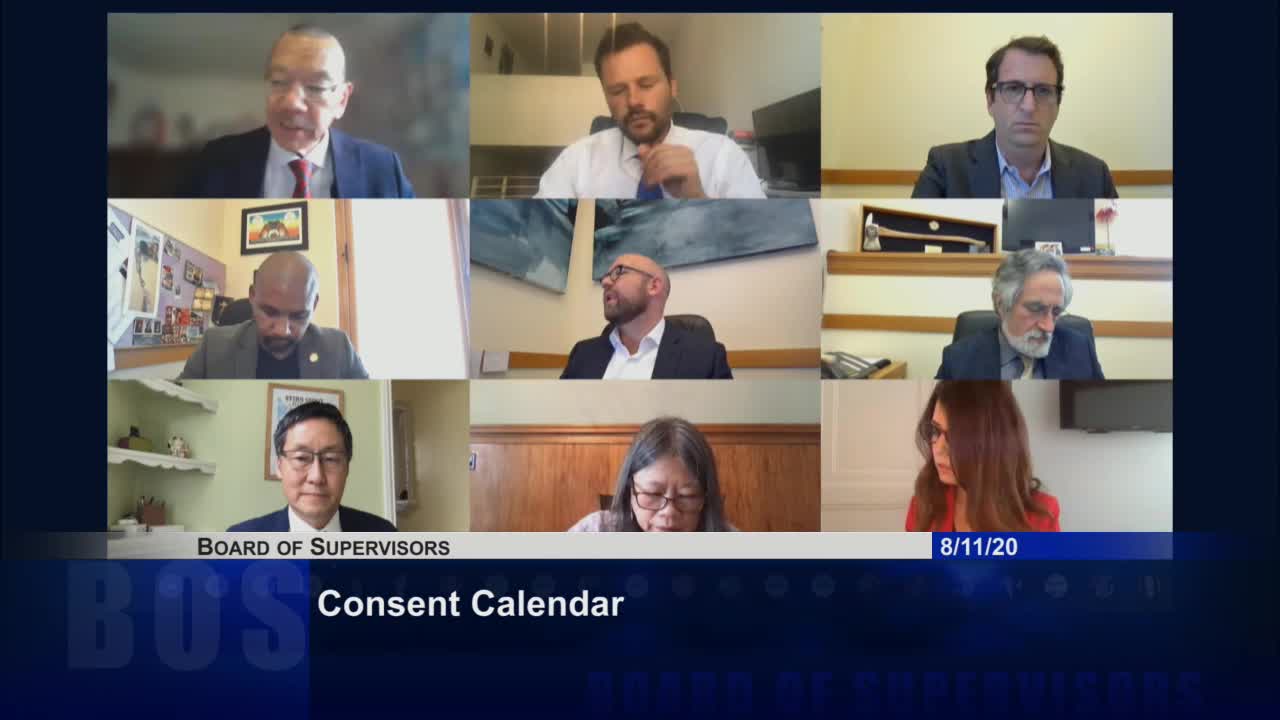
The Board of Supervisors agreed Aug. 11 to continue a proposed settlement with Hastings College of the Law and to meet in closed session on Aug. 18 for a confidential briefing, after an extended public debate about hotel rooms, encampment responses and the potential precedent set by settling public-agency litigation.
The San Francisco Board of Supervisors continued consideration of a proposed settlement with Hastings College of the Law on Aug. 11 and scheduled a closed-session briefing for Aug. 18 to review legal advice and implementation questions. The item drew extended debate about the city's use of hotel rooms to shelter people during the COVID-19 pandemic, resource trade-offs between neighborhoods, and whether litigation prompted changes in policy.
Item 11 on the board agenda sought authorization for a settlement of a lawsuit filed by Hastings College of the Law against the City and County of San Francisco. The lawsuit alleged violations tied to encampment conditions in the Tenderloin and sought injunctive relief requiring the city to achieve specific outcomes. City attorneys told the board they were asking members to consider the settlement "on its own terms." Deputy City Attorney Anne Pearson said settling would resolve the existing case but could not predict future filings.
Supervisor Hillary Ronan, who represents the neighborhood near the contested construction project on Folsom Street earlier in the meeting, and Supervisor Matt Haney, whose district includes the Tenderloin, both described a recent period of intensive placement work in the Tenderloin that moved large numbers of people into hotel rooms. Ronan said much of the change came after lawsuits and court pressure, and described the situation as a public-health crisis; Haney and others also argued that aggressive placement and a block-by-block outreach approach had produced meaningful improvements.
Other supervisors warned about precedent: Supervisor Aaron Peskin and colleagues asked whether settling the Hastings litigation would encourage similar plaintiffs to bring lawsuits in other districts to secure scarce hotel rooms. Deputy City Attorney Pearson and other city attorneys advised supervisors that rejecting the settlement would leave the case open and that the court could later decide compliance and remedies. Pearson said the city could receive confidential legal advice about litigation strategy in closed session; she reminded the board that some options and the choice among them were appropriate for confidential deliberation.
After the public discussion the board approved a motion (seconded and passed unanimously) to continue the item to a closed session on Aug. 18, with direction for city attorneys to brief supervisors privately. President Norman Yee said he would also put a public item on the Aug. 18 agenda to allow public comment on the matter and noted supervisors could choose to waive attorney-client privilege in open session at that meeting if they wanted to.
Why the item matters
The debate flagged several broader governance questions that supervisors said warrant more study: whether litigation that compels the city to act on encampments simply reallocates scarce resources (hotel rooms, outreach capacity) rather than expanding total capacity; how the city prioritizes neighborhoods for urgent shelter work; and the governance question of when lawsuits between public agencies should be resolved privately in closed session versus publicly in open meeting. Several supervisors, including Ronan and Haney, stressed the unusual circumstances of the pandemic and said the city's placement approach had to be agile; others stressed the need to preserve the board's policy prerogatives and to avoid encouraging "copycat" suits.
Public comment and next steps
During public comment, the meeting drew dozens of callers on homelessness and related municipal responses; several speakers described personal experience in seeking shelter and urged the board to take speedy action. The board's decision to move the item into closed session does not foreclose public participation: supervisors set up a public-comment opportunity on the Aug. 18 agenda and signalled they may in open session choose to waive privilege if they want to present settlement details publicly. City attorneys said the office can provide confidential strategic advice in closed session and will prepare that briefing.
Board members asked for more information ahead of Aug. 18, including: a precise accounting of hotel rooms leased and available; which departments control those allocations; how long rooms can be leased or financed under FEMA and other funding; contingency funding sources; and whether settlement terms can include additional commitments to expand placement capacity for other neighborhoods.
Ending
The board paused action on the Hastings settlement and asked staff and counsel to brief members in closed session on Aug. 18 and to add a public comment item on the same date. Supervisors said they wanted both the legal advice and an opportunity to hear from community members before making a final public vote on settlement authorization.