Get Full Government Meeting Transcripts, Videos, & Alerts Forever!
Board affirms Balboa Reservoir EIR, clears development agreement and land sale after amendments
Summary
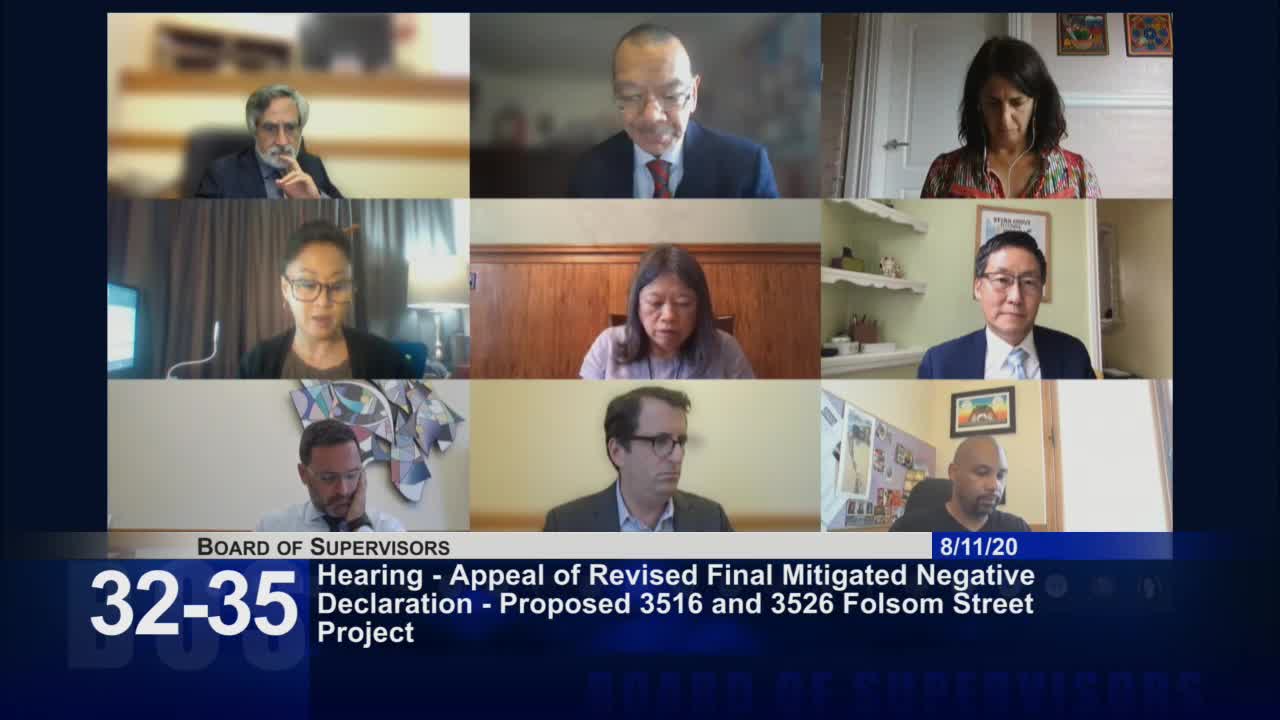
The San Francisco Board of Supervisors affirmed the Planning Commission's environmental review of the Balboa Reservoir project and advanced the project's planning and financial package on Aug. 11, including a development agreement and a contentious land sale that passed 10-1 after changes designed to increase public protections and permanent affordability.
The San Francisco Board of Supervisors voted unanimously on Aug. 11 to affirm the Planning Commission's certification of the Balboa Reservoir subsequent environmental impact report and to advance related ordinances, and later approved the land-sale resolution 10-1 after last-minute amendments to the development agreement.
The action moves forward a plan by Reservoir Community Partners (a partnership led by Bridge Housing and AvalonBay Communities) to redevelop roughly 16.4 acres adjacent to City College of San Francisco into about 1,100 housing units, of which 550 would be income-restricted; about three affordable-parcel pads will be deeded back to the city with long-term affordability restrictions. The project also includes roughly four acres of publicly accessible open space, a childcare center and educator housing.
City planning staff recommended upholding the SEIR, saying the document analyzed the appropriate range of feasible alternatives and disclosed impacts and mitigation measures required under the California Environmental Quality Act (CEQA). Planning Deputy Director Jean Yi Poling and planner Wade Woodcraft explained the SEIR had studied reduced-density alternatives and cumulative impacts, including the potential overlap with City College projects on the adjacent east basin.
Opponents and appellants urged the board to require a 100% affordable alternative on public land and to reexamine the project in light of the COVID-19 pandemic''in particular, questions about public-transit ridership changes and whether lower-density or entirely public models would produce fewer environmental impacts. Appellants argued the SEIR did not reasonably analyze a 100% affordable, city-owned option that would avoid extending Lee Avenue and could cut construction impacts by confining…
Already have an account? Log in
Subscribe to keep reading
Unlock the rest of this article — and every article on Citizen Portal.
- Unlimited articles
- AI-powered breakdowns of topics, speakers, decisions, and budgets
- Instant alerts when your location has a new meeting
- Follow topics and more locations
- 1,000 AI Insights / month, plus AI Chat