Get Full Government Meeting Transcripts, Videos, & Alerts Forever!
Get email alerts on the Land Use Housing topic
No spam. Unsubscribe anytime.
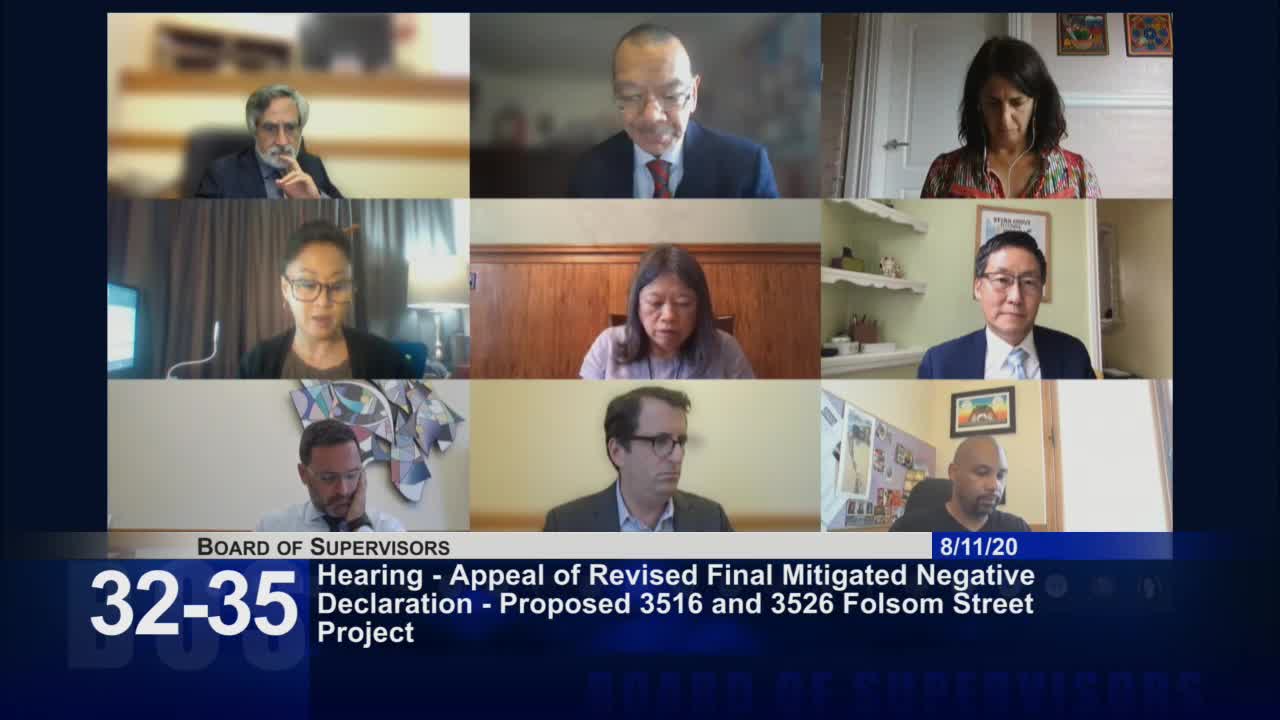
Board affirms Balboa Reservoir EIR, clears development agreement and land sale after amendments
Summary
The San Francisco Board of Supervisors affirmed the Planning Commission's environmental review of the Balboa Reservoir project and advanced the project's planning and financial package on Aug. 11, including a development agreement and a contentious land sale that passed 10-1 after changes designed to increase public protections and permanent affordability.
The San Francisco Board of Supervisors voted unanimously on Aug. 11 to affirm the Planning Commission's certification of the Balboa Reservoir subsequent environmental impact report and to advance related ordinances, and later approved the land-sale resolution 10-1 after last-minute amendments to the development agreement.
The action moves forward a plan by Reservoir Community Partners (a partnership led by Bridge Housing and AvalonBay Communities) to redevelop roughly 16.4 acres adjacent to City College of San Francisco into about 1,100 housing units, of which 550 would be income-restricted; about three affordable-parcel pads will be deeded back to the city with long-term affordability restrictions. The project also includes roughly four acres of publicly accessible open space, a childcare center and educator housing.
City planning staff recommended upholding the SEIR, saying the document analyzed the appropriate range of feasible alternatives and disclosed impacts and mitigation measures required under the California Environmental Quality Act (CEQA). Planning Deputy Director Jean Yi Poling and planner Wade Woodcraft explained the SEIR had studied reduced-density alternatives and cumulative impacts, including the potential overlap with City College projects on the adjacent east basin.
Opponents and appellants urged the board to require a 100% affordable alternative on public land and to reexamine the project in light of the COVID-19 pandemic''in particular, questions about public-transit ridership changes and whether lower-density or entirely public models would produce fewer environmental impacts. Appellants argued the SEIR did not reasonably analyze a 100% affordable, city-owned option that would avoid extending Lee Avenue and could cut construction impacts by confining development to the southern half of the basin. Planning staff responded that such an alternative would not meet the project's objectives, would still require substantial site work and would not avoid the significant construction and operational impacts the SEIR identified.
The Board held a separate vote later in the meeting that approved three related land-use ordinances on first reading (planning-code changes to enable the special-use district and map rezoning) and passed the development-agreement ordinance on first reading after amendments. The final, and most contested, step was the resolution authorizing the sale of the property by the San Francisco Public Utilities Commission (PUC) to Reservoir Community Partners for $11.4 million; that sale was approved 10-1, with Supervisor Aaron Peskin recording the dissent. The Board and the developer added several changes in the development agreement in the days leading up to the vote, designed to increase accountability and to protect public interests.
Key changes adopted before the vote included: - Deeding three affordable parcels to the city at project completion, then leasing them back to the developer or a nonprofit operator subject to permanent affordability restrictions; educator housing parcel language was revised so affordability covenants extend for the life of the project or 99 years. - Raising the minimum proportion of very-low-income units within the affordable set (moving toward more low-income placements and an increased floor for deep affordability). - Adding a binding "use it or lose it" schedule of performance and explicit predevelopment milestones; if the developer fails to commence construction for a defined period, the city retains repurchase rights. - A $1 annual rent requirement for the on-site childcare facility when run by a nonprofit operator to support low-cost slots. - Commitments from the developer and City College to cooperate on transportation demand management (TDM), parking allocations and mitigation work during overlapping construction; a project-specific open space advisory committee was added to guide park programming and maintenance and to ensure community input.
Planning staff and the developer repeatedly told the board the most significant environmental effects would occur during the initial horizontal work that is common to any scheme on the site: demolition of the old reservoir infrastructure, removal of asphalt and excavation for streets and utilities. The city and project team argued those impacts do not meaningfully differ if the site contained only affordable housing instead of a market/affordable mix because the heavy site-preparation work would still be needed.
Supporters of the project, including labor unions, neighborhood organizations and housing advocates, urged the board to approve the package. They argued the development adds badly needed housing capacity near transit, creates subsidized educator housing and includes public benefits such as parkland, childcare and permanent affordable housing that would be difficult to produce through city-only financing.
Opponents countered that the city was effectively giving away a valuable public site at a below-market price and that a 100% publicly controlled, deeply affordable plan should have been analyzed in more depth. Several supervisors signalled concern about the bargain sale price and asked the city to pursue policy changes for future public-land projects; Supervisor Dean Preston said he would pursue a hearing on maximizing affordable housing on public land.
The board recorded the following formal outcomes in the meeting record: - Motion to affirm the Planning Commission certification of the SEIR (Item 37): passed unanimously (11-0). - Ordinances (Items 40'42) advancing planning-code, general-plan and development-agreement actions: passed on first reading unanimously. - Resolution approving the land-sale agreement (Item 43): approved 10-1 (Supervisor Mar recorded the sole no vote).
What happens next
The actions on first reading advance the measures to final votes on subsequent meetings; the development agreement includes the agreed milestones and the repurchase provisions adopted by the board. City College and developer staff said they expect to proceed through final approvals and permitting before vertical construction begins; the development agreement sets a multi-year schedule for site work and building phases. The project team told the board it intends to use union labor and to target local-hire and apprenticeship commitments for construction.
Why it matters
The Balboa Reservoir site is one of the largest publicly owned, developable parcels on the West Side of San Francisco. The board's vote advances a package that creates hundreds of permanently affordable homes and infrastructure while also crystallizing a contentious policy tradeoff: sell-and-partner versus retain-and-build. Supervisors signalled they plan further hearings and policy work on how the city uses public land in coming months, including greater scrutiny of undervalued sales and stronger rules to maximize permanently affordable units on future sites.
Ending
After the vote the board adopted several in-memoriam adjournments and closed the meeting, but multiple supervisors said they want continued oversight and additional hearings to consider public-land policy changes and to monitor implementation of the Balboa commitments.