Get Full Government Meeting Transcripts, Videos, & Alerts Forever!
Get email alerts on the Public Safety Policing topic
No spam. Unsubscribe anytime.
San Francisco supervisors reopen public comment, then table motions on mayoral emergency proclamation and curfew after hours of testimony and criticism
Summary
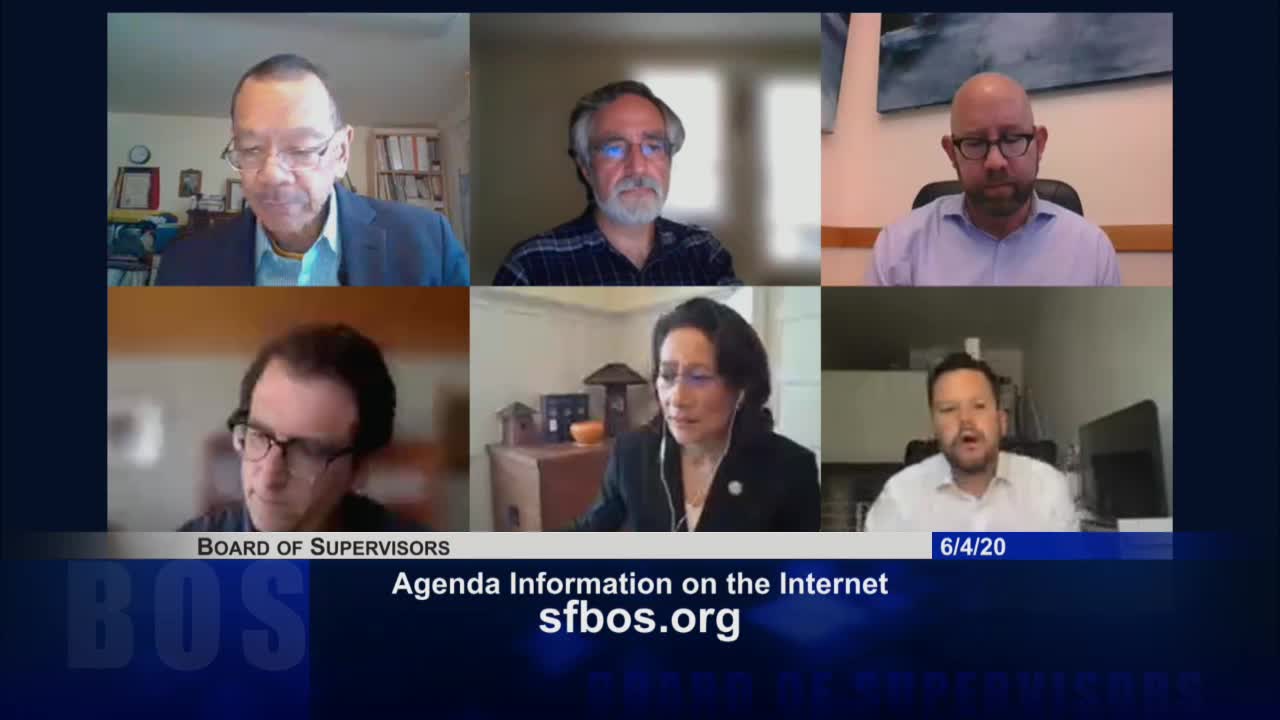
The San Francisco Board of Supervisors reconvened on June 3 to act on two motions related to a mayoral proclamation of a local emergency and a curfew first issued May 31, then spent more than two hours hearing police and public testimony before voting to table both items.
The San Francisco Board of Supervisors reconvened on June 3 to act on two motions related to a mayoral proclamation of a local emergency and a curfew first issued May 31, then spent more than two hours hearing police and public testimony before voting to table both items.
The board reopened public comment at the start of the session and heard more than 40 speakers, including journalists, neighborhood residents and organizers of the youth‑led protest that drew thousands to the Mission District on June 2. Many called the protest “overwhelmingly peaceful” and criticized the city’s use of a curfew, arrests of demonstrators and the detention of at least one reporter.
Chief William Scott of the San Francisco Police Department told supervisors the demonstration began about 3 p.m. at 18th and Dolores, drew “thousands” and was by and large peaceful. He said officers encountered scattered incidents of objects thrown at officers, two small fires earlier in the night and what officers believed to be people carrying accelerants. Scott said a tactical decision near the end of the night led officers to detain and cite people under the city’s curfew ordinance: “Out of those, 26 people were detained; 23 were cited and released,” he said. Scott said one detained person was a juvenile who was released to a responsible party and that department supervisors reported no uses of force during those arrests.
Undersheriff Matthew Freeman, representing Sheriff Vicki H. Miyamoto, said the sheriff’s office deployed emergency services personnel to protect City Hall and the Hall of Justice and that deputies made one arrest related to graffiti on an unmarked vehicle; the department is investigating a separate incendiary attack on a sheriff’s vehicle.
Julian Mark, a reporter for Mission Local, told the board he was detained for about 20 minutes while wearing a press credential he said was issued by the SFPD. “I think that my rights were violated quite a bit,” Mark said in public comment. Chief Scott told supervisors that department policy excludes credentialed journalists from curfew enforcement and that detained reporters should be released once verified; he acknowledged the department needs clearer field guidance and said SFPD leaders have begun discussions with media representatives.
Supervisors pressed the chief on several topics: whether the department is issuing press credentials, what training officers receive for identifying credentialed reporters, the cost of overtime and mutual‑aid deployments, and the department’s decision to keep a curfew in place while large demonstrations were expected. Chief Scott said he had not personally signed a new press pass in more than three years but that the department has a renewed process for issuing and renewing media credentials. He said overtime and mutual aid are being tracked but that exact cost estimates were not yet available and that mutual aid is typically reimbursed through the sending agencies and possibly the state or FEMA.
Public commenters repeatedly urged the board to end curfew use, to investigate individual arrests, to drop charges for peaceful protesters and to “defund” or demilitarize the police. Many speakers described arrests of young people they said had been trying to go home and criticized the city for concentrating resources on curfew enforcement instead of social services. Several called for an independent review of the detention of journalists and for clearer rules on press credentials.
Procedurally, the board first voted to reopen public comment by roll call (10 ayes). Later in the meeting, a motion to table items 1 and 2 — the board’s two pending motions regarding the mayor’s May 31 proclamation of a local emergency and the curfew — passed on a roll call vote (10 ayes). The clerk had also read an earlier communication indicating the mayor had issued a proclamation terminating the local emergency and curfew earlier the same morning; supervisors nevertheless proceeded to consider the two motions recessed from the June 2 meeting before ultimately tabling them.
The session left several outstanding items for follow up: supervisors asked for cost accounting on overtime and mutual aid, clarity on SFPD press‑credential procedures and the department’s field guidance for handling credentialed journalists, and a more complete accounting of arrests made under the curfew. Several supervisors and many public commenters urged the board to consider budgetary and policy changes that would reduce police reliance in favor of social, health and housing services.
The board’s vote to table leaves no immediate legislative action on the proclamations; supervisors noted the discussion and public testimony would inform future oversight or policy work.
Notes: Chief Scott said arrests near the end of the protest were made under the curfew ordinance and that 26 people were detained, 23 cited and released, and one juvenile was released to a responsible party. Julian Mark, Mission Local reporter, said he was detained for roughly 20 minutes while wearing press credentials; Chief Scott said the department’s written guidance excludes verified journalists from curfew enforcement and that verification should lead to immediate release.