Get Full Government Meeting Transcripts, Videos, & Alerts Forever!
Get email alerts on the Public Health Overdose topic
No spam. Unsubscribe anytime.
Supervisors press mayor as city confronts surge in opioid overdoses
Summary
Supervisor Matt Haney pressed Mayor London Breed for immediate steps after medical-examiner data showed San Francisco on track for a record number of overdose deaths in 2020; Breed said the city is expanding Narcan distribution, seeking enforcement tools against dealers and pursuing safe-injection site plans.
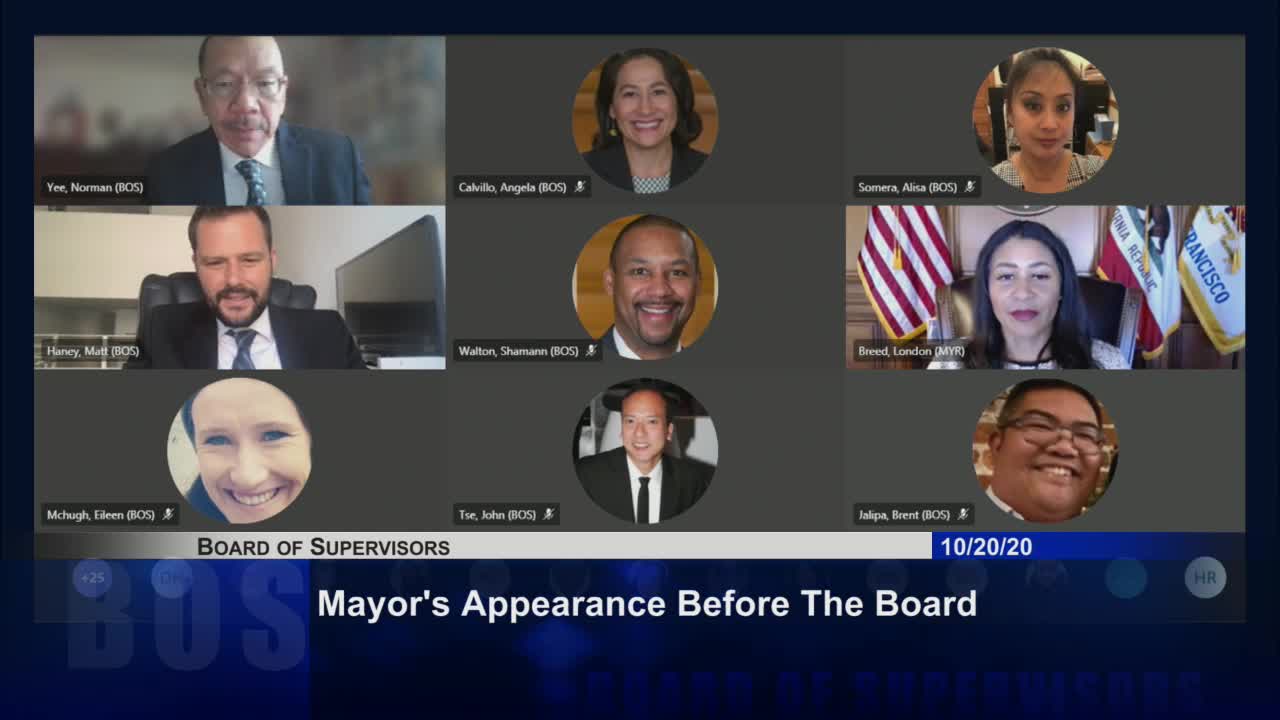
San Francisco officials warned Oct. 20 that the city is on track for a record number of drug overdose deaths in 2020, and supervisors pressed Mayor London Breed for immediate steps to stem the rise.
“DPH’s report shows that we are on track for potentially over 700 overdose deaths in 2020,” Supervisor Matt Haney said, citing a recent medical-examiner update he said would amount to roughly two overdose deaths per day and “nearly double last year’s totals.”
Breed said the city has expanded distribution of naloxone (Narcan), increased testing and outreach, and is pushing “safe injection site” proposals while urging more federal support. “We are the first urban county in California to have hit the state’s yellow tier,” Breed told the Board, stressing the public-health gains even as she called the overdose surge “very personal” and “devastating.”
Haney pressed Breed for actions that could blunt immediate harm. Breed pointed to stepped-up naloxone distribution in single-room-occupancy hotels and work by outreach teams, nonprofits and police; she said the city will pursue enforcement against repeat dealers and said she supported the City Attorney’s move to seek civil injunctions in the Tenderloin. “We need more enforcement,” Breed said, and asked the Board to continue funding prevention and treatment programs.
Public commenters and supervisors urged faster deployment of low-barrier services, testing and wraparound supports. Community advocates also reiterated calls for safe-supply and supervised consumption sites as part of a larger treatment and prevention strategy. Haney said he will convene a hearing to press for a coordinated, near-term response and public updates from the Department of Public Health, the medical examiner and the Department of Homelessness and Supportive Housing.
Breed and Haney both acknowledged limits on local authority — including the need for federal changes to reduce legal risks to city staff and nonprofit operators of supervised consumption programs — and the mayor asked the Board for continued support to both expand services and pursue enforcement against traffickers. The mayor said fentanyl is driving many of the deaths and that immediate distribution of reversal medication remains a top priority.
The Board did not take a formal vote on new funding at the Oct. 20 meeting; Haney said he will schedule a hearing to receive the DPH and medical-examiner findings and to press for a short-term plan to reduce overdose deaths before the end of the year.
Looking ahead, supervisors said they want clear, regular public reporting on overdose fatalities, demographic breakdowns and the city’s response timeline. Breed said she would work with agencies to provide the requested briefings and urged continued community cooperation on prevention and vaccination efforts as the city balances reopening with ongoing public-health threats.