Get Full Government Meeting Transcripts, Videos, & Alerts Forever!
Get email alerts on the Criminal Justice topic
No spam. Unsubscribe anytime.
Supervisors ban jail phone-and-commissary markups, aiming to ease costs for families of incarcerated people
Summary
The Board passed an ordinance prohibiting the city from entering agreements that generate revenue by marking up phone calls or commissary prices for incarcerated people, extending the change to new communications technology.
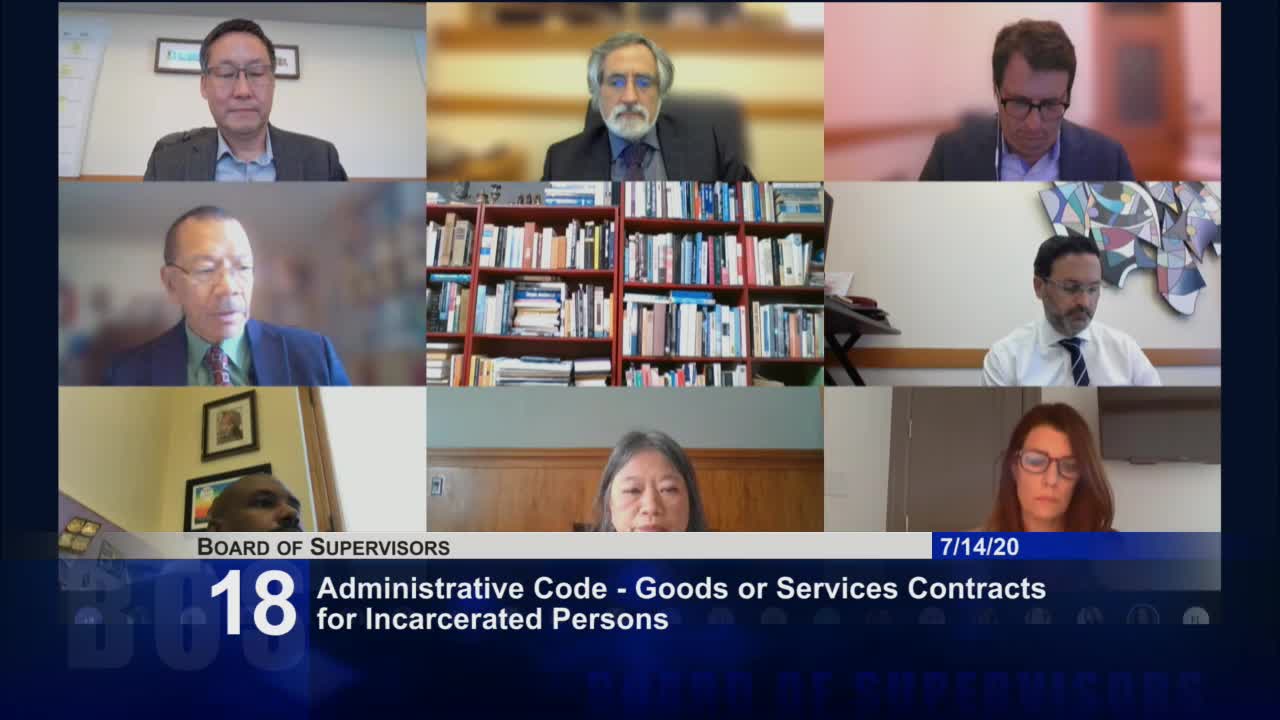
The San Francisco Board of Supervisors on July 14 unanimously adopted an ordinance that prohibits the city from entering agreements to provide goods or services to people in jail where the city would keep some or all of the revenue — effectively banning markups on jail phone calls and commissary items.
Supervisor Sandra Fewer, who led the ordinance’s introduction, framed the measure as a racial and economic justice step that would prevent families — in particular low‑income women of color who often shoulder the cost of staying in touch — from having to subsidize jail programming and operations. “We will not balance the budget on the backs of poor people and people of color,” Fewer said on the floor.
Why it matters: For years jurisdictions have contracted with vendors that charged high rates for phone calls or took a share of commissary sales, with the revenue sometimes used for jail programs. The ordinance codifies the city’s recent budget direction that ended routine markups, and it extends the restriction to new technology such as video calls or tablets the jail may offer.
Board discussion and rationale Supervisor Fewer said the practice placed a heavy financial burden on the families and support networks of incarcerated people — the very people least able to afford it during the COVID‑19 economic downturn. She cited a Treasurer’s Office Financial Justice Project estimate that some 80% of jail calls and commissary costs are paid by support networks and noted that services such as parenting classes, violence prevention and substance‑use recovery previously funded by markups are important and should be preserved without charging families.
Fewer thanked a coalition of advocates and city officials for their work on the policy, including Sheriff Paul Miyamoto and the Treasurer’s Office, and named community partners who pushed for change. She also emphasized that the city should provide these communication services “for free or at the lowest cost possible” and that the ordinance was intended to prevent a return to high fees.
Vote and next steps The ordinance passed on final reading by roll call, 11‑0. The law takes effect immediately under the city’s administrative code provisions that ban entering into revenue‑sharing agreements of the type described. The board directed departments to ensure that new contracts or services offered to people in custody comply with the ordinance’s prohibition.
Implementation questions The ordinance does not itself appropriate funds to replace any jail programming formerly financed in part by market markups; supervisors and speakers stressed that the city must maintain programming through budget decisions rather than vendor commissions. Departments charged with implementing the ordinance — including the Sheriff’s Office and the Treasurer’s Office — will need to report on how communications services are delivered and funded going forward.