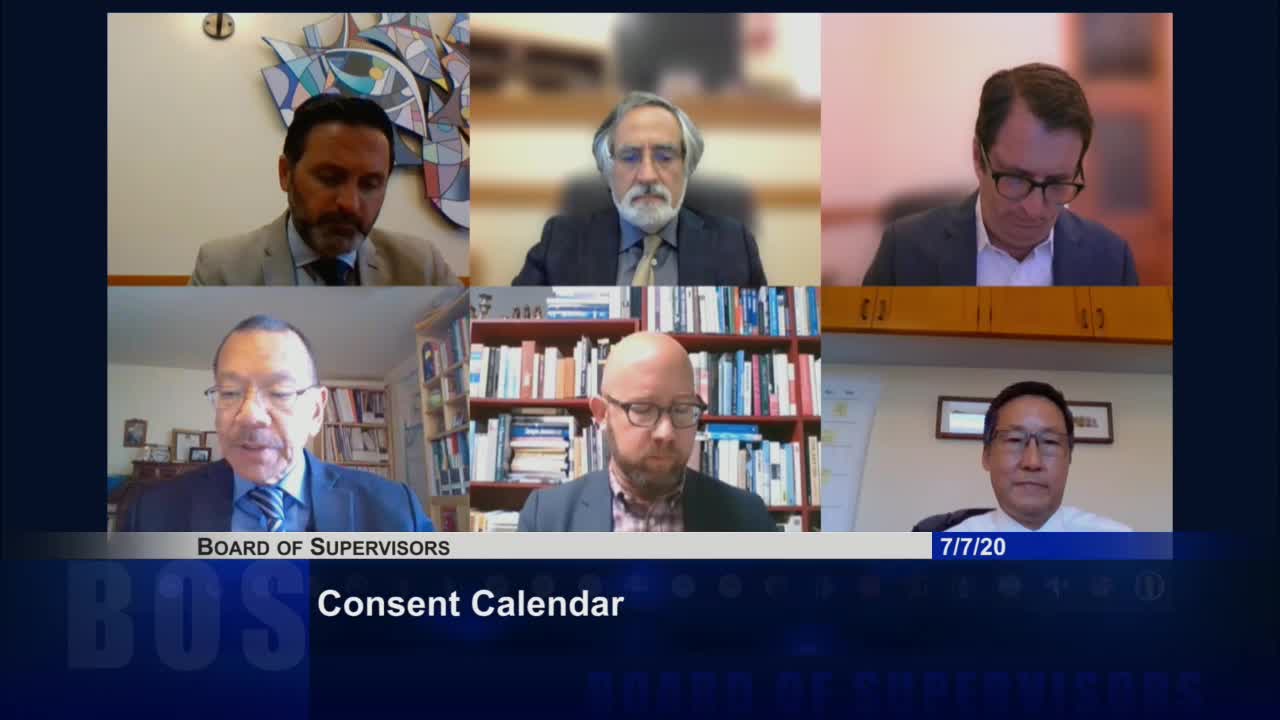
Board adopts emergency hotel, office cleaning standards requiring regular room service and protections for workers
Loading...
Summary
The San Francisco Board of Supervisors unanimously passed an emergency ordinance setting cleaning and disease-prevention standards for tourist hotels and large commercial office buildings, including an amendment requested by the Department of Public Health and protections for lactating employees.
The San Francisco Board of Supervisors on July 7 adopted an emergency ordinance requiring new cleaning and disease-prevention standards for tourist hotels and large commercial office buildings as part of the city's COVID-19 recovery measures.
The ordinance, which required a two-thirds vote for final passage under Charter section 2.107, passed unanimously (11-0) after supervisors approved a non-substantive amendment recommended by the Department of Public Health. The board also voted to delete a provision affecting shared beverage and food equipment that the department asked be removed.
Supervisor Peskin, the measure's lead sponsor, said the ordinance is intended to position San Francisco as "the place to come back to" by guaranteeing high cleanliness standards in hotel rooms and commercial buildings. "This is part of a revitalization and recovery package, to send a message to our country and the world, that San Francisco is at the forefront of having the safest, cleanest COVID-free hotel rooms in the United States of America," Peskin said during the meeting.
Supporters framed the ordinance as both a worker-protection and economic-recovery measure. Supervisor Safa— described the item as an effort to "elevate our hotel cleaners, our janitors, and those that are in these spaces and ensure their safety," arguing that demonstrating safe workplaces will encourage guests and office workers to return.
The board adopted a narrow amendment proposed by Supervisor Peskin to remove language on page 7 (lines 19'23) that would have discontinued shared beverage and food equipment in public and employee areas; the amendment was seconded and approved before the final vote. Several supervisors requested that their names be added as cosponsors during the hearing.
The ordinance extends cleaning standards similar to those the city previously applied to residential single-room-occupancy (SRO) hotels. Peskin told colleagues the SRO rules were the model for the new standards and that this measure expands those practices to fully commercial hotels and large offices.
The ordinance passed by roll call with all 11 supervisors voting in favor.
The board also discussed but did not adopt additional permanent code provisions at this meeting; Peskin said he plans to introduce permanent legislation at a later date to codify the rules beyond the emergency ordinance.
The item was taken up as part of a broader set of COVID-19 recovery measures discussed throughout the meeting.