Get Full Government Meeting Transcripts, Videos, & Alerts Forever!
Get email alerts on the Public Health Testing topic
No spam. Unsubscribe anytime.
San Francisco health officials outline plan to expand COVID-19 testing; say capacity rising but access remains uneven
Summary
San Francisco27s deputy public health officer, Dr. Susan Philip, told the Board of Supervisors that laboratory capacity to analyze COVID-19 tests has risen substantially but that actual daily testing remains far below that capacity and access is uneven across neighborhoods and congregate settings.
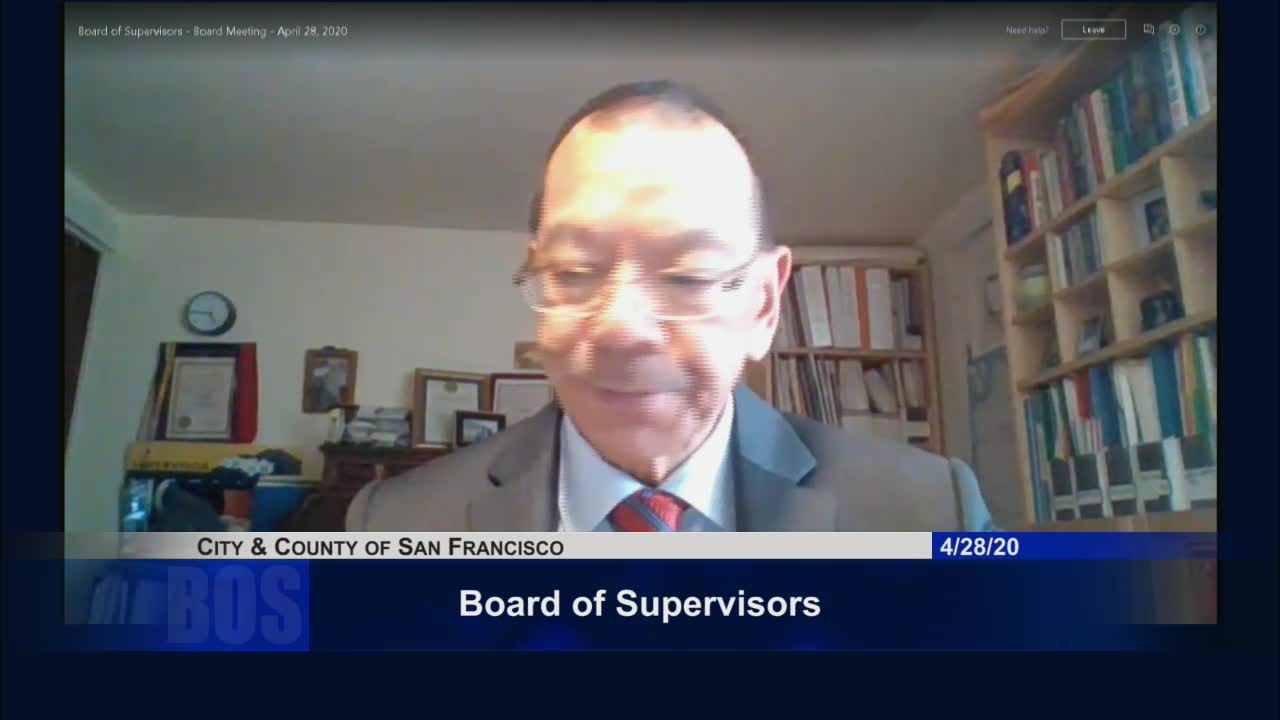
San Francisco27s deputy public health officer, Dr. Susan Philip, told the Board of Supervisors on a teleconference that the city now has laboratory capacity to analyze thousands of COVID-19 specimens daily but testing performed so far remains far lower and access is uneven across neighborhoods and congregate settings.
Philip said the city27s public and partner laboratories can analyze up to roughly 4,300 specimens a day and that an additional 1,500 tests per day are being handled through the CityTestSF collaboration, but that actual daily tests reported recently were on the order of a few hundred. She urged continued expansion of test access, and said testing alone is not sufficient without case investigation and contact tracing to isolate and quarantine exposed people.
The deputy health officer framed testing as part of a larger containment and care strategy: identify infected people, isolate them with support, trace and quarantine close contacts, and prioritize screening where it will most reduce severe illness and spread. She said testing supply chains 2D swabs, transport media and reagents 2D have stabilized in recent days, allowing broader site openings, but warned supplies remain subject to national market pressures.
Philip described current testing practice and near-term priorities. Molecular tests that detect viral RNA remain the standard diagnostic tool; a positive molecular test indicates active infection at the sampled site. A single negative molecular test, she said, is less conclusive and may require repeat sampling because of early infection or collection technique. The city27s short-term priorities are: protecting vulnerable populations and essential workers; mitigating outbreaks in congregate living sites (including skilled nursing facilities, shelters and SROs); and expanding testing for contacts and, as supplies and operations allow, asymptomatic screening in high-risk settings.
On congregate facilities and skilled nursing facilities, Philip said the department is shifting from a strictly contact-based testing approach toward broader screening where warranted, but stressed the work is operationally complex. "We have a very low threshold now for saying, 'Let27s just test staff and residents,'" she said, adding that decisions require on-the-ground assessments of facility layout, staffing patterns and infection-control practices and coordination with the state.
The deputy health officer flagged caution about serology (antibody) tests. She said the federal Food and Drug Administration and the World Health Organization have warned that presence of antibodies has not yet been proven to indicate protective immunity, so serology cannot yet be used to clear people to return to work.
Supervisors pressed Philip on timing and access. Supervisor Matt Haney asked when the city would move to widespread asymptomatic testing beyond contact tracing; Philip said officials are planning phased expansion and would start with health-care workers while building the workforce for repeated screening and contact tracing. Supervisor Dean Preston asked how the city will decide the cadence of repeated tests in congregate settings; Philip said the science is still evolving and UCSF and other partners will help evaluate optimal intervals. Supervisor Shamal Walton and others pressed for clearer timelines and more mobile or neighborhood-based access for communities with high case rates.
Philip said CityTestSF sites are open, including Pier 30-32 and a SOMA site, and that city-run sites at community health centers are available to symptomatic residents and essential workers who cannot access primary care. She urged residents with any of a broadening list of symptoms 2D from fever and cough to a new loss of smell 2D to seek testing and stressed that test results must be paired with case investigation, quarantine and supportive services.
The board and public speakers emphasized equity and urged immediate expansion of testing in neighborhoods that are reporting disproportionate cases. Philip said the department shares that priority and will continue to refine operations and outreach.
Looking ahead, Philip said testing strategy will continue to evolve as supplies, test technology and scientific understanding change. She closed by urging supervisors that testing must be matched with investments in contact tracing, worker protections and supports for people who must isolate.
Dr. Philip27s briefing is part of an ongoing series of public health updates the board has scheduled during the declared emergency.
Sources: presentation and Q&A with Dr. Susan Philip during the San Francisco Board of Supervisors teleconference and public Q&A.