Get Full Government Meeting Transcripts, Videos, & Alerts Forever!
Get email alerts on the Mental Health topic
No spam. Unsubscribe anytime.
Board approves amended housing conservatorship ordinance; supervisors require added outreach, reporting and voluntary services offers
Summary
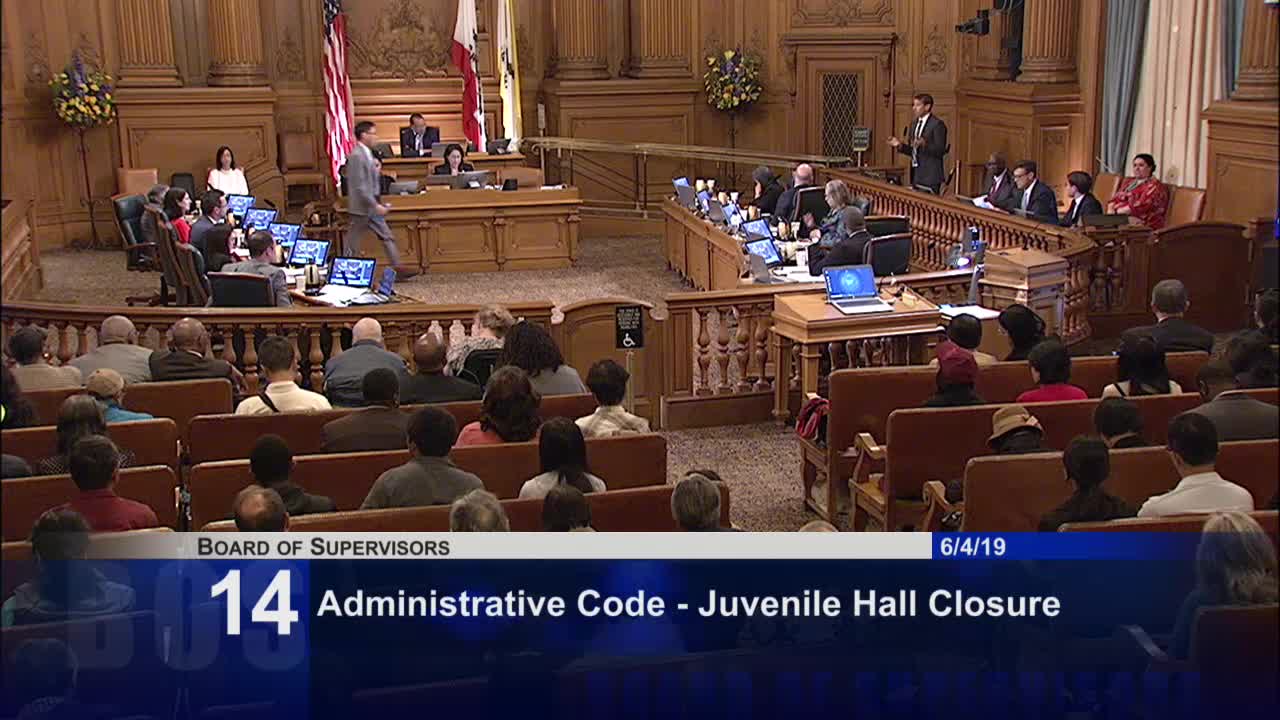
The Board of Supervisors passed on first reading, 10-1, an ordinance implementing provisions of SB 1045 to authorize housing conservatorships in San Francisco, with amendments that emphasize voluntary services, require documented offers of treatment prior to petitions and expand working-group reporting on 5150 holds and outcomes.
On June 4 the Board of Supervisors passed on first reading, by a 10-1 vote, an ordinance that adapts state law (SB 1045) to permit a local housing conservatorship pilot in San Francisco. The ordinance was amended on the floor by Supervisor Matt Haney and Supervisor Hilary Ronan (seconding) to add additional safeguards: mandatory documented offers of intensive case management, mental health and substance use treatment and clinically appropriate placements before filing a conservatorship petition; extra outreach attempts by AOT (assisted outpatient treatment) teams prior to evaluation; and expanded data and reporting duties for the Housing Conservatorship Working Group.
Supervisor Mandelman, the lead on the amendments, said the changes are intended to make conservatorship a least‑restrictive, clinically appropriate option and to ensure oversight of the use of 5150 holds, including tracking when police officers perform holds. The working group will be required to submit its first report to the mayor and board within six months of the ordinance’s effective date and annually thereafter, and to provide counts of referrals, evaluations and conservatorships as well as descriptions of services provided to conserved individuals.
Supporters said the ordinance and amendments provide tools to assist a small number of San Franciscans suffering from severe untreated mental illness and substance use disorders who repeatedly cycle through emergency services, jails and the street. They noted the legislation is a five‑year pilot and said the goal is to use conservatorship only when voluntary options have been exhausted.
Several supervisors — including Walton, who voted no — and some advocates raised concerns about disproportionate impacts on people of color and the role of law enforcement in 5150 detentions. Chief among the concerns were: ensuring offers of voluntary treatment are made and documented; preventing law‑enforcement‑led detentions where medical clinicians could respond; and making substantial investments in voluntary capacity and housing so conservatorship is not used as a default.
The roll call on the amended ordinance registered 10 ayes and one no (Supervisor Walton). The ordinance was approved on first reading.