Get Full Government Meeting Transcripts, Videos, & Alerts Forever!
Get email alerts on the Mental Health Housing topic
No spam. Unsubscribe anytime.
Supervisor Ronan introduces cooperative living ordinance and $25 million funding resolution for people with chronic mental illness
Summary
Supervisor Aaron Peskin and Supervisor Hillary Ronan introduced an ordinance to establish a cooperative living program for people with chronic mental illness, and a companion resolution urging the mayor to allocate $25 million of state revenues to start the program.
Supervisor Hilary Ronan introduced two measures intended to expand housing options for people with chronic mental illness: an ordinance to establish a cooperative living program and a resolution urging the mayor to allocate $25 million in excess state revenues to launch the initiative.
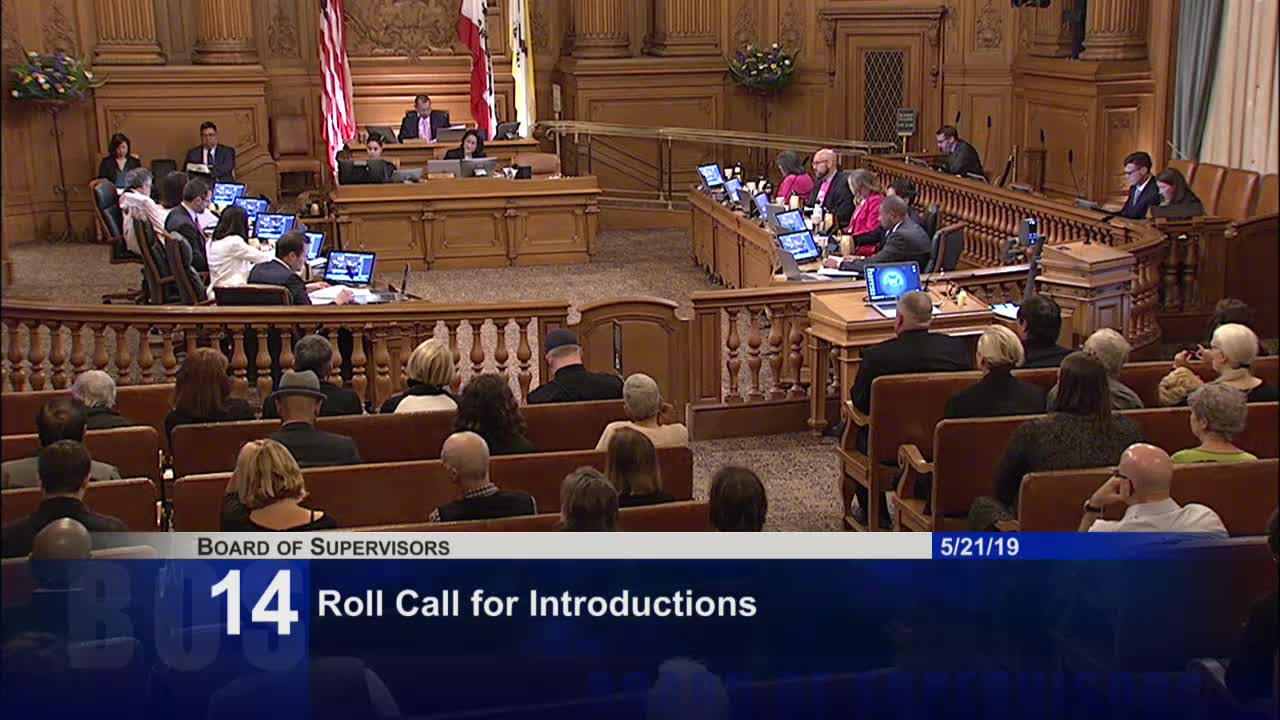
Ronan told the Board of Supervisors the ordinance would establish guidelines and procedures for city departments—naming DPH and "MOHD" in the text as entities to work with nonprofit providers—to acquire apartments and single-family homes and contract with service providers to operate scattered-site cooperative living units with on-call case management.
The resolution would urge Mayor Breed to prioritize the need and dedicate $25 million of excess state revenues as an immediate source of funds to scale acquisitions so the program has an economical and stable stock of units. Ronan said DPH would provide programmatic oversight and direct client placement, and that services and operations would be paid through medical funds, state mental health realignment dollars and other public funds, according to her remarks.
Ronan cited data presented at committee hearings: she said DPH reported 44 percent of homeless clients brought in for acute care leave short-term treatment programs without a place to go, which she characterized as a revolving-door problem the measures aim to address. She also credited local service providers — Progress Foundation, Positive Resource Center, and Conard House — for running existing cooperative living programs that currently house roughly 263 individuals across about 50 properties.
Ronan described the ordinance as building on an existing model in which providers master-lease units; her proposal would create a loan-acquisition program so providers, MOHD and DPH could secure a more stable stock of units. Ronan identified Supervisor Matt Haney as a cosponsor and thanked staff and nonprofit partners involved in drafting the proposal.
At the time of introduction the items were presented to the board; Ronan asked colleagues for support as the measures move forward through committee and subsequent hearings.