Get Full Government Meeting Transcripts, Videos, & Alerts Forever!
Get email alerts on the Labor Union Hospitality topic
No spam. Unsubscribe anytime.
San Francisco supervisors hear monthlong Marriott hotel strike; workers press for health care and job security
Summary
At a Nov. 2 special meeting the Board of Supervisors convened as a committee of the whole to hear testimony from striking Marriott workers and union leaders. Workers demanded employer-paid health benefits, job security and that “one job should be enough.” No Marriott corporate representative attended.
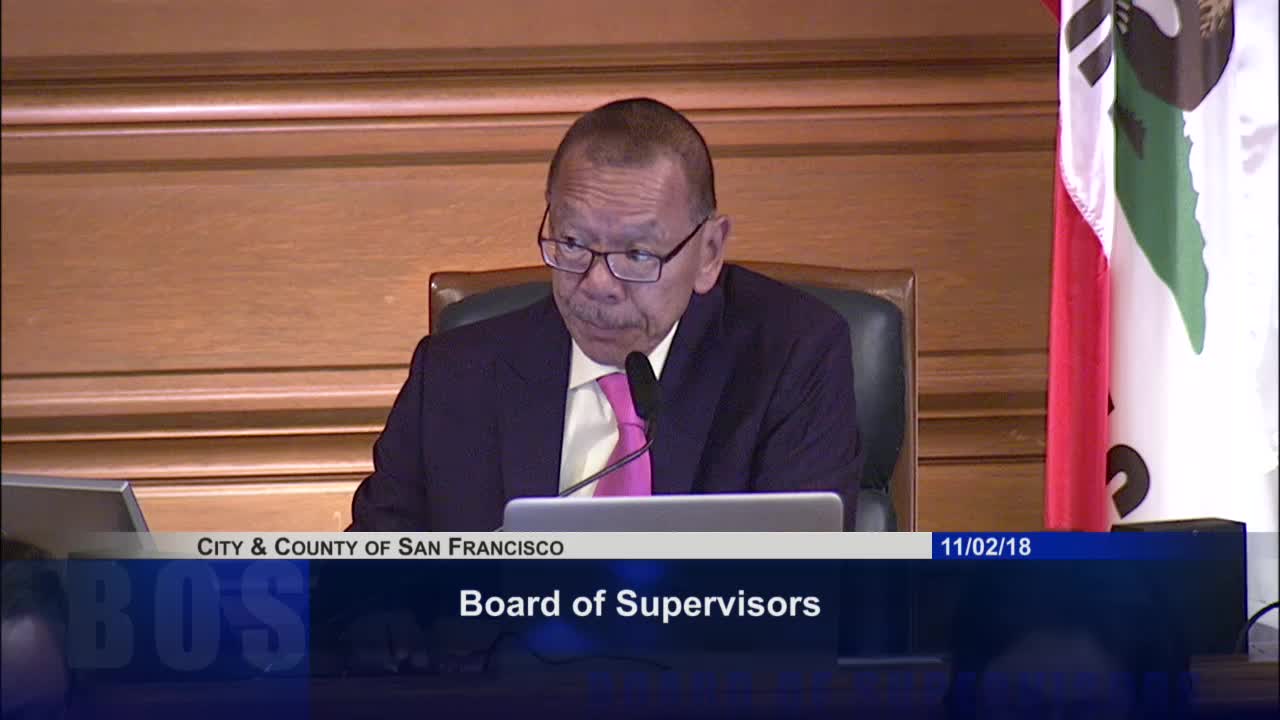
SAN FRANCISCO — The San Francisco Board of Supervisors convened a special meeting as a committee of the whole on Nov. 2, 2018, to hear firsthand testimony from striking Marriott hotel workers and Unite Here Local 2 leaders about a monthlong labor dispute that union speakers said involved roughly 2,000–2,500 workers at seven Marriott-operated hotels.
The hearing drew dozens of workers and supporters to the Board Chamber. Union leader Anand Singh, president of Unite Here Local 2, told supervisors the strike reflected broader problems in the city and said, "One job should be enough." Singh said negotiators had made “significant progress” on job security in recent talks but remained far apart from the company on health-care commitments. He said the union expected to return to the bargaining table in San Francisco on Nov. 12.
Why it matters: Striking workers told the board they cannot afford San Francisco rents, that many hold two or three jobs to make ends meet and that employer-paid health coverage and stronger job protections are central demands. Supervisors repeatedly framed the dispute as a test of corporate responsibility in a city where tourism and hotels generate billions in annual spending.
Board proceedings and votes
Before opening public testimony, members appointed Supervisor Norman Yee to serve as presiding officer pro tem for the meeting and voted to excuse President London N. Breed (not present), Supervisor Sandra (Kim) and Supervisor Mark Peskin (as recorded by the clerk). The appointment of Supervisor Yee was made by Supervisor Ronan and seconded by Supervisor Safa Yi and carried by unanimous consent. The motion to excuse the absent members was moved and seconded and passed in a roll-call vote with the eight members present recorded as aye (Feuer, Mandelmann, Ronan, Safa Yi, Supervisor Stephanie, Tang, Yi, Brown).
What speakers told the board
Anand Singh (Unite Here Local 2) described the dispute as "a crisis," saying 2,500 families had been out on strike for about a month and that the union’s core demand was that “one job should be enough.” He said Marriott had not committed to maintaining workers’ health benefits for the coming years and called the company’s stance “brazen.” Singh also cited the company’s global value, saying Marriott is a multibillion-dollar corporation.
Several dozen hotel employees testified during the public-comment period. Their remarks, repeated across multiple speakers, emphasized long hours, multiple jobs, family strain, workplace injuries and the cost of health care. Consuelo Escorsia, who identified herself as a lobby attendant at the Marriott Marquis for 29 years, said, "I am on a strike because I believe that one job should be enough to have a dignified life, to pay our rent and our bills, and to be able to help our family." Julian Penrose, a bellman at the W Hotel, said he had worked 24- and 32-hour shifts to make ends meet and called on Marriott to sign a contract so "one job should be enough to make ends meet." Other speakers described programs called "Green Choice" that reduce guaranteed cleaning hours and increase workloads, and many said they feared losing health coverage if the company did not agree to the union’s terms.
Supervisor responses and discussion
Supervisors from across the chamber thanked workers and the union for bringing their testimony forward, with multiple members saying they supported the workers’ demands. Supervisor Ronan, who called the hearing, told the chamber he had invited Marriott CEO Arne Sorensen to attend and that the company had declined. He said the willingness of colleagues to hold a special meeting reflected the issue’s importance. Several supervisors noted the broader economic stakes: Supervisor Ronan cited city tourism spending of about $9.1 billion in 2017 and said the dispute implicates income inequality, housing and public services.
No formal city action on the contract was taken at the hearing. Members discussed possible next steps, and one supervisor said the city might review hotel-related tax measures to consider whether policy action could address worker needs, but no directive or ordinance was introduced at the meeting.
Key factual points raised in testimony
- Union/worker counts: the clerk’s opening statement referenced a previous motion noting "2,000 hotel workers" at seven Marriott-operated hotels; Anand Singh and others referred to about "2,500" families affected. (Sources differ in the hearing.) - Contract timeline: speakers said the union’s contract with Marriott had expired Aug. 14 and that new bargaining was scheduled to resume Nov. 12 in San Francisco (Anand Singh). - Employer valuation: Anand Singh referenced Marriott as a corporation with roughly $49,000,000,000 in value in remarks to the chamber. - Programs and job quality: multiple workers raised concerns about "Green Choice" scheduling and increased workloads; several said the program reduced hours guaranteed to cleaning staff and contributed to injuries.
Outcome and next steps
The hearing provided a public record of striking workers’ testimony and of supervisors’ support; no settlement was reached at the meeting and no Marriott corporate representative addressed the board. Singh said the union planned to resume bargaining Nov. 12. Supervisors said they would continue to monitor the dispute and explore options available to the city; one supervisor indicated willingness to consider tax- or policy-related measures but did not propose specific legislation at the meeting.
Ending
The committee adjourned after extended public comment and supervisor remarks. The hearing record captures worker testimony describing economic hardship, calls for employer-paid health care and job protections, and repeated appeals to the city’s largest hotel operator to agree to a contract that union speakers said would make "one job ... enough."