Get Full Government Meeting Transcripts, Videos, & Alerts Forever!
Get email alerts on the Short Term Rentals topic
No spam. Unsubscribe anytime.
Supervisor Campos says he will seek law requiring companies to pay taxes before short-term rental implementation
Summary
Supervisor David Campos announced an upcoming ordinance that would condition implementation of city laws on companies’ payment of owed taxes. The announcement came amid public comment on recent short-term rental legislation and competing views from home-sharers and advocates.
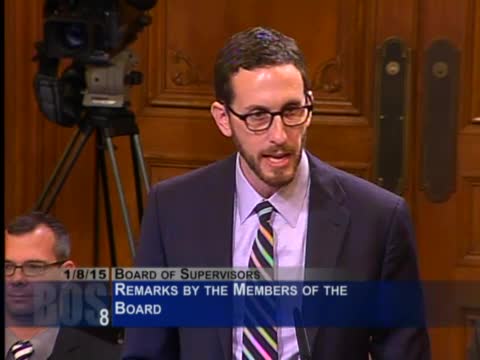
Supervisor David Campos told the Board of Supervisors on Jan. 8 that he will introduce legislation “next week” requiring that private companies pay owed taxes before the city implements laws affecting them.
“In simple terms, everyone should play by the same rules, and that even a $13 billion corporation should do what every single small business and every single resident of San Francisco does — pay taxes,” Campos said during his remarks. “I will be introducing legislation next week that will simply require that the implementation of any law is predicated on companies actually paying their taxes.”
Campos framed the announcement in the context of recent board debates over short-term rental rules and the city’s effort to collect taxes from online platforms. He told the board he would ask for a public hearing with the city treasurer and other agencies to clarify whether companies have paid required taxes and to consider changes allowing the treasurer to report on those payments publicly.
Several members of the public who addressed the board during the nomination/public-comment period raised the short-term rental law passed by the board in late 2014 and urged the supervisors not to “relitigate” that recently approved legislation. Jeannie Stone, who identified herself as a home-sharer, told the board that making future rules contingent on companies paying back taxes could prevent the law’s implementation and said, “I ask the board of supervisors to not relitigate this issue.” Another speaker, who said the change would require disclosure of confidential tax information, called the idea a “dangerous precedent.”
Campos acknowledged the treasurer had already issued a statement regarding tax obligations and said the new ordinance, if needed, would clarify reporting and enforcement mechanisms. The item at the Jan. 8 meeting was an announcement of intent; no ordinance was introduced or voted on that day.