Get Full Government Meeting Transcripts, Videos, & Alerts Forever!
Get email alerts on the Housing Policy topic
No spam. Unsubscribe anytime.
Supervisors adopt planning-code amendments to streamline 100% affordable housing reviews, restore neighborhood notice rules
Summary
An ordinance amending planning-code procedures to allow administrative approval of 100% affordable housing projects and to adjust neighborhood-notice provisions passed unanimously after supervisors added amendments preserving some 30‑day notices and language-access requirements.
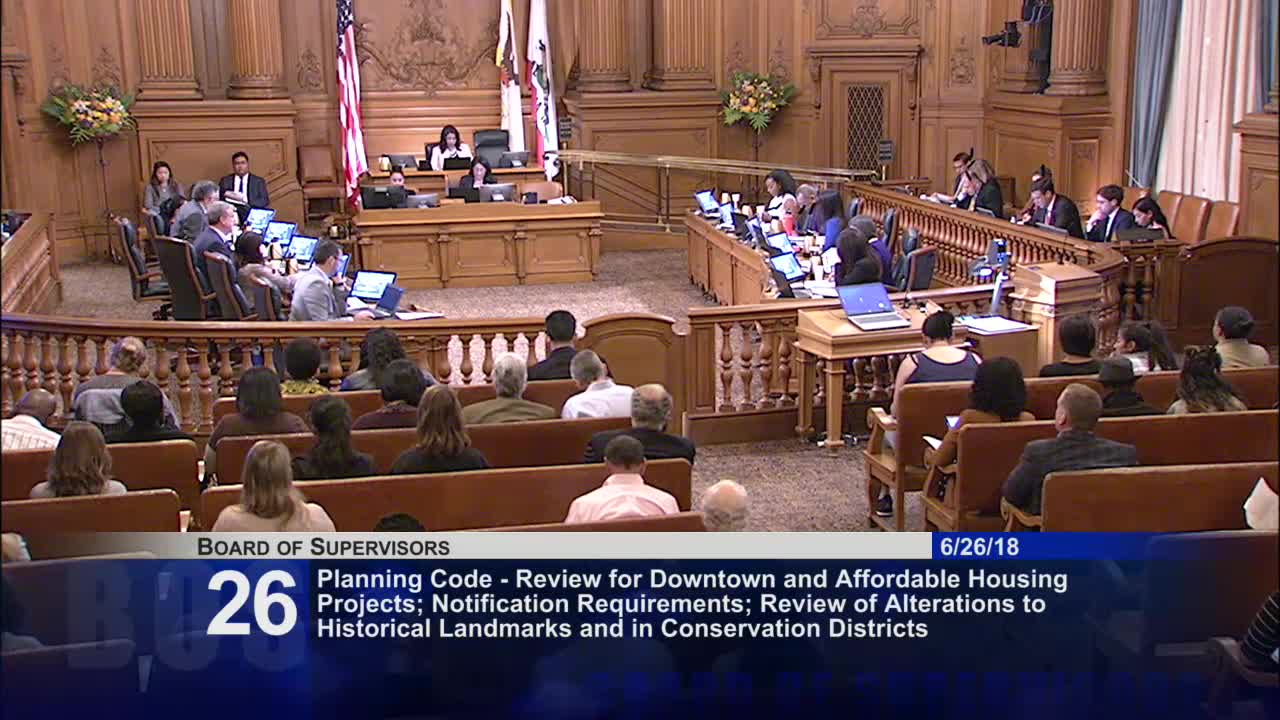
The Board of Supervisors voted unanimously on June 26 to adopt an ordinance that changes the planning code’s review procedures for certain projects while preserving neighborhood-notice protections for others.
The ordinance directs that projects composed of 100% affordable housing (as defined in the legislation) may proceed via administrative review rather than discretionary review when the planning director certifies consistency with affordable-housing design guidelines and applicable rules. The change is intended to speed the permitting timeline for entirely affordable projects.
At the same time, Supervisor Peskin offered a set of amendments — adopted on the floor and incorporated into the ordinance — that restored several existing neighborhood-notice protections. The amendments preserve 30‑day notice requirements for applications governed by Planning Code section 3.11 (for example, demolition and removal of residential units, changes of use and significant residential construction), maintain 20‑day notice and other procedures under section 3.33 for many other permits, and explicitly keep longstanding plan-set notice formats. The board also adopted a clarification to exclude certain small features already exempted in Planning Code section 136C (items 1–24 and 26) from new notice changes, preserving present exemptions for minor work such as certain windows or dormers.
Supervisor Ronan secured additional language-access provisions: mailed and posted notices for 3.11‑level notices must comply with the city’s language-access ordinance and include translated basic information where required by the city’s rules. The board also inserted conforming technical edits to make clear that removal of residential units and certain discretionary reviews remain subject to the longer notice periods.
Planning department staff and the Deputy City Attorney explained on the record that the amendments restored several sections of the current code that the original ordinance had consolidated into section 3.33. Planning staff and supervisors debated how notice periods should apply to small alterations (for example, rear-yard “pop‑outs” and dormers) and agreed the revised language will preserve the code’s existing exemptions for many small features while continuing to streamline approvals for fully affordable developments.
The ordinance passed unanimously on first reading after a brief floor debate and multiple friendly amendments; supervisors said they would continue to work with the planning department to refine pre-application meetings and notification practices going forward.
Ending: The board’s action is procedural and affects permitting timelines and notice processes. The ordinance will return for final passage per regular legislative procedure and planning staff will implement the updated notice rules in their workflows.