Get Full Government Meeting Transcripts, Videos, & Alerts Forever!
Get email alerts on the Land Use Housing topic
No spam. Unsubscribe anytime.
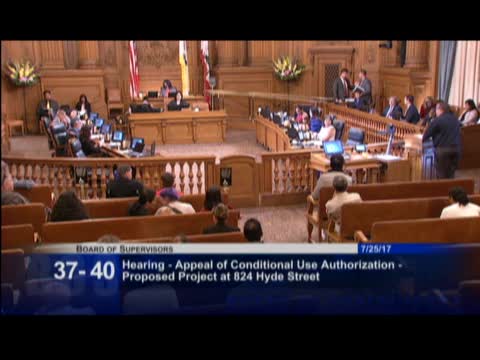
Board overturns Planning Commission, denies micro-hotel at 824 Hyde and upholds appeal
Summary
The Board of Supervisors voted unanimously to overturn the Planning Commission's approval of a 30-room micro-hotel planned for 824 Hyde Street, siding with neighbors and tenant advocates who said the site should be rebuilt with housing after a 2010 fire destroyed the prior rent-controlled units.
The San Francisco Board of Supervisors on Tuesday voted unanimously to uphold an appeal and overturn the Planning Commission's conditional-use authorization for a 30-room micro-hotel at 824 Hyde Street.
The project sponsor proposed a six-story building with 30 tourist rooms on a parcel where a four-story, eight-unit rent-controlled residential building burned in 2010. A separate, previously approved housing entitlement for a 14-unit residential project remained on the record. Appellants and neighborhood groups urged supervisors to require that the destroyed housing be replaced rather than allow a tourist use.
Why it matters: The board's decision prioritizes replacement housing in a neighborhood advocates say has experienced strong pressure on rent-controlled units. Supervisors cited precedent and tenant right-to-return concerns in overturning the commission's approval.
Lower Polk Neighbors, the appellant, argued the site should be rebuilt as housing and warned that allowing a conversion to hotel use after a fire would create a precedent that could encourage permanent loss of rent-controlled units. "If there is anything necessary or desirable for the site, it's housing," the group's representative, Chris Schulman, said during the hearing.
Project sponsor representatives argued the location falls within the city's Apartment and Hotel district and that hotel uses are compatible; they also noted the hotel would produce ongoing hotel tax revenue and reduce pressure on short-term rental conversions, while offering no off-street parking and bicycle parking in the building.
Supervisor Peskin, who moved to uphold the appeal and deny the conditional use, said allowing a nonresidential use to replace destroyed rental units risks undercutting tenants' right to return. "It's tantamount to saying ... it's okay to have a fire and change it to a non-residential use so that people don't have the right to return," Peskin said in debate. The motion to proceed on findings to deny the conditional use and clear the way for the previously entitled housing passed unanimously.
Public-input and evidence: Tenant and neighborhood groups, Unite Here Local 2 (hotel workers), the Coalition for San Francisco Neighborhoods and several residents spoke in favor of the appeal. The planning department and the project sponsor presented the planning staff rationale and the project's entitlement history; the Planning Commission had voted 4-3 to approve the hotel.
Outcome: By roll call the board voted to approve items that effectively conditionally reversed the department's determination in favor of the appeal (motions recorded as items 39 and 40), resulting in denial of the Planning Commission's conditional-use authorization for the hotel. The vote was recorded as 11 ayes, 0 noes.
Next steps: The previously entitled 14-unit housing project remains an option for the site; the decision sends the project back to the permit phase as housing is pursued instead of a tourist hotel.