Get Full Government Meeting Transcripts, Videos, & Alerts Forever!
Get email alerts on the Civil Liberties topic
No spam. Unsubscribe anytime.
Supervisors pass ordinance banning use of city resources to create registries based on religion, national origin or ethnicity
Summary
The Board unanimously passed on first reading an ordinance prohibiting city participation in databases or registries of individuals by religion, national origin or ethnicity, and added a private right of action after emotional testimony in committee and public outreach.
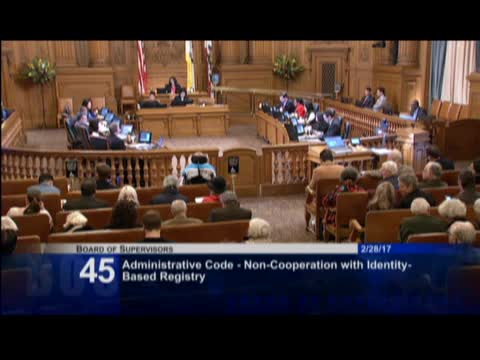
The Board of Supervisors unanimously passed on first reading an ordinance prohibiting city departments from using resources to create, implement, investigate or otherwise assist any government program that registers individuals on the basis of religion, national origin or ethnicity (item 45). Supervisors also added language creating a private right of action after advocates and community members urged stronger enforcement during committee hearings.
Why it matters: The ordinance was presented as a pre-emptive city policy to ensure municipal agencies do not cooperate with any federal effort to create registries based on religion, national origin, or ethnicity. Supporters said it protects civil liberties and sends a clear message to communities concerned about federal enforcement actions.
What was said: Supervisor Malia Cohen, who sponsored the ordinance, described the measure as aimed at disclosure to federal authorities rather than internal data collection and said the text had been amended to address concerns from the Human Services Agency and to preserve internal data collection for service delivery. "This piece of legislation...is to reject any attempt, from the federal government to force the city and county of San Francisco to participate in the creation of a registry or a database for people based on their religious beliefs, national origin, or their ethnicity," Cohen said during her remarks.
Supervisor Hillary Ronan described how moving testimony in committee led her and colleagues to support creating a private right of action so residents could bring suit if data were improperly disclosed. "We felt that it was important to do something unprecedented and add a private right of action so that we were creating the strongest law possible," Ronan said.
Vote and next steps: The ordinance passed unanimously on first reading and will return for further readings and final passage per charter rules. The first-reading action puts the city on record against municipal cooperation in or assistance to any registry based on protected attributes; sponsors said they expect to work with city departments on implementation guidance and to preserve appropriate data collection for government services.
Limitation: The ordinance targets disclosure and external databases; Cohen told the board that the measure is "only aimed at disclosure, not our internal collection of data," and that city agencies may continue to collect demographic data necessary for equitable service delivery.
What to watch: The measure will return for final readings. The city attorney and departments will likely draft policies and guidance on how the new law intersects with existing reporting and data collection obligations.