Get Full Government Meeting Transcripts, Videos, & Alerts Forever!
Get email alerts on the Cannabis Policy topic
No spam. Unsubscribe anytime.
Board approves members of cannabis state‑legalization task force after debate over one seat
Summary
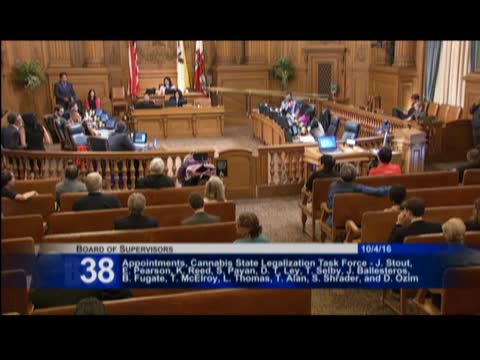
The Board of Supervisors approved appointments to the city’s cannabis state‑legalization task force after heated floor debate over one candidate. An amendment to replace Kevin Reed with Michael Nolan failed 1–10; the board then approved the original slate of candidates unanimously.
The Board of Supervisors approved a slate of appointments Oct. 4 to San Francisco’s Cannabis State Legalization Task Force, but the process included a contested amendment. Rules Committee recommended Kevin Reed for one seat; Supervisor Cohen moved an amendment in committee to replace Reed with Michael Nolan for seat 11. Cohen said she wanted to correct a committee error; other supervisors and multiple members of the Rules Committee defended Kevin Reed’s long experience in the cannabis industry and his neighborhood engagement.
Supporters of Reed — including Supervisors Mar, Campos, Kim and Wiener — spoke in his defense, citing community ties, prior task force service and neighborhood cleanup work. After floor debate the amendment to replace Reed with Michael Nolan failed 1–10. The full slate of task force appointees on item 38 was then approved unanimously by roll call (11–0).
What was decided: the board approved the task force membership list as recommended by the Rules Committee; the failed amendment was an example of the board’s deliberative review on appointments to consequential advisory bodies.
Why it matters: The task force will advise on state legalization implementation: regulations, neighborhood impacts, licensing and equity. Who sits on these advisory bodies shapes the policy direction during a period of rapid regulatory change following state ballot measures.
Next steps: The task force begins meeting under the appointments approved by the board.