Get Full Government Meeting Transcripts, Videos, & Alerts Forever!
Get email alerts on the Police Reform topic
No spam. Unsubscribe anytime.
Board of Supervisors hears blue ribbon panel report calling for independent oversight and transparency in SFPD
Summary
The San Francisco Board of Supervisors convened in committee of the whole Oct. 4 to hear a 72‑finding, 81‑recommendation report from a blue ribbon panel assembled by District Attorney George Gascón, which concluded the San Francisco Police Department needs greater transparency, systematic auditing and stronger external oversight.
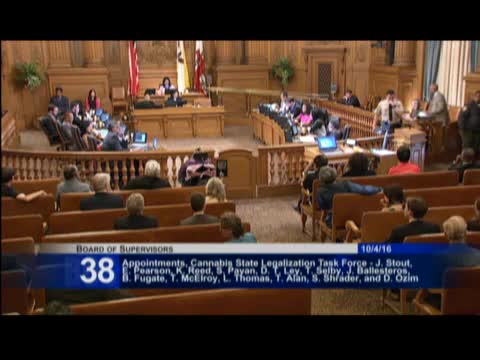
The San Francisco Board of Supervisors convened a committee of the whole on Oct. 4 for a public hearing on the final report of the Blue Ribbon Panel on Transparency, Accountability and Fairness in Law Enforcement, which was assembled by District Attorney George Gascón.
The panel—composed of three judges, multiple law firms and outside experts—found institutional problems in the San Francisco Police Department (SFPD) and urged the city to adopt an independent, recurring audit function, improved data collection and transparent discipline practices. The panel’s executive director, Anad Subramanian, summarized the report’s top-line findings and urged the board to require specific implementation timelines and regular status hearings.
At a densely attended hearing the panel’s judges and lawyers detailed gaps the review found across stops/searches/arrests, internal discipline, hiring and promotions, use‑of‑force policy, culture, Brady material disclosures and external oversight. Justice Cruz Reynoso and Judge Ladoss Cordell emphasized a history of repeated outside reviews and federal intervention dating back decades, and urged political leadership to act beyond “reports on shelves.”
Panel presentations highlighted four core themes: - No regular, citywide auditing function for the department; other large jurisdictions use inspector‑general offices to audit police activity. - Significant data and compliance problems in stop/search reporting; lower search “hit” rates for Black and Latino people indicate risk of bias. - Opacity in hiring, promotions and internal affairs, and lack of integrated discipline databases. - A department culture shaped in part by strong union influence; several witnesses said the San Francisco Police Officers Association (POA) can impede reform.
Acting Police Chief Tony Chaplin and deputy chief Garrett Tom attended and told the board the department is implementing changes, including updated data reporting, bias training, the roll‑out of body‑worn cameras and work on a revised use‑of‑force policy. The chief committed to responding to the panel’s recommendations and said the U.S. Department of Justice was conducting a technical review that the department expects to integrate with the blue ribbon findings.
During more than three hours of public comment and extended supervisor questioning, community advocates and survivors called for rapid, concrete steps: enhanced public oversight, independent audit capacity, stronger whistleblower protections, and use‑of‑force reform that is not delayed by labor negotiations. Several commenters said the POA’s public statements and political spending undermine trust in the department and make reform more difficult.
After hearing testimony and public comment, Supervisor Malia Cohen moved to table further deliberation and to schedule follow‑up status hearings; colleagues seconded the motion and it was approved without objection. The board signaled it will ask the department and the Police Commission for written responses, and supervisors proposed regular committee‑of‑the‑whole updates to track implementation.
Why this matters: The report documents systemic issues that the panel says pose legal and civil‑rights risks and urged the city to adopt a sustained program of auditing, transparency and civilian oversight. The board’s next steps, including timelines and whether to create an independent audit/inspector general role, will determine whether recommendations translate to durable change.
The panel’s report is public; the judges urged supervisors to require specific implementation timelines and to use the council’s budget authority to ensure necessary resources for oversight and reform.