Get Full Government Meeting Transcripts, Videos, & Alerts Forever!
Get email alerts on the Affordable Housing topic
No spam. Unsubscribe anytime.
Board hears heated public concern over Midtown Park Apartments as supervisor outlines rent restructuring
Summary
Supervisor Kim told the Board of Supervisors that rent adjustments and a five-year phase-in are planned for Midtown Park Apartments to stabilize the complex; residents and advocates told the board they fear displacement and urged action to preserve long-standing affordable units.
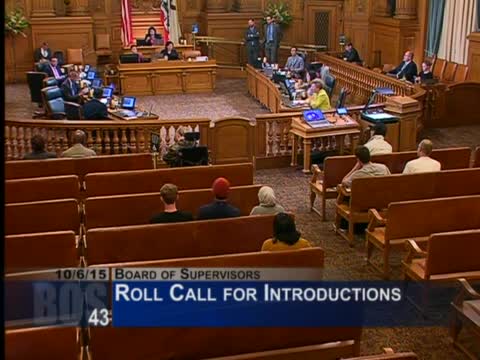
Supervisor Kim told the San Francisco Board of Supervisors on Oct. 6 that Midtown Park Apartments, a city-owned, Mercy Housing–managed complex in the Western Addition, needs major rehabilitation and a rent restructuring aimed at stabilizing the property while keeping it affordable for current residents.
"No Midtown residents will be displaced, nor have they been during this process," Supervisor Kim said, describing an income recertification process and a five‑year phase-in for rent changes. He said the development has an estimated need of "over $40,000,000 in rehabilitation" and that the city has provided emergency capital, including $500,000 this year.
Kim pressed that the goal is to keep current residents in their homes while bringing project income in line with operating needs. He gave a breakdown from the mayor—s office of housing and Mercy Housing of planned rent outcomes after recertification: "28 households will see a rent reduction," 2 will have no change, 49 will see increases under $100 per month, 21 will see increases of $100 to $200, 12 will see increases of $200 to $300, and 10 households will see increases of $400 to $700 per month over five years. He also said 7 units were classified as market rate because of noncompliance or lack of response to income certification.
Kim said the city and Mercy Housing will continue to subsidize operations during stabilization, with the mayor—s office committing at least $200,000 a year to cover operating shortfalls while repairs and certification proceed. He said financial-planning workshops for residents have been held and that he has scheduled meetings with residents and Mercy Housing to discuss outstanding concerns.
Numerous residents, neighborhood advocates and longtime San Francisco activists urged the board during the public-comment period to preserve affordability and to honor prior promises to Midtown tenants. Tenant leaders and speakers noted Midtown—s origin as relocation housing in 1968 and called attention to the board—s 2007 pledge to work toward resident ownership. Speakers described fear that lease changes and income recertification could be used to push longtime residents out, and several said some tenants already face market-rate conversions.
"We've been trying for at least the last three months," Midtown resident Juanita Clay told the board, urging direct engagement. Other speakers including Andres Estebanese, Karen Smoot, Richard Stone (San Francisco Green Party), and others described Midtown—s history and urged the board to uphold previous commitments.
The board did not take a policy vote or adopt new authority at the meeting on Midtown; rather, the item was presented and discussed and Supervisor Kim said he would continue meeting with tenants and Mercy Housing. The proceedings included clarifications about the income-certification process, the phased schedule for rent adjustments, and the city contribution to operations while the property is stabilized.
Ending: Supervisor Kim reiterated his office—s commitment to keeping Midtown—s units affordable and available to current residents and said his door remains open to tenants. The board did not adopt new legislation or a binding action affecting Midtown at the Oct. 6 meeting.