Get Full Government Meeting Transcripts, Videos, & Alerts Forever!
Get email alerts on the Short Term Rentals topic
No spam. Unsubscribe anytime.
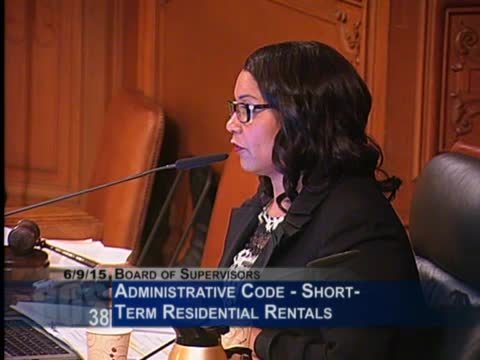
Supervisors continue short‑term rental ordinances after heated debate; vote set for July 14
Summary
After hours of debate, the Board of Supervisors voted to continue two competing short‑term rental ordinances to July 14. A motion to end debate earlier failed, and supervisors remained sharply divided over caps, platform data sharing and enforcement.
The San Francisco Board of Supervisors on July 9 continued two competing short‑term rental measures after an extended, often contentious debate over how to balance home‑sharing income for residents with enforcement against commercial "hotelization" of housing.
Supervisor Mark Farrell moved to continue items 37 and 38 for one month to the July 14 meeting; that motion carried on roll call, 7‑4. Earlier, a motion to terminate debate failed, 5‑6. The two items before the board were: an amendment advanced by the mayor and Supervisor Farrell (focused on enforcement, data sharing and some caps) and an alternative ordinance introduced by Supervisor David Campos with co‑authors that would require platforms to list only registered units, require quarterly data reporting to the city, and impose a 60‑day cap designed to remove commercial listings from the market.
Speakers across the chamber described distinct constituencies: supervisors said they had heard from long‑term residents who rely on modest short‑term rentals to make ends meet, and from tenants and neighborhood groups who say whole apartments have been converted into de facto hotels that remove rental units from the housing stock.
Supervisor Wiener objected that a 60‑day limit would harm casual hosts who rely on income from hosting a room; he said many residents in his district use short‑term rentals to pay mortgages or medical bills. Supervisor Campos argued the 60‑day limit and platform data requirements were necessary to stop large commercial actors and to protect tenants; he cited a budget analyst estimate that short‑term rentals may be taking between roughly 925 and 1,960 entire units off the long‑term market.
Supervisor Kim emphasized enforcement challenges and privacy questions around required data sharing; she supported an expedited private right of action and said private enforcement historically helped enforce the city's Hotel Conversion Ordinance. Several supervisors said they supported parts of both proposals and urged colleagues to keep negotiating; others said urgency required action now.
The board's continuance to July 14 gives members and stakeholders another month to try to reconcile differences on caps, platform obligations and enforcement mechanisms. No final ordinance was adopted July 9.