Get Full Government Meeting Transcripts, Videos, & Alerts Forever!
Get email alerts on the Planning Code Nct Fillmore Divisidero topic
No spam. Unsubscribe anytime.
Supervisors debate affordability levels as Fillmore and Divisadero transit districts advance
Summary
The board approved amendments to planning code to create Fillmore and Divisadero neighborhood commercial transit districts amid objections that the rules leave default affordability at roughly 12 percent rather than the 33 percent voters requested.
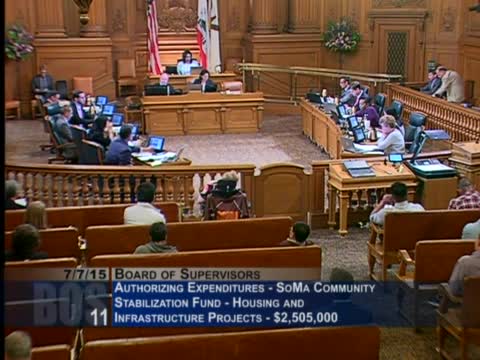
The San Francisco Board of Supervisors on July 7 approved two ordinances to establish neighborhood commercial transit (NCT) districts along Fillmore Street and Divisadero Street, moving both measures forward despite objections from colleagues who said the legislation leaves the default affordable housing percentage far below voter expectations.
Supervisor Avalos moved to continue items 12 and 13 to later in the meeting, citing concerns that the density bonuses tied to the NCT designation were not paired with higher affordability levels. "They're not meeting up to our standard that we approved by the voters last year, 33% affordability. We're giving a bonus... and yet we're not, with that bonus, we're not actually increasing the level of affordability," Supervisor Avalos said.
That motion to continue failed on a roll call vote, 4 in favor and 7 opposed. The clerk recorded supervisors Yi, Avalos, Breed, Campos, Christensen, Cohen, Farrell, Kim, Mar, Tang, Wiener on the later roll calls; on the final vote the board approved the ordinances on first reading with 10 ayes and 1 no (Supervisor Avalos).
Nut graf: The ordinances change planning rules to increase development capacity along transit corridors; sponsors and supporters said the move adds housing where transit access exists, while dissenting supervisors warned the default affordability percentage (12%) does not meet the 2014 voter-mandated target of 33% for affordable units.
Supporters, including Supervisor Wiener, described transit corridors as appropriate locations for increased density and said that a rise in the number of units would increase the number of affordable units even at the lower default percentage. Supervisor Kim, who chairs the land use committee, said committee discussion and protections (including retention of a 40 percent requirement for two-bedroom units) informed her support but that the city should consider capturing more value from increased development potential in future code amendments.
Ending: The ordinances were passed on first reading and will return for subsequent hearings as required by the planning code and CEQA processes. Supervisor Avalos recorded the lone no vote on final passage.